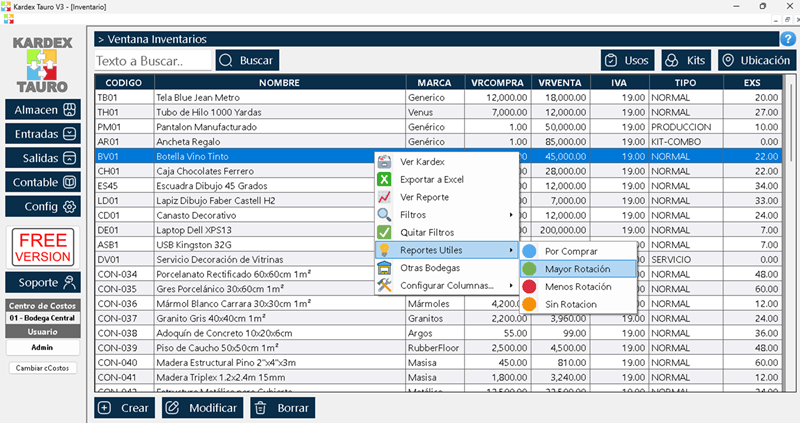
Sales invoice example
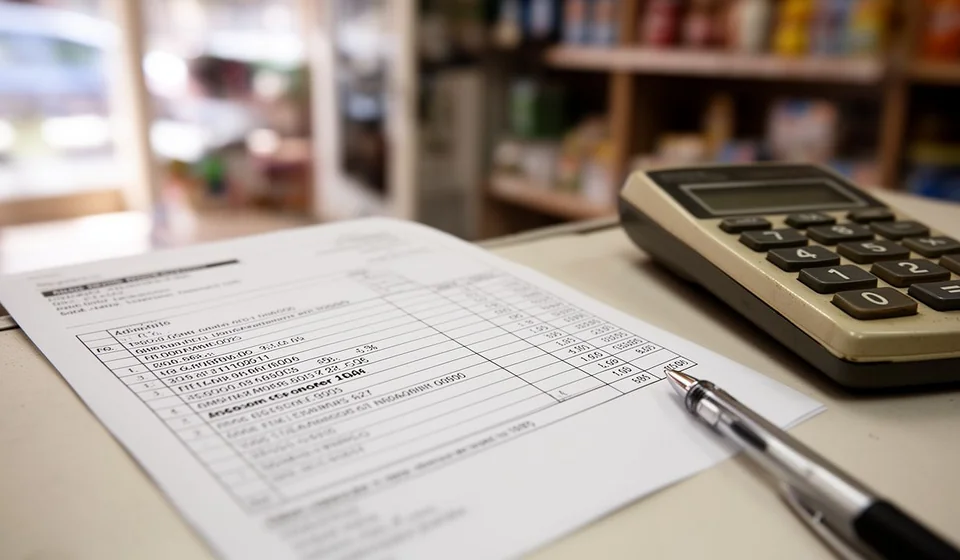
Sales invoice example
Every time a business sells a product or provides a service, that transaction is backed by a document: the sales invoice. It is the record the customer receives as proof of purchase and, at the same time, the support the company keeps for its accounting, its collections and its inventory control. Even though thousands of invoices are issued every day, it is not always clear what data they must contain, in what order, and how the figures must tie together. If you came here looking for a sales invoice example to guide you, or a picture of an invoice showing what a well-made one looks like, you are in the right place. In this article you will see a complete sales invoice, built with fictional data and consistent numbers, explained part by part: what goes in the header, what is recorded in the items table, how the subtotal, the tax and the total are calculated, and which mistakes to avoid when filling one out.What a well-made sales invoice must include
A well-made sales invoice is not just a piece of paper with a price on it: it is a document that anyone, whether the customer, the accountant or an auditor, must be able to understand without ambiguity. To play that role, every invoice should include, at a minimum, the following blocks of information:- Seller's details. Name or business name of the seller, tax identification number (EIN, VAT number, GST number or the equivalent for your country), address and contact details. Without these, no one knows who sold the goods or whom to contact with a claim.
- Invoice number and date. Each invoice carries its own consecutive number and the date of issue. Numbering keeps documents in order and makes duplicates or lost invoices easy to spot.
- Customer's details. Name or business name of the buyer, ID number and address. These can be minimal at a counter sale; for credit sales or when tax rules require it, they are essential.
- Table of products or services. Quantity, description and unit price for each line, with its line total. This is the heart of the invoice: it shows exactly what was sold, how much of it, and at what price.
- Subtotal, tax and total. The sum of the lines, the applicable tax (VAT, sales tax or other, depending on the country and the product) and the final amount to pay. The three figures must relate to one another correctly.
- Payment method and terms. Cash, credit, bank transfer or card, plus any deadlines. It defines when and how the invoice will be paid.
- Notes and warranties. Delivery times, warranties, discounts or remarks agreed with the customer. They prevent misunderstandings later on.
A complete sales invoice example, part by part
To see all those elements applied in a single document, we built a sample sales invoice as it would look printed or on screen. The company, customer and product data are fictional, and the amounts are shown in dollars ($) only for the exercise: what matters is the structure and that the numbers tie together.1. Header: who is selling and which invoice it is
The header identifies the seller and the document. It is the first thing anyone checks to confirm that the invoice is valid, to see its number and to know when it was issued.| Seller | Comercializadora Alfa S.A.S. |
| Tax ID | NIT 901.234.567-8 |
| Address | Av. 68 # 24-31, unit 102 |
| Phone / email | 555 0134 · sales@alfaejemplo.com |
| Document | Sales invoice No. FV-00456 |
| Issue date | September 2, 2026 |
| Payment terms | Cash basis |
2. Customer details
This section states who the sale is made to and where delivery or billing goes. The more complete it is, the easier it will be to find the invoice later when it is needed.| Customer | María Fernanda Ruiz |
| ID number | ID card No. 1,098,765,432 |
| Address | Calle 45 # 12-08, apt. 301 |
| Phone / email | 310 555 0117 · mfruiz@correoejemplo.com |
3. Line items: quantity, description and unit price
The items table is the most important part of the invoice. Each row stands for one product sold and shows how many units left, what was sold and at what price. In a well-made invoice, this table matches the merchandise that actually came out of inventory.| Qty | Description | Unit price | Line total |
|---|---|---|---|
| 2 | Ergonomic office chair, model SE-200 | $150,000 | $300,000 |
| 5 | LED desk lamp, model LED-45 | $80,000 | $400,000 |
| 3 | Cable organizer, pack of 10 units | $50,000 | $150,000 |
4. Totals and payment method
This block summarizes the transaction: the subtotal adds up every line, the tax is calculated on the subtotal, and the total is what the customer pays. It also states how the money will be received.| Subtotal | $850,000 |
| Tax (19% VAT in this example) | $161,500 |
| Total due | $1,011,500 |
| Payment method | Bank transfer (cash basis) |
| Notes | Six-month warranty on chairs and lamps. |
- Line 1: 2 × $150,000 = $300,000.
- Line 2: 5 × $80,000 = $400,000.
- Line 3: 3 × $50,000 = $150,000.
- Subtotal: $300,000 + $400,000 + $150,000 = $850,000.
- Tax: 19% of $850,000 = $161,500.
- Total: $850,000 + $161,500 = $1,011,500.
What each part of a sales invoice is for
Every piece of data on an invoice has a job to do. Knowing the purpose of each one helps you fill it out better and catch mistakes early: Seller's details and invoice number. They give the document its identity and traceability: with the consecutive number you can track down any invoice, answer claims and reconcile with the accounting records. Issue date. It places the sale in the correct period for reports and tax filings; a wrong date can distort the month's revenue. Customer's details. They support collection and accounts receivable; in e-invoicing and in sales subject to tax rules, they are the backbone of the document. Quantities and descriptions. They make returns, exchanges and warranties hassle-free; on top of that, the quantities sold feed inventory control and the stock ledger record. Unit price and line totals. They keep the transaction auditable: anyone can multiply the quantity by the price and verify the line. Subtotal, tax and total. They are the basis for recording the sale in the books, for the tax to be reported and for matching the amount actually collected. Payment method and terms. They decide whether the sale becomes cash in the register or an account receivable, and when payment is expected.Common mistakes when filling out sales invoices
Mistakes on an invoice are not a minor detail: a poorly filled document can delay a payment, complicate a return or create accounting inconsistencies. These are the most common ones:- Incomplete seller details. Without the name or the tax ID, the invoice loses its value as an accounting support document.
- Messy numbering. Duplicated, missing or skipped invoice numbers make reconciliation impossible and can raise red flags in a review.
- Wrong customer data. A mistaken ID or address complicates collection, delivery and the backup of the transaction.
- Vague descriptions. Writing "several products" or "assorted merchandise" is useless for a return, a warranty or for knowing what left the inventory.
- Calculation errors. Adding the lines up wrong or leaving a total that does not match is the most visible mistake: the customer notices it and the document loses credibility.
- Applying the tax incorrectly. Using the wrong rate, charging tax on an exempt sale or omitting it when it applies creates differences at filing time.
- Confusing unit price with line total. Writing the total value of the line instead of the price per unit distorts prices and discounts.
- Forgetting to record the inventory outflow. If the invoice does not take the sold units out of stock, the stock ledger ends up wrong and shortages or surpluses appear.