Online store: how to control physical and digital inventory
Online store: how to control physical and digital inventory
Running a physical shop is no longer the only way to sell. More and more small businesses are opening an online store to reach customers who would never walk through their door: shoppers in other cities, people who buy late at night, or customers who simply prefer to order from their phone. E-commerce has grown quickly, and a business that only sells at the counter is leaving a considerable share of potential sales behind.
Opening an online store, however, brings a challenge that many owners discover too late: now there are two sales channels sharing the same products. If the shop sells the last unit of an item that the website still shows as available, somebody ends up without their order. This article explains what an online store is, what you need to start one, and above all how to keep a single inventory across the physical and digital channels so you can sell without headaches.
What is an online store
An online store, also called an e-commerce store or a virtual store, is a business that sells products or services over the internet. Instead of displaying merchandise on shelves and serving customers face to face, the business presents its catalog on a website, and the customer browses, pays and receives the order at home or picks it up at the point of sale.
A typical online store runs on three basic building blocks:
- Product catalog: the list of items with photos, descriptions, prices and availability, organized into categories so customers can quickly find what they need.
- Shopping cart: the place where the customer accumulates the items they want before paying, adding or removing units and reviewing the total.
- Payment method or gateway: the system that makes it possible to charge by card, bank transfer, cash on delivery or other options, safely and with confirmation.
Unlike a printed catalog or a social media post, an online store completes the whole sale over the internet: the customer sees, chooses, pays and receives a confirmation without calling or visiting the location.
Types of online stores
Not all online stores work the same way. Depending on the business model and the effort required, there are three main types:
Own store. This is a website you fully control: your domain, your design, your catalog and your sales rules. It is the option that gives you the most freedom and fits a brand with its own identity best, although it requires more setup, maintenance and promotion work to attract visitors.
Marketplaces. These are large platforms where many sellers offer their products under the platform's rules. The benefit is that they already have millions of shoppers looking for things to buy, which speeds up your first sales. In exchange, they charge commissions and you compete with other sellers for the same customer.
Social media with a catalog. Many businesses sell directly from their social profiles, posting product photos, replying to messages and arranging payment and delivery. It is the simplest gateway to e-commerce and works well for small brands, although it demands fast responses and an almost manual order tracking process.
Many businesses combine options: an own store as the main showcase plus a presence on marketplaces and social networks to reach more customers. That combination multiplies sales, but it also multiplies the fronts that must manage the same inventory.
What you need to set up an online store
Starting an online store does not require a huge initial investment, but it does require order. Before you launch, make sure these points are covered:
- Well-defined products: know exactly what you are going to sell, at what price, with which margins, and how many units of each reference you have. Without this base, any sales tool becomes chaos.
- Photos and descriptions: clear images of the actual product and texts that explain features, sizes, materials and how to use it. Online customers cannot touch the item: the photo and the description are your counter.
- Payment methods: decide how you will charge: cards, bank transfers, cash on delivery, digital wallets. The more options you offer, the fewer sales are lost at the last step.
- Logistics and shipping: decide how the order reaches the customer: your own courier, a carrier, pickup points or collection at the store. Define rates, delivery times and coverage areas before publishing the first product.
- Sales platform: choose where you will sell: your own website, a marketplace or social networks. Each channel has its own rules, costs and way of managing orders.
- Return policy: establish what happens if the product arrives damaged, does not fit, or simply does not meet expectations. A clear policy builds trust and prevents conflicts.
If you already sell from a physical store, the good news is that products, photos and prices already exist. The challenge is not creating them, but connecting that physical world with the new digital one.
The big challenge: one inventory for two channels
The core problem of selling in person and online at the same time is that the product is the same, but the sales channels are two. The shirt hanging in the store is also published on the website. The customer who buys it at the counter and the customer who buys it with a click are competing for the same unit, even though they will never meet.
Here is an everyday example: a customer opens the online store at nine at night and buys the last refrigerator listed as available. The next morning, another customer arrives at the shop, pays for that same refrigerator at the register and takes it home. When the delivery driver reaches the online buyer's address, the product no longer exists. The business must cancel the order, refund the money and explain what happened, while the customer is left with a bad experience.
That situation repeats every time inventory is not one single record. That is why the goal of any business selling through multiple channels is to make the physical store and the online store read and update the same stock, in real time or nearly in real time.
What syncing inventory between the physical and the online store means
Syncing inventory means that both channels work on the same reality: a single number of available units per product that updates automatically with every sale, no matter which channel it happened in.
It works in both directions:
- When a customer buys online, the available units drop in the online store and also in the physical store, because the merchandise leaves the same warehouse.
- When a sale happens at the counter or the physical location, that sale is deducted from the same stock the website sees, so nobody can buy online an item that is already sold out in the store.
Sync also covers other operations: returns that put units back into inventory, purchases from suppliers that increase it, adjustments for damaged or expired products, and reservations set aside for pending orders. All those movements must be reflected in one single record so the figure the customer sees is always reliable.
How to keep physical and digital inventory in sync
Achieving that sync does not depend on the seller's discipline or on writing down every sale by hand: it depends on using tools that connect the channels automatically. The practical options are these:
- Inventory management software: a program that centralizes every product and records merchandise coming in and going out. It is the backbone of control, because any sales channel leans on it.
- Connection between the sales platform and the inventory system: link the online store with the management program so each web order automatically becomes a stock exit, without manual typing or spreadsheets.
- Shared stock per product: give every reference a single stock level used by both the physical point of sale and the website. If the product runs out in one channel, it stops being offered in the other.
- Low-stock and out-of-stock alerts: set notifications for when a product reaches a minimum or runs out of units, so you can decide in time whether to reorder or unpublish it.
- Cycle counts and audits: periodically compare real units against the recorded ones to correct differences caused by loss, errors or theft before they affect sales.
The level of sophistication depends on the size of the business: a small venture can start with a well-kept spreadsheet and a daily update routine, but as volume grows, manual updating becomes a bottleneck and human error shows up. At that point it makes sense to move to a system that does the work on its own.
What happens if you do not sync your inventory
Selling through two channels with separate inventories seems harmless at first, but problems appear quickly and hit where it hurts most:
- Sales of out-of-stock products: the website keeps offering items that are already sold out at the store, generating orders that cannot be fulfilled.
- Cancellations and refunds: when an order cannot be shipped, you have to refund the money and absorb the cost of the mistake, including payment fees that are not always recovered.
- Angry customers: someone who paid and never received the product is unlikely to buy again, and their complaint can reach public reviews that other customers do read.
- Reputation damage: in e-commerce, trust is the most valuable asset; a few failed orders are enough for a business to earn a reputation for being unreliable.
- Blind buying decisions: without reliable figures you do not know what to purchase or how much, and you end up with slow-moving stock or shortages of your best sellers.
- Manual work and typing errors: moving sales from one side to another by hand takes time and always leaves room for mistakes that nobody detects in time.
In short, not syncing is not just an operational problem; it is a commercial problem. Customers do not distinguish between your store and your website: for them it is one company, and they expect that company to deliver what it promises on every channel.
Physical store vs online store: key differences
To understand why inventory behaves differently on each channel, it helps to compare how the sale works in both:
| Aspect | Physical store | Online store |
|---|---|---|
| Stock | The customer sees the real units on the shelf and takes them away immediately. | The customer sees an availability figure that must be trustworthy to avoid delivery failures. |
| Sale | It is recorded at the point of sale when payment happens at the register. | It is recorded when the payment is confirmed, even outside store hours. |
| Delivery | Immediate: the product leaves with the customer. | Deferred: it requires order preparation, packing and shipping or a pickup point. |
| Returns | Received on the spot and put back on the shelf. | Must be entered back into the record to become available on the website again. |
| Opening hours | It only sells while the store is open. | It receives orders 24 hours a day, including closing days. |
The table shows the heart of the matter: in the physical channel the sale and the delivery happen together, while in the online channel there is a gap in which the product is sold but still in the warehouse. If the record does not deduct that unit at the moment of the sale, the next customer could buy something that no longer exists.
Steps to sell online with control
If you already have a physical store and want to add the digital channel without losing control, follow this order:
- Build your base inventory: register every product with code, name, cost, selling price and real available units. Without this master list, nothing works.
- Choose the channel to start with: your own online store, a marketplace or social media. Start with one and master it before expanding.
- Define a single source of truth: decide where the official inventory record lives, your management system, and make every channel depend on it.
- Connect sales with stock: set up the integration or the routine so that every order deducts units automatically in the central record.
- Set alerts and rules: define minimum levels, products that must never run out, and the procedure when something is sold out: stop offering it, offer a reservation, or show the out-of-stock notice.
- Train your team: everyone who works at the store, the warehouse or the web orders must understand that every sale and every return gets recorded, no exceptions.
- Review with data: measure every week what was sold on each channel, which products turn over the most, and where differences appear, so you can correct them before they grow.
Conclusion
Selling online is a great opportunity for any business with a physical location, but only if both channels play with the same cards. An online store without synced inventory sells products it cannot deliver and loses customers who never come back; an online store connected to the real stock of the business grows with peace of mind, because every order that arrives can be fulfilled.
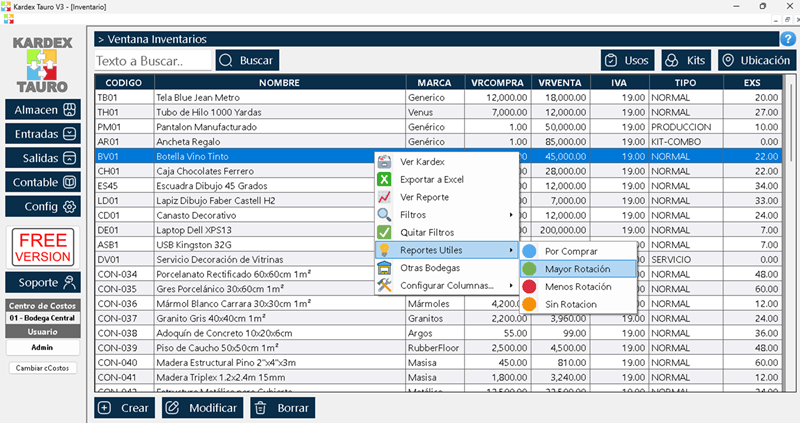
The answer is not selling on more channels without control, but having a single, reliable inventory behind all of them. With a system like Kardex Tauro, your store and your online shop work on the same record, and you decide with data what to buy, what to reorder and what to keep selling on each channel.