What is Python?
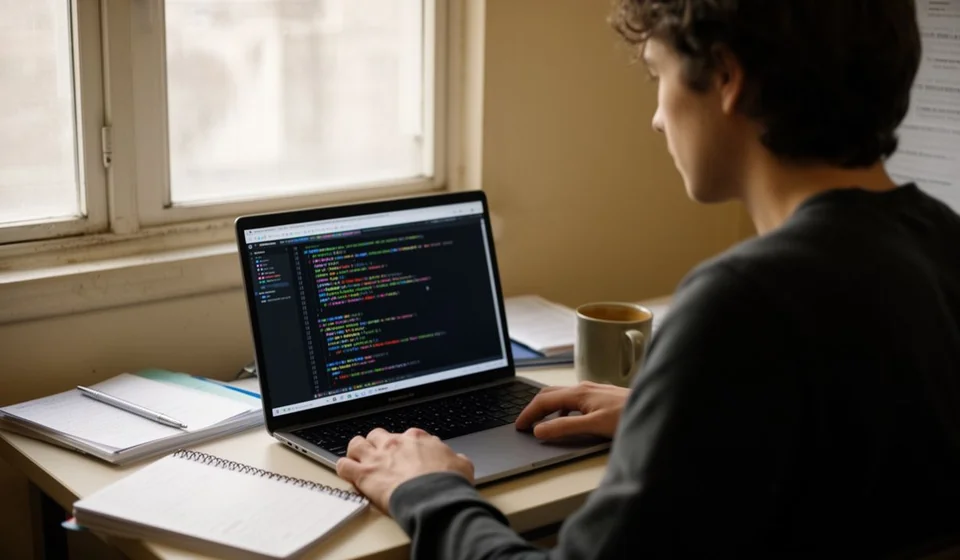
What is Python?
Python is a high-level, interpreted, general-purpose programming language built around a simple idea: code should be easy to read and easy to write. Its first public release appeared in 1991, when the Dutch programmer Guido van Rossum set out to design a language that was both simple and powerful, and it has since grown into one of the most widely used programming languages in the world. Today it is used to build web applications, analyze data, automate tasks, develop artificial intelligence systems, and write all kinds of programs and scripts. Its popularity comes from an unusual combination: it is simple enough for someone starting from scratch, yet complete and robust enough for large professional projects. It is used by students in their first programming class and by engineering teams at technology companies, banks, universities, and public institutions. This article explains what Python is, what it is used for, why it is a great choice for beginners, how a program is written, how to install it, how it differs from other languages, and what career opportunities it offers. If you are thinking about learning to program, this guide gives you the context you need to decide with good information.What exactly is Python
Python is an interpreted language: the code you write is executed directly by a program called an interpreter, without first converting it to machine language as happens with compiled languages. That feature makes writing and testing programs very fast, because you only need to save the file and run it to see the result immediately. It is also a high-level, general-purpose language. High-level means it works with concepts close to everyday language instead of requiring deep knowledge of the hardware; general-purpose means it is not designed for a single kind of task. With Python you can build a desktop application, process millions of records, generate reports, or control a connected device, all with the same language. Another distinctive feature is its clean syntax. Python forces you to organize code with indentation and avoids the large number of braces, parentheses, and symbols used by other languages, which produces shorter programs that are easier to understand. It is often said that Python code reads almost like plain English.What Python is used for
The list of uses for Python is very long, and that versatility is one of the main reasons for its success. Among the most common applications are:- Web development: many websites and online services run on applications built with Python, both on the server side and in the logic that processes the data users see on screen.
- Data analysis: organizing, cleaning, exploring, and visualizing information, from a store's sales to scientific indicators, is one of the areas where Python is used most intensively.
- Artificial intelligence and machine learning: it is the reference language for training models, processing natural language, and building recommendation or prediction systems.
- Task automation: with a few scripts you can rename files in batches, send emails, download information from the internet, update reports, or sort folders that used to take hours of manual work.
- Science, education, and research: laboratories, universities, and research centers use it for calculations, simulations, and experiments of all kinds.
- System administration: monitoring servers, making backups, reviewing activity logs, and automating the maintenance of technology infrastructure.
Why Python is ideal for beginners
There are many languages you can start with, but Python is the one most often recommended in schools, online courses, and universities. The reasons are very concrete:- Simple, readable syntax: the code resembles everyday English and uses few symbols, so your effort goes into learning to solve problems rather than memorizing writing rules.
- Fast results: your first program can be written and run within minutes, which keeps motivation high during the first weeks, when most people tend to give up.
- Understandable errors: when something fails, the interpreter tells you which line caused the problem and what kind of error it is, something that can be cryptic for beginners in other languages.
- Huge community: there are tutorials, documentation, forums, and answers in every language, and almost any question you have has already been solved by someone else.
- A long growth curve: what you learn at the beginning keeps working later: you do not need to switch languages to go from a small script to a professional project.
How a program is written in Python
The best way to understand why Python is considered easy is to see an example. A program that stores a value and makes a decision is written like this:- name = "Ana"
- age = 25
- if age >= 18:
- print("Hello, " + name + ", you are an adult")
- else:
- print("Hello, " + name + ", you are a minor")
How to install Python
Installing Python is a simple process that takes a few minutes. The project's official website publishes installers for Windows, macOS, and Linux, and many Linux distributions already include it by default. The general steps are:- Download the latest stable version from the official Python website, not from third-party pages.
- Run the installer and follow the on-screen instructions, which are the same as for any common program.
- During installation, check the option that adds Python to the system PATH, so you can run it from any folder.
- Verify that everything worked: open a terminal or console and type the command python --version, which should show the installed version number.
The ecosystem: Python libraries and tools
One of Python's great strengths is its ecosystem: a huge collection of ready-to-use libraries that save you from reinventing the wheel. The language includes a very complete standard library, with modules for working with files, dates, email, the internet, mathematics, and many other tasks, and on top of that foundation there is a catalog of third-party packages installed with a package manager called pip from a public index. In practice, this means a good part of the work is already solved before you start. There are libraries for connecting to databases, reading and writing spreadsheets, generating reports and charts, creating web interfaces, processing images, handling dates and time zones, sending emails, or automating repetitive tasks. The programmer focuses on the logic of their problem instead of building everything from scratch. The ecosystem also includes frameworks for web development, specialized environments for data analysis, and complete platforms for artificial intelligence. Although each area has its preferred tools, they all share the same language and the same foundations, which makes it easier to move from one field to another without starting over.Python compared with other languages
No language is the best at everything, and Python is no exception. The following table summarizes, in very general terms, how it compares with other popular languages on two aspects that usually matter to beginners: ease of learning and main use.| Language | Ease of learning | Typical main use |
|---|---|---|
| Python | Very high: readable syntax close to English | Web, data analysis, automation, and artificial intelligence |
| JavaScript | Medium-high, with some confusing concepts at first | Interactivity in browsers and web applications |
| Java | Medium: requires more structure from the start | Enterprise applications and large systems |
| C++ | Low-medium: requires understanding how memory works | Games, high-performance systems, and low-level software |
| PHP | Medium: easy to start, with details worth mastering | Websites and self-hosted server systems |
Career opportunities with Python
Learning Python opens the door to highly demanded professional profiles, including:- Web and software developer: building and maintaining applications, services, and internal systems.
- Data scientist or analyst: turning information into conclusions and reports that support business decisions.
- Artificial intelligence engineer: designing and training machine learning models for prediction, recognition, and recommendation.
- Automation specialist: removing repetitive manual tasks through scripts and integrations between systems.
- Internal tools developer: automatic reports, data loads, database synchronization, and support for other teams.
- Teacher and technical content creator: the high demand for learning has turned teaching Python into a field of work on its own.
Conclusion
Python is an interpreted, high-level, general-purpose programming language known above all for its clean, readable syntax. It is used for web development, data analysis, automation, artificial intelligence, and a long list of everyday tasks, and it is the most common doorway into the world of programming. Its combination of simplicity and power makes it a very worthwhile investment of time: the basics can be learned in weeks, and that knowledge keeps working for years, both for solving small tasks and for taking part in professional systems. If you are just starting out, the best next step is concrete: install Python, open an editor, and write your first program, even if it only says hello. Consistent practice is worth more than any theory.Downloadable code: the index of Python code for inventory, finance and accounting: six free programs has commented, tested Python programs you can download; the first one is the Python code: weighted-average stock ledger.
