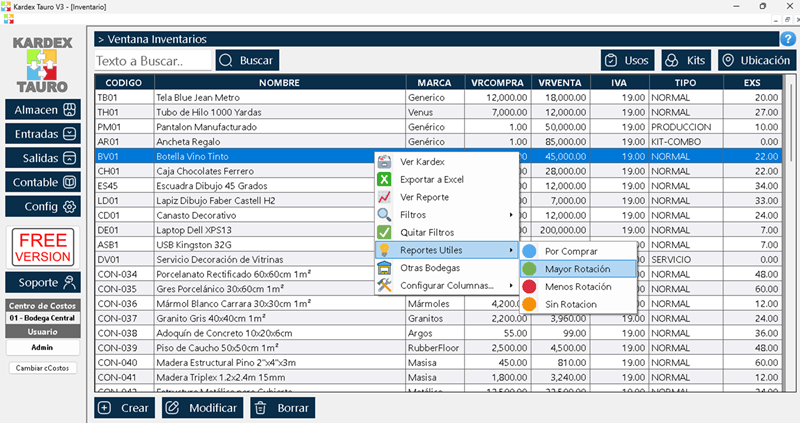
How to Manage Seasons in Your Clothing Inventory
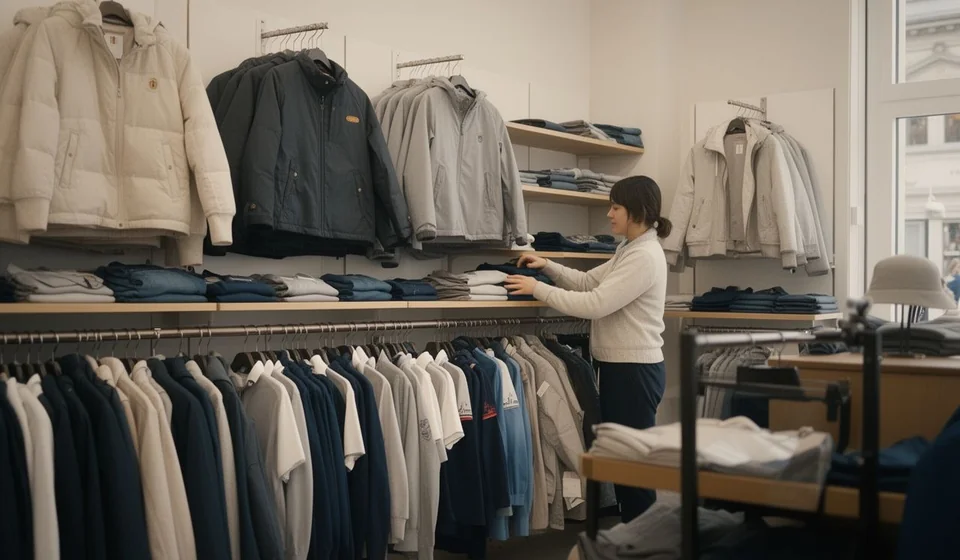
How to Manage Seasons in Your Clothing Inventory
Anyone who sells clothes knows it by heart: there are months when garments practically sell themselves and others when the shop feels like a museum. In January, uniforms and school clothes move; in December, pajamas and party dresses fly off the racks; and when the rains come, jackets and sweaters come back. The problem is not that demand changes, but that the inventory did not change in time. Buying clothes without thinking about the season is gambling: sometimes you win, but almost always you are left with garments, sizes, and colors nobody wants once the calendar moves on. Controlling seasons in your inventory means deciding with dates and numbers what to buy, how much to buy, and when to stop buying.
For a small store this is not an administrative luxury: it is the difference between selling merchandise at full price and clearing the leftovers at a discount. And you do not need to be a large retailer to pull it off. With a season calendar, clear buying rules, and an orderly record of what comes in and goes out, a clothing business can reach every season with exactly the right stock.
Why a clothing inventory lives by the calendar
Clothing combines three quirks that few inventories share. First, it is perishable in fashion terms: a garment that did not sell during its season loses value every week that passes, because next year the style, color, or model may interest nobody. Second, it has sizes: it is not enough to carry the item, you must carry the size the customer asks for, and that multiplies the references you have to control. Third, its demand is tied to the weather and to the school and holiday calendar, which are predictable if you watch them, but punish hard those who arrive late.
That is why the first mistake of many clothing stores is not selling too little, but buying poorly: they buy the same things every month, without asking what is coming next. When the high season arrives they do not have the most requested items, and when it passes they carry the leftovers. Managing seasons is, at heart, a change of focus: first the calendar, then the purchase.
The seasons that shape a clothing store's year
Every market has its own dates, but almost every clothing store lives with four big seasons. Knowing them and putting them on a visible calendar is the first step of control.
| Season | Approximate months | What customers usually ask for | Buying and selling strategy |
|---|---|---|---|
| Back to school | January-February and June-July | Uniforms, jeans, shirts, sneakers, and everyday basics | Buy before the peak, prioritize children's and teen sizes, and restock what sells fastest |
| Year-end and Christmas | October-December | Pajamas, party wear, shirts and blouses for gifts | Bring new items early, display the most visible stock, and keep budget to restock in December |
| Weather change and rainy season | April-May and September-November | Jackets, sweaters, raincoats, and closed shoes | Get ahead of the weather with small lots and increase the order if last year sold out |
| New collection launch | According to the supplier's calendar | New arrivals, trendy colors, and fresh models | Test with short quantities and reorder only what confirms sales |
The idea is not to copy this table literally, but to build your own: with the real dates of your city, your customers, and your suppliers. Once it is written down, the season stops being a surprise and becomes a commitment with a start and an end date.
How to plan purchases for each season
Planning seasonal buying starts with a simple question: what did I sell last season? Many stores answer from memory, and memory celebrates successes and forgets failures. A per-product record of sales and stock, such as the one kept in Kardex Tauro, answers with numbers: how many units of each reference were sold, in which sizes, in which weeks, and how many were left unsold. With that data, buying stops being a leap into the void.
With the history in hand, three rules are worth following:
- Set a maximum budget per season and stick to it: if you sold fifty uniforms last season, you do not need to buy eighty.
- Buy in stages: an initial order that covers the safe part and budget reserved for short restocks during the season, because there is always a model or a size that flies and another that stays behind.
- Respect the buying deadline: every season has a point after which any new merchandise will probably arrive when nobody is looking for it anymore.
How to avoid being left with out-of-season garments
Leftover stock is the number-one enemy of a clothing store, and it is fought before buying, not after selling. The simplest tool is repeating the size mix that sales already confirmed: check last season's records for which sizes sold most and order in that same proportion, instead of equal quantities of everything. The same applies to colors: what sold last year in your area is a better guide than any distant trend.
It also helps to buy what already has guaranteed customers: uniforms for nearby schools, workwear for local businesses, or pieces that regular customers request. That clothing almost never ends up in the clearance rack, because it has assured demand before it even reaches the store. For everything else, the rule is clear: if a reference does not move in the first weeks of the season, it is not restocked. Let the leftover go out with controlled discounts and use the money to buy what actually sells.
Controlled clearances and discounts
Running a clearance is not a failure: it is a planned move. Clothes that do not sell during their season take up space, tie up money, and lose value; selling them at a discount on time almost always pays more than storing them until next year. What matters is that the clearance is controlled and not a panic sale.
An orderly way to do it is in stages, with fixed dates: gentle discounts in the first weeks, deeper discounts later, and a final clearance before receiving the new merchandise. That way customers learn that waiting has a cost and buy on time. Another useful rule is moving last season's garments off the main racks before showing the new collection, because nothing kills a sale like seeing last year's dress next to the new arrival. And it pays to protect what still has demand: there is no need to discount the jeans that sell well just because new stock arrived.
Measure what sold in each season
The season does not end the day the racks are put away: it ends when results are measured. Comparing season against season is what turns experience into method. With a per-product record of sales and stock, Kardex Tauro lets you review, season after season, which references sold out and which were left over, and with that reading decide what to restock, in what quantities, and in which sizes next time.
The data worth checking at the end of each season is short and concrete: units sold per reference, which ones sold out, what percentage of the inventory went out at a discount, and how much was left unsold. Four figures are enough to know whether you bought well. If the season ended with little leftover, with the most requested items available until the end, and with discounts smaller than planned, the buying was well calibrated. If too much was left, the next purchase is adjusted downward.
The calendar rules, the data decides
Managing seasons in a clothing inventory comes down to three habits: knowing what is coming, knowing what was sold, and buying accordingly. The store that waits until December to think about December always arrives late; the one that plans from September already knows how many pajamas it needs, in which sizes, and with which budget.
Clothes will always be in fashion, but inventory is not managed by fashion: it is managed with dates, with numbers, and with the habit of reviewing what happened before deciding what comes next. Whoever controls their seasons does not eliminate the risk of being wrong, but makes sure of being wrong on a small scale and correcting in time. And in a clothing business, that is worth almost as much as a good sale.