How to control production consumption
How to control production consumption
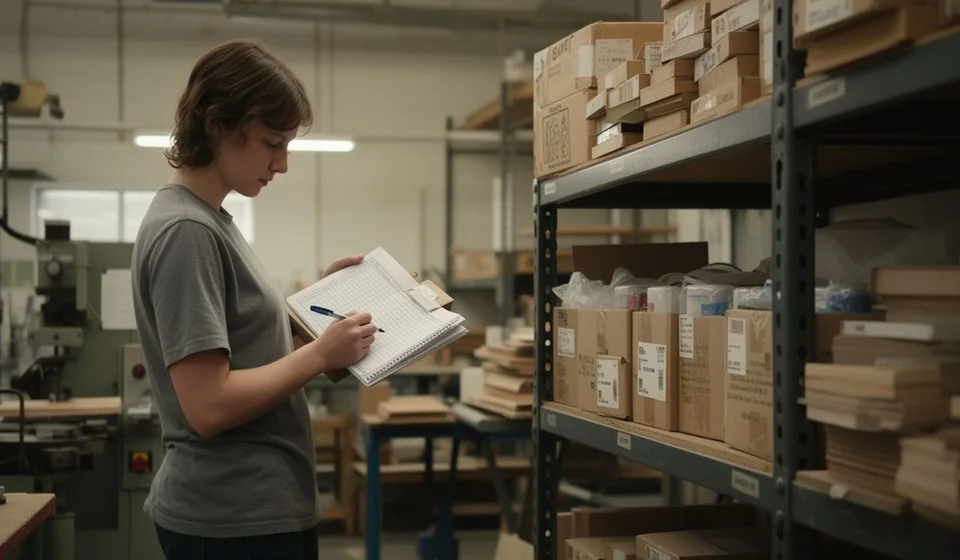
In a small factory or workshop, inventory does not only leave when something is sold: it also leaves every day toward the workbench. The fabric of a garment workshop, the wood of a carpentry shop, or the flour of a bakery are materials consumed to produce. Controlling those production consumptions is what separates a business that knows how much it costs to manufacture from one that only discovers its losses when physical count time arrives. This article explains what a production consumption is, how to record it without relying on memory, and why it is worth telling it apart from a sale or from shrinkage.
What is a production consumption?
A production consumption is the removal of materials from inventory to be used in manufacturing a product, with no sale to an external customer. When the workshop receives an order and starts working, it takes the raw material it needs out of the warehouse: that removal is a consumption. That material does not come into the cash register as money: it becomes a manufacturing cost built into the finished product.
Think of a furniture factory: the wood, the glue and the hardware are not sold when they leave the storeroom; they are transformed into the table that will be sold later. If that removal is not recorded, the system will keep showing as available some stock that is already on the production floor. Weeks later the result appears: missing raw material, costs calculated too low, and physical counts that do not match.
Which types of consumption exist in a factory
Not everything consumed during production is direct raw material. To keep good control, it helps to recognize each type of removal:
- Raw materials: the main materials transformed into the product (fabric, wood, flour, metal).
- Supplies and auxiliary materials: they support the process without remaining visible in the product, such as glues, threads or lubricants.
- Tools and spare parts: work items handed to an operator or consumed in machine maintenance.
- Packaging: boxes, bags, tape and labels that accompany the product when it goes out.
Types of consumption, how to record them, and their effect on inventory
The following table summarizes the most common consumptions in a small factory or workshop, how to record each one, and the effect of each record on stock:
| Type of consumption | How to record it | Effect on inventory |
|---|---|---|
| Raw material for manufacturing (fabric, wood, flour) | As a warehouse consumption linked to the production order | Deducts the raw material from stock |
| Auxiliary supply for the process (glue, thread, lubricant) | As a warehouse consumption indicating the area or machine that uses it | Deducts the supply and moves it into process cost |
| Tool or spare part handed to an employee | As a consumption that identifies the person or machine receiving it | Deducts the item and keeps traceability of who holds it |
| Packaging used in shipping | As a warehouse consumption when the order is being prepared | Deducts the packaging from available inventory |
The step-by-step to control consumptions
Controlling consumptions requires discipline, and this is the order that works in small factories:
- Define who requests and who receives each removal. Every consumption must answer two questions: who asked for the material and who received it (an employee, an area or a machine). When responsibility is assigned, removals with no owner disappear.
- Record the consumption when it happens. If recording is left for the end of the day, it relies on memory, and memory fails: quantities are forgotten, materials are mixed up, and the real cost is lost. Recording on time takes one minute; reconstructing a week of consumptions can take an afternoon.
- Link the raw material to the production order. When a batch is manufactured under an order, the raw material consumptions must be associated with it. This way you know how much material each product consumed, and the cost is calculated with real data.
- Finalize the consumption document so it deducts stock. A half-saved consumption has no effect on inventory: only when it is finalized does the system deduct the stock and leave the removal recorded in the stock ledger.
- Review the stock ledger regularly. Checking outgoing movements every week helps detect duplicated consumptions or wrong quantities while there is still time to correct them.
How an inventory system helps control consumptions
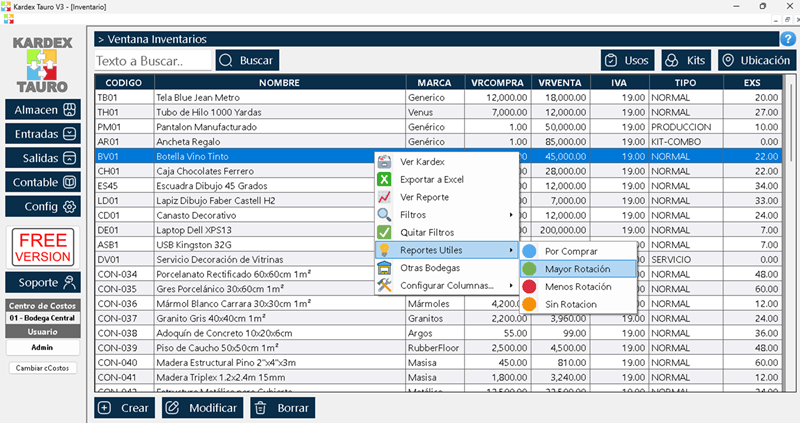
Keeping this control on a paper sheet is possible, but fragile: pages get lost and totals are added wrong. An inventory system solves that because recording a consumption means creating a formal document. In Kardex Tauro, the Internal Consumption window and the Create Consumption document are used to record product removals for internal use. When the consumption is finalized, the system checks that stock is available, automatically deducts the supplies from inventory, and generates the corresponding movement in the stock ledger as a merchandise output.
The document also identifies who receives the goods and who requests them, which is very useful to know which area consumes more materials or which employee received a tool. In this way, a simple stock deduction becomes a cost analysis tool.
Linking consumptions to production orders
In a factory that works by batches, the most organized way to control raw material consumption is to link it to the production order, the document that plans what will be manufactured, in which quantities, who produces it and who requests it. In Kardex Tauro, raw material consumptions are recorded as products are manufactured and remain related to the corresponding order: when you open the order you see the planned products, the consumptions made, and the receipts of finished product. The stock ledger automatically records those consumption movements and the finished product receipts, keeping full traceability of the process.
That link has a huge advantage: if a batch costs more than budgeted, you can review the consumptions one by one to find where the material went. Without it, all consumptions are mixed together and the cost per product is guesswork.
Consumption, sale or shrinkage: three movements that should not be confused
A common mistake in workshops is recording everything that leaves the warehouse as if it were a sale, or the opposite, recording nothing because "nothing was sold." There are three different movements:
| Movement | What it means | How it is recorded |
|---|---|---|
| Sale | The product goes to an external customer and generates revenue | With a sales invoice and inventory output |
| Consumption | The material is used internally to manufacture or to operate | With a warehouse consumption document |
| Shrinkage | The material is lost or damaged without becoming a product | Identified through the physical count and adjusted in inventory |
A sale brings money into the company; a consumption generates no accounts receivable or payable: it is an operating cost. Shrinkage is different because the material has no clear destination: it evaporates, spills, breaks or is lost. Recording shrinkage as a consumption or as a sale distorts costs and hides real process problems, such as avoidable spills or raw material damaged by poor storage.
Count what you consume to validate the records
No matter how careful the records are, the only way to confirm that the numbers match reality is to count. Periodic physical counting of the most expensive or fastest-moving raw material is the proof test of control: if the system says there are twenty units and only twelve are on the shelf, the record failed somewhere: perhaps an unrecorded consumption, unidentified shrinkage, or a typing error.
For the count to be useful: count high-consumption materials more often (every week or every two weeks, depending on volume); compare the result against the stock ledger before adjusting; investigate large differences, because adjusting without understanding the cause is the same as hiding the problem; and fix the recording procedure, not just the stock figure.
Conclusion
Production consumptions are the link between the warehouse and the factory floor. Whoever controls them knows how much material each product costs to make, avoids emergency purchases caused by unexplained shortages, and reaches the physical count without surprises. Recording every removal, linking the raw material to the order that uses it, and periodically counting what is consumed is a discipline that tools like Kardex Tauro turn into a daily routine: when a consumption is finalized they automatically deduct stock and record the movement in the stock ledger.