What Is a Stockout?
What Is a Stockout?
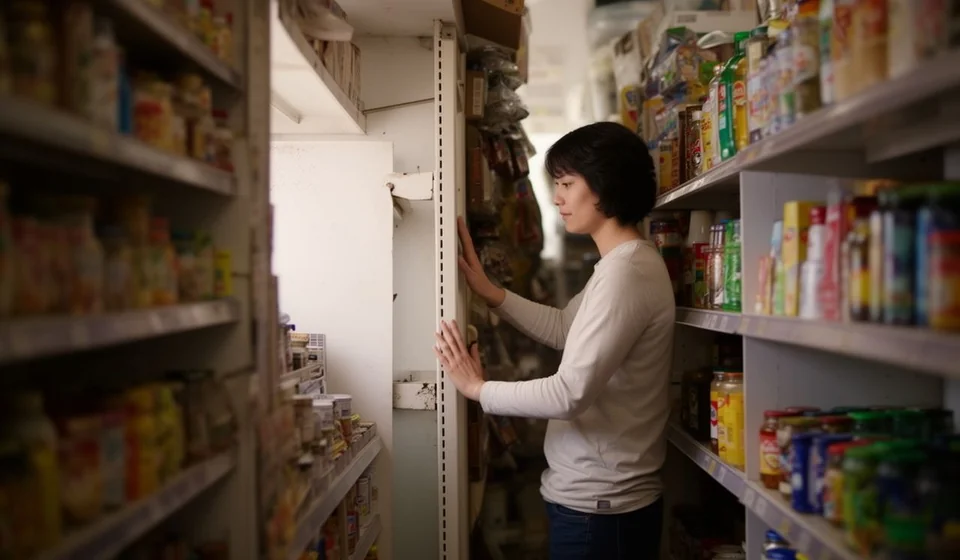
A stockout happens when a business runs out of a product exactly when a customer asks for it. The item is in the catalog, it has its own code and a place on the shelf, but when it is time to hand it over there is not a single unit left. The customer asks, the salesperson checks, and the storeroom confirms what everyone already feared: it is sold out and the replacement order has not arrived yet.
Running out of merchandise is not the same as not carrying a product: no business can offer everything that exists. A stockout is different because there is real demand behind it that could not be served. There were customers willing to buy, the product was part of the regular offer, and still the stock reached zero before the replacement purchase was received. That difference is what turns an everyday event into a measurable problem and, above all, a preventable one.
In small businesses, a stockout is often treated as a minor mishap: "it sold out, we will order more and that is that." In reality, every time it happens the business loses a concrete sale, risks a customer who may not come back, and shows that the way purchases are planned is not working. Understanding what a stockout is, why it happens and how to measure it is the first step toward making it stop happening.
Why stockouts happen
No stockout appears out of nowhere. It is almost always the result of one of these situations, which often combine with each other:
- Unrealistic demand estimates. Stock is bought based on what sold last year or on what "should" sell, without looking at the real trend of recent months. If a product is growing and the order stays the same, running out is only a matter of time.
- Late or infrequent ordering. When the supplier order is placed only after the shelf is already empty, lead time works against you: while the goods are in transit, sales are lost.
- Supplier failures. A supplier who delivers late, incomplete or with a different quality than ordered breaks any purchasing plan, no matter how good it is.
- Unexpected sales spikes. A promotion, a peak season or a product that suddenly becomes a trend can empty a stock that seemed sufficient.
- Unrecorded shrinkage and errors. Damaged, expired, lost or miscounted products reduce the real inventory without anyone writing it down: the system says there is stock, but reality says there is not.
When the stockouts of a business are reviewed, two or three of these causes are almost always acting at the same time. The table below summarizes them with everyday examples and their fix:
| Cause of the stockout | Everyday example | How to avoid it |
|---|---|---|
| Poor demand forecasting | 20 units are ordered of an item selling at a rate of 8 per week: it runs out in the third week. | Review the actual sales of recent months before each order and buy based on the trend, not on intuition. |
| Late ordering | The order is placed when there is no stock left and the supplier takes ten days to deliver. | Set a reorder point: the minimum quantity that, once reached, triggers the order immediately. |
| Supplier failure | The usual supplier delivers half the order late, right in the peak season. | Have at least one proven backup supplier and order with extra lead-time margin on critical dates. |
| Unexpected sales spike | A post about the product goes viral and the stock lasts a single day. | Keep safety stock to absorb variations and warn the supplier at any sign of rising demand. |
What a stockout costs the business
The most obvious consequence is the lost sale: the customer was ready to buy and the business could not sell. But the real cost goes far beyond that single transaction:
- Unhappy customers. Someone who finds an empty shelf once may come back; someone who finds it empty twice in a row starts looking for another supplier, often without saying a word.
- Damage to the business's image. Promising a delivery and not fulfilling it, or answering questions about a sold-out product with excuses, makes the business look disorganized.
- Deferred sales that never happen. Some customers accept waiting or placing an order; the rest, the majority, simply buy elsewhere.
- Emergency purchases. To restock quickly the business turns to more expensive suppliers or accepts unfavorable delivery terms, and the margin suffers.
- Distorted data. If sales that could not be served are not recorded, reports show a business with less demand than it really has, and the next purchase is miscalculated again.
How to measure stockouts
To know whether the problem is getting better or worse you have to measure it, and the simplest way is to count stockouts per period. Every time a customer asks for a product that is not available, a stockout is recorded: the date, the product and, if possible, the quantity that was not sold. At the end of the month the events are added up.
A business with two hundred active references that records ten stockouts in a month has a rate of 5 % of its products with availability problems. That number, compared month after month, says far more than the general feeling that "something is always missing." If stockouts go down, purchasing is improving; if they go up, it is time to go back to the list of causes and tackle the ones that are active.
Keeping that record does not require complicated tools: a simple table where each event is noted on the spot is enough. What matters is the discipline of recording the shortage when it happens, because a stockout that is not recorded is a stockout that cannot be fixed.
Example of a monthly stockout record
| Product | Stockouts in the month | Units requested but not served |
|---|---|---|
| 1 kg laundry detergent | 3 | 12 |
| 500 g rice | 2 | 8 |
| Scented candles | 1 | 4 |
After three months of a record like this, the pattern starts to show: the detergent always runs out at the end of the month, which means the order is placed too late or the quantity purchased is too small for the real sales pace. The record turns a hunch into a concrete fact on which to decide.
How to keep a product from running out
Preventing stockouts rests on three basic tools within reach of any small business:
- Safety stock. An extra quantity, above normal consumption, that absorbs supplier delays and sales spikes. It is not idle inventory if it is calculated with judgment: it should cover the supplier's delivery time plus a prudent margin.
- Reorder point. The minimum stock that, once reached, signals that it is time to order right away. It is calculated from the average daily consumption and the supplier's delivery time.
- Backup suppliers. Having a proven second option prevents being at the mercy of a single supplier when a delivery fails.
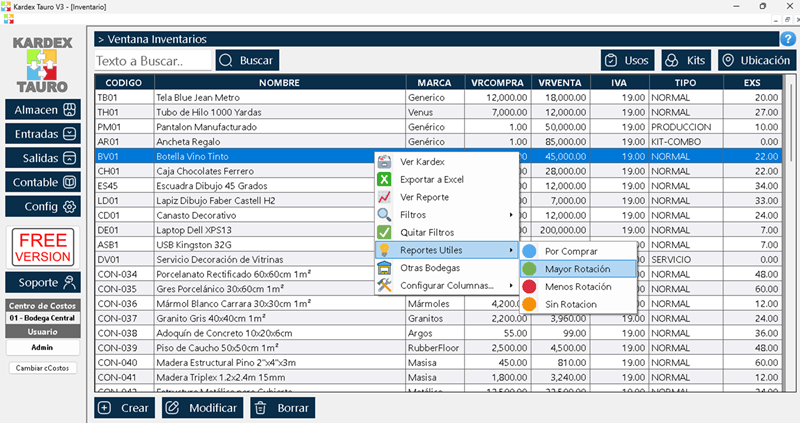
All of these measures work better when the business knows, with numbers, what is selling and what is left in the warehouse. The record of sales and stock is the foundation of every buying decision: keeping an orderly stock ledger in a tool like Kardex Tauro helps anticipate which products are running out before the stockout happens, because it shows the sales pace of each item and the available balance at all times.
With a reliable stock ledger, a calculated safety stock and a defined reorder point, a stockout stops being a surprise and becomes a rare, controllable event. Businesses that record every sale and every receipt —with Kardex Tauro or with any orderly method— know when a product is approaching its limit and buy before the shelf goes empty. The goal is not to carry everything in unlimited quantities: it is to have what customers ask for, at the moment they ask for it, without letting money sleep in the warehouse.