What Is Obsolete Inventory?
What Is Obsolete Inventory?
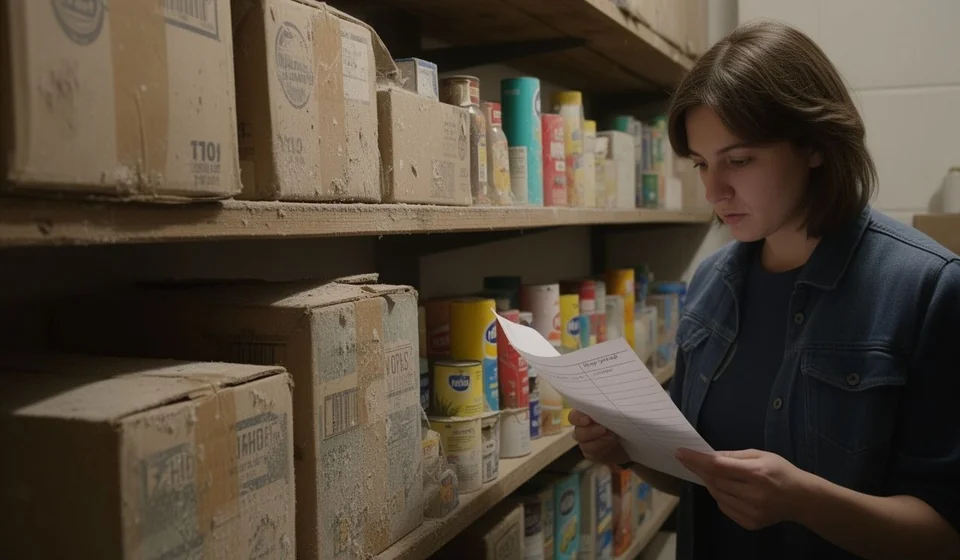
Almost every stockroom has an uncomfortable corner: shelves with dusty boxes, loose units that have sat in the same spot for months, and products the salesperson no longer even offers because they have learned that nobody asks for them. That corner is not just clutter. It is company money that stopped working, and the longer it stays there, the more expensive it becomes to keep. Knowing how to name that problem is the first step toward letting go of it, and that problem has a name: obsolete inventory.
Obsolete inventory is made up of the products a business can no longer sell under normal conditions because they were discontinued, because they went out of season or out of fashion, because a newer version replaced them, or simply because they have had no movement for so long that nobody buys them anymore. The merchandise can be in perfect condition, well packed and properly stored, and still be obsolete: what failed was not physical care, but its place in the market. For a small business, recognizing this difference is essential, because not everything in the stockroom is going to be sold, and treating products that no longer have a buyer as sellable inventory only delays the decision that has to be made.
It is worth distinguishing obsolete inventory from two similar situations. Slow-moving inventory can still be sold, even if it takes time: it has a market, just a small and spaced-out one. Obsolete inventory, by contrast, has lost its real demand, and offering it at a normal price is no longer a credible option. It is also not the same as shrinkage caused by damage or spoilage, which is another reason a product leaves the stock. An obsolete product is usually in good physical condition; what it lost was its commercial opportunity.
Why obsolete inventory appears
No business owner buys merchandise expecting it to sit still. Obsolete inventory is almost never born from bad intentions, but from decisions and circumstances that combine over time:
- Fashion and season changes: what sold very well last season can be left without buyers when the collection, color, or trend changes.
- Technology changes: a spare part, accessory, or device is discontinued when the new version appears, and customers stop asking for the previous model.
- Overbuying for discounts: buying large quantities to take advantage of a supplier offer is tempting, but if real demand does not follow, the surplus becomes stock that does not turn.
- Poor demand forecasting: estimating how much will be sold is hard, and when the estimate lacks realism, the mistake piles up in the stockroom.
- Supplier minimum orders: sometimes you have to buy more than needed for the order to be accepted, and the difference is surplus from day one.
- Manufacturer discontinuations: the supplier launches new packaging or stops making the item, and what remains on the shelf loses relevance without the business having decided anything.
What holding obsolete inventory costs
The most common mistake is thinking that a product sitting still "costs nothing" because it was already paid for. In reality, it is one of the most expensive assets a small business can hold, and its cost is paid every day:
- Tied-up money: the capital invested in that merchandise is not generating a return and cannot be used to buy what does sell. While the product appears in inventory as a value, that value is money that is not working.
- Space you pay for: the warehouse, the shelving, and the premises have a cost, and every obsolete box takes a spot that could hold merchandise that turns.
- Carrying costs: caring for, insuring, counting, and controlling products that will not be sold consumes staff time that could go to what actually generates sales.
- Growing deterioration: the more time passes, the more likely the product will be damaged, expire, or lose its packaging, and then the problem moves from obsolete to shrinkage.
- Missed opportunities: every dollar trapped in the stockroom is a purchase not made, a discount not taken, or a debt paid more slowly.
How to identify obsolete inventory
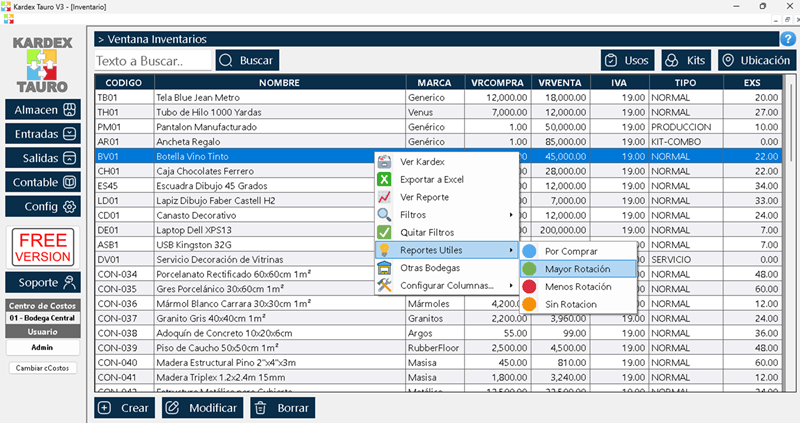
There is no need to guess or wait until the problem is visible to the naked eye. The practical way to detect it is to review the movement of each product: if an item has had no sales out in a long period, it is a candidate for obsolescence. This is where an organized inventory record makes the difference. Kardex Tauro records movements by product, so with one query you can see which product has had no sales out in recent months, how many units remain, and since when it has not moved; in addition, the shrinkage that is recorded discounts stock, so the balance reflects what is really left in the stockroom.
The month threshold depends on the type of business: what is normal for a hardware store is worrying for a clothing shop. This table offers a starting point:
| Type of product | How to detect it | What to do |
|---|---|---|
| Seasonal clothing and footwear | No sales out in 30 to 60 days once the season ends | Clear it with a discount before the next collection |
| Electronics and appliances | No sales out in 60 to 90 days or overtaken by a newer version | Negotiate an exchange with the supplier or run a focused sale |
| Groceries and products with expiry dates | No sales out in 90 days or an approaching expiry date | Special promotions, bundles, or removal before it becomes shrinkage |
| Hardware, spare parts, and technical items | No sales out in 120 to 180 days | Check whether they still fit equipment in use; liquidate the rest |
| Stationery, packaging, and generic material | No sales out for more than 180 days | Internal use or sell at cost to free up space |
The periodic review should be systematic: first check the movements of each product to build the list of candidates, then confirm in the stockroom that the physical balance matches and the merchandise is still in good condition, and only then decide the fate of each item. That way, the decision is made with data, not by impression.
How to liquidate obsolete inventory
Once a product has been declared obsolete, the question stops being "what price can I sell it at?" and becomes "how do I recover as much as possible and free up space?". The options, from greatest to least benefit, are usually:
- Discounted sales or bundles: a clear offer, tied to products that do sell, moves fast what was left sitting.
- Alternative channels: other shops, wholesalers, or secondary markets may buy complete lots at a lower price, but in cash and all at once.
- Supplier negotiations: in some cases it is possible to return part of the purchase or receive credit for discontinued merchandise, especially when the supplier was the one who changed the product.
- Employee or partner discounts: selling at or near cost to people you know recovers something and rewards those who support the business.
- Donation: when no sale is viable, donating frees the stockroom and avoids paying for space and care for a product with no market.
Whichever path is chosen, it is essential to record the outflow in the stock record so the balances stay up to date and the inventory value reflects reality. A product that is liquidated or written off cannot keep appearing in the balances as if it were available for sale.
How to keep it from coming back
The best news is that obsolete inventory can be prevented, and prevention starts long before the stockroom: in the way the business buys and records:
- Buy against real demand: purchasing decisions should be based on what actually goes out, not on intuition or the excitement of a discount.
- Smaller, more frequent purchases: restocking little and often leaves less capital exposed than one large risky order.
- Clear supplier agreements: negotiating returns or exchanges for slow products protects the business when manufacturers change their lines.
- Review movement monthly: setting aside time each month to see what has not moved allows action while the problem is still small.
- Forecast prudently: for fashion or seasonal products, it is better to run short and restock than to fill the stockroom with what nobody will ask for later.
In the end, all this care comes down to one idea: inventory exists to be sold, and the longer a product sits without moving, the more expensive it becomes for the business. Recording purchases, sales, and shrinkage in a system such as Kardex Tauro, reviewing with discipline which products do not turn, and deciding in time what to do with them turns the uncomfortable corner of the stockroom into a problem of the past instead of a permanent expense.