Inventory for a Cell Phone Store
Inventory for a Cell Phone Store
Running inventory for a cell phone store is nothing like running inventory for a stationery shop or a clothing store. In most businesses the units of a single product are interchangeable: if you have ten boxes of the same reference, any of them works for counting and for selling. In the mobile device business things are different. Every phone is a unique unit with its own serial number and its own IMEI, and that difference changes the way you must record incoming stock, sales and balances. Anyone who only adds up quantities ends up with an inventory that balances on paper but cannot tell which exact device is in the back room, which one was sold and which one is still in the display case.
This article offers a practical way to organize the control of a cell phone and accessory store: what must be recorded per unit, what can be recorded per batch, how to keep display units separate from warehouse stock, and how to handle warranties without turning them into a permanent headache. The core idea is simple: each type of product requires a different level of detail, and the trick is to apply neither too much nor too little.
Why every phone is a unique unit
A phone carries two details that identify it as an individual: the manufacturer's serial number and the IMEI, an international fifteen-digit code that identifies it to mobile networks. Even if you have fifty units of the same model, the same color and the same storage, each one has a different IMEI that is not repeated in any other device in the world. They are like fifty people wearing the same outfit: they look identical from a distance, but each one has its own history and its own identity.
That individuality forces a change of habit for the person in charge: when a device arrives, it should not be enough to increase a counter; the record should show which unit came in. The difference shows up in three everyday situations:
- Warranty: a customer complains about a failure and you must know exactly which unit was sold, from which batch it came and when.
- Loss or theft support: if a device goes missing in the store or during a transfer, the IMEI makes it possible to identify and report it without guessing.
- Batches with repeated failures: when a group of devices shows the same defect, the serial record makes it possible to locate every affected unit without checking the whole stock one by one.
This is not paperwork for its own sake. Inventory should answer real questions. If someone asks how many phones you have, any system can reply; if someone asks which exact unit you have, only a system that records serials can reply.
The device serial and the product code are not the same thing
One of the most common mistakes in this kind of store is confusing two identifiers that do different jobs. The product code identifies the reference: it groups all the units that are alike, such as the code for a model with its color and its capacity. The serial number, or IMEI, identifies the individual physical unit: it tells one specific device apart inside that group.
Put it in context: a store receives fifty units of the model Aurora 128 GB in black. All fifty share the same product code, because they are the same reference sold at the same price. But each one has its own IMEI, because for warranty, insurance and sales purposes it matters which of the fifty went out. Inventory needs both levels: the code to group and summarize, and the serial to single out a device when necessary.
| Type of product | Special control | Example |
|---|---|---|
| Phone or main device | Serial or IMEI per unit | Model Aurora 128 GB, each device with its fifteen-digit IMEI |
| Fast-moving accessory | Product code and incoming batch | Universal case that comes in and goes out by the dozen |
| Display unit | Own serial, flagged as display | The unit in the showcase, opened and used for demonstration |
| Device received for warranty or service | Serial and origin: own stock or customer's | A customer's phone received for repair |
The table sums up the golden rule: the higher the unit value and the more individual each unit is, the more sense serial control makes. A case, a screen protector or a cable are indistinguishable units that do not need their own identity; the product code and the batch are enough. A high-value device with years of useful life demands individual records, because its history begins before the sale and continues after it.
Display units: an inventory separate from the back room
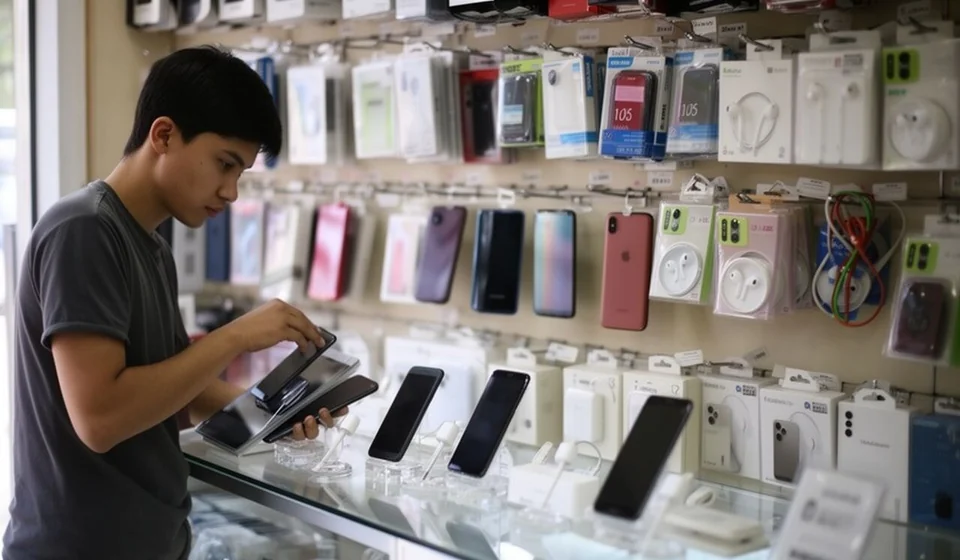
Every cell phone store shows powered-on devices in its showcase. That habit, necessary for selling, is a classic source of inventory differences when it is not managed. The display unit is touched every day, test apps are installed on it, it loses its original packaging, it can get scratched and its battery wears out from constant use. It is not identical to the sealed unit in the back room, even though it shares the same code and the same model.
If display units are mixed with warehouse stock in a single balance, two things happen: inventory shows items that are not actually sellable in their original condition, and it is easy to make a mistake and hand a customer the demo unit believing it is new. The practical solution has three steps:
- Record every display unit by its serial, just like any other device, but marked with its display status.
- Keep the showcase and the back room as separate locations in the records, so a physical count can be compared with the record for each one.
- When the demo unit is sold, something frequent and legitimate, take it out by its serial as a normal sale and move a new device from the back room to the showcase, also with its serial and its movement recorded.
With this routine the showcase is never a black hole in the inventory: every unit on display has an owner, the store; an identity, its serial; and a location, the showcase. Any physical count must match the records.
Accessories: a different rhythm, a different rule
Headphones, chargers, cases, screen protectors, memory cards and cables usually make up most of the references in the store and, at the same time, the lowest unit value. Recording each one by serial would be slow work with no real benefit: a dozen identical chargers does not need to know which of the twelve was sold. For this family of products the right control is by product code and incoming batch, with frequent physical counts, because these items are small, easy to steal and easy to confuse between similar brands and models.
It is also worth checking the packaging: a damaged or returned accessory that goes back on the shelf without being recorded creates the same kind of difference as a lost device, even if it weighs less in money. The discipline of recording returns, shrinkage and warranty exits for accessories matters as much as the fine control of devices, only with less ceremony.
Warranties: inventory keeps talking after the sale
In mobile phones the warranty is tied to the individual device, almost always by IMEI. That is why a sale should not close without recording which serial went out, to which customer and on which date: when the customer comes back with a claim, those three facts answer everything. Without them the store ends up defending a warranty blindly, unable even to confirm that the device was bought there.
There is also a second front: devices that come in for warranty service or repair. A customer's phone left at the workshop is not store inventory; it is third-party goods in custody. If those devices are mixed with your own stock, counts get distorted and the inventory shows devices you cannot sell. The recommendation is to always separate three groups: your own devices available for sale, your own devices on display, and customer devices in service, each identified by its serial and its origin.
Putting it into practice: serials per unit and batches
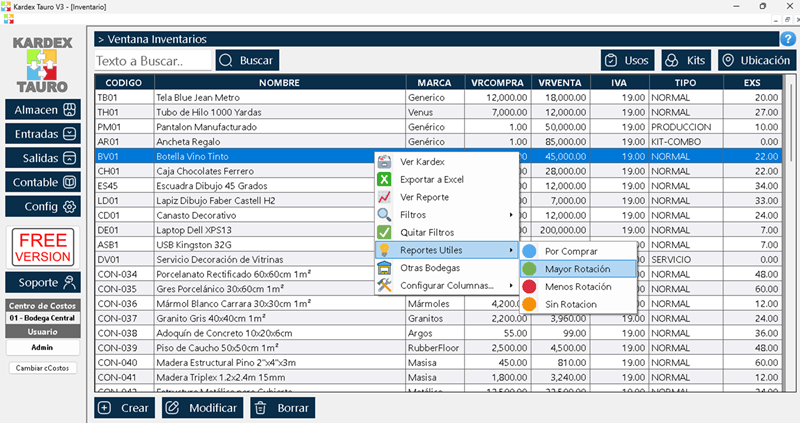
The good news is that this level of control does not require manual spreadsheets or endless paperwork. Kardex Tauro lets you record serials per unit: when device stock arrives, the Add/View Serials window opens and you capture the serial or IMEI of every device one by one. If the product does not need individual tracking, it supports grouping by batch, and when control uses serials the unit count is automatic: entering fifteen serials means fifteen units received, with no quantities typed by hand. That eliminates the classic error of writing a quantity different from the devices that actually arrived.
With that foundation, the store's daily routine comes down to four moments:
- Receiving: every device arrives with its serial; every group of accessories arrives with its product code and its batch.
- Selling: the device goes out recording the exact serial of the unit delivered to the customer.
- Moving: transferring a device from the back room to the showcase is recorded with its serial and its new location.
- Counting: the system counts serialized units automatically, and the physical count of showcase and back room must match that record.
All of this logic, serials per unit, batch grouping and automatic counting, is built into Kardex Tauro so that a store with few people can manage professional-level control without depending on a specialist. In the end, the inventory of a cell phone store is not an exercise in counting boxes: it is the business's memory of every device that arrives, is displayed, is sold and is backed by warranty. Keeping that memory up to date is what separates a store that controls its operation from one that simply trusts its luck.