Inventory and Electronic Invoicing in Colombia
Inventory and Electronic Invoicing in Colombia
In a business that sells merchandise, the word selling hides two movements that happen almost at the same time: delivering the product to the customer and keeping a record of the operation. In Colombia, that record is now kept, for most businesses, in the electronic invoice, the digital document administered by the National Directorate of Taxes and Customs (DIAN) that has become the usual way of reporting sales to the State.
Electronic invoicing is not an isolated procedure that lives only in the accounting department. Every invoice describes products, quantities and prices, and behind every line there is merchandise that leaves the warehouse or the store. That is why, for a small business with up to fifty employees, understanding the relationship between the invoice and the inventory is not a matter for experts: it is the way to know, every day, how much was sold, how much is left and whether the records match reality.
This article explains what electronic invoicing is, how it connects with the stock ledger or stock record, what it demands in practice, and which steps a small company can follow so that invoices and stock move at the same pace.
What electronic invoicing is and the role of the DIAN
In general terms, the electronic invoice is a document with the same legal validity as the traditional invoice, but one that is created, transmitted and kept through digital means. It is not a PDF attached to an email or a scanned image: it is a structured file with clearly defined data that travels from the seller to the DIAN for validation and also reaches the buyer as the support of the operation.
In Colombia, the DIAN is the entity that administers this mechanism. It authorizes the businesses that must invoice, validates the documents it receives and keeps the record of each taxpayer's operations. The issuer does not act alone: it uses an authorized software or technology provider, generates the invoice with the business and customer data, and sends it for review before it is considered issued. Once the document passes validation, it stays in the tax authority's records, and the business keeps its representation for accounting and tax purposes.
The important part for anyone who manages inventory is what the invoice must contain. Speaking in general terms as well, the DIAN expects to find in each document the identification of the seller and the buyer, the description of the good, the quantity sold, the unit value, the applicable taxes and the total of the operation. That list of data turns the invoice into a mirror of the sale: if the invoice says ten units of a product at a certain price, that is exactly what the business is declaring that left the store.
Every invoice is an output of merchandise
This is where the bridge between two worlds that are often managed separately appears: invoicing and inventory. A sales invoice is not just the document that justifies a payment. When it describes ten units of a product, it means that ten physical units stopped being available: they were delivered to the customer, shipped, or committed for a future delivery. In the language of the stock ledger, that is called an inventory output.
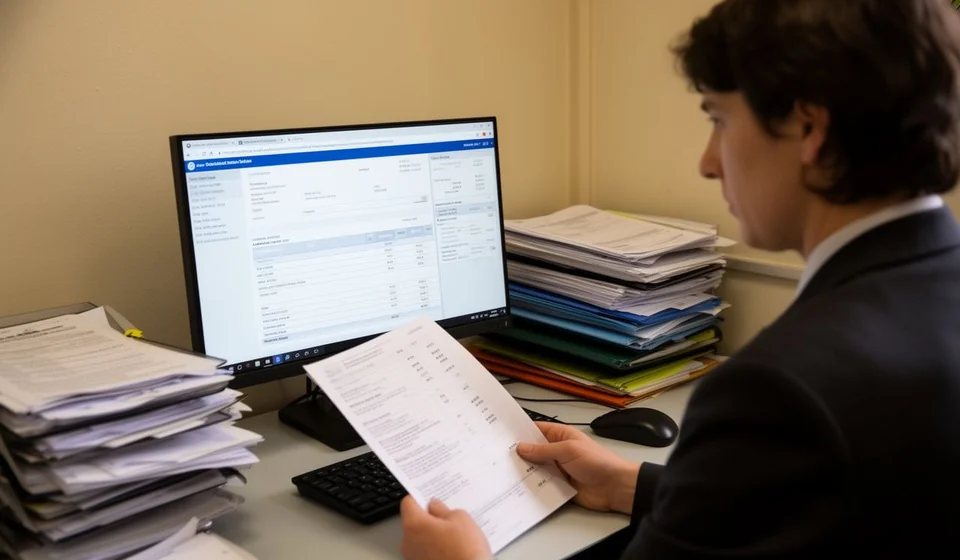
If the invoice is issued but the output is not recorded, the effect soon becomes noticeable. The stock book will keep saying that there are one hundred units when in reality only ninety remain. The next sale may be offered with the wrong balance, the daily closing will not match what was invoiced and, at some point, someone will have to explain a difference that appears in no document. With electronic invoicing the risk is greater, because the invoice is validated by the DIAN: what was declared as sold must be supported by the real merchandise that actually left.
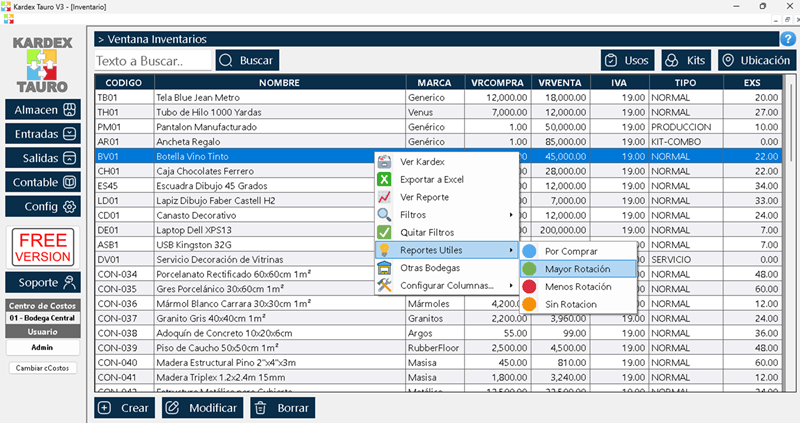
The practical way to avoid that gap is to record the output at the same moment the invoice is issued. A system such as Kardex Tauro invoices the sale and subtracts the stock automatically in one step: when the invoice is confirmed, the merchandise leaves the stock ledger without parallel spreadsheets or double entries, and the balance you check after the operation already reflects the sale that was just made.
What electronic invoicing asks from the inventory
For the invoice and the stock ledger to match, the inventory must be able to answer, at the moment of selling, the questions that the invoice requires. The following table summarizes the most common requirements and what each one means for stock management:
| What the invoice requires | How it affects the inventory | What to do in the SME |
|---|---|---|
| Description or identification of the product | The stock ledger and the invoice must call the same item by the same name or code | Standardize names and codes in a single product catalog |
| Quantity sold | That quantity must leave the stock at the moment of the sale | Subtract the merchandise on the same day, not at the end of the month |
| Unit value and total | The price is linked to the inventory valuation and to the cost of goods sold | Keep prices and costs updated for each product |
| Applicable taxes | The real margin of each sale depends on the correct rate of the item | Configure the taxes properly before invoicing |
| Date and number of the operation | They allow tracking every movement and reconciling what was invoiced with what was shipped | Review the daily cutoff of invoices against the stock ledger |
Why it pays to keep the inventory up to date
If electronic invoicing forces every sale to be recorded accurately, an up-to-date inventory is what makes that accuracy real. These are the most direct benefits:
- You do not sell what you do not have. With a reliable balance, the seller knows before confirming whether the units are available, and avoids invoices that later have to be cancelled because the merchandise was not enough.
- Fewer credit notes and returns. Most invoices cancelled for lack of stock are born from an outdated stock ledger; with real balances, that almost disappears.
- Faster closings. At the end of the day, what was invoiced and what was shipped should be the same number; if both are recorded together, the reconciliation takes minutes, not hours.
- Purchases based on data. Knowing what was sold and what remains makes it possible to replenish what really moves and avoid filling the warehouse with idle products.
- Better customer service. Someone who checks the stock in the stock ledger gives immediate answers and keeps the promises it makes.
- Consistent reports. Sales, costs and taxes come from the same information, and that shows in the tax return and in the reports to the accountant.
Keeping the inventory up to date does not mean doing physical counts every week. It means that every input and every output is recorded when it happens, so that the balance in the system is a real picture of the business and not an approximation.
How to integrate invoicing and inventory in an SME
Integrating both processes does not require a large infrastructure or a big accounting department. For a small company, the usual path is the following:
- Define the product catalog. Every item must have a unique name and code, with its unit of measure, its price and its tax. If the invoice and the stock ledger use the same catalog, the descriptions always match.
- Record the inputs first. Purchases, receiving documents and customer returns must enter the stock ledger before any output is invoiced; invoicing merchandise that does not yet appear in the system is the classic recipe for disorder.
- Invoice and subtract at the same moment. The sale is recorded, the invoice is generated with the real product data and the stock is subtracted immediately. There is no need to wait until the end of the day to write down what left.
- Reconcile at closing. Every working day, the invoiced total is compared with the stock ledger outputs; if both match, the process works.
- Count physically in cycles. A periodic count of the best-selling products, even once a month, detects theft, damage or recording errors in time, things no system can prevent on its own.
- Review the reports. Sales by product, minimum stock and turnover show whether the operation is healthy and whether next month's purchases have a real basis.
For an SME, the key is that the record is part of the sale and not a separate job. Tools designed for small businesses, such as Kardex Tauro, make it possible to invoice the sales movement and keep the stock ledger updated in the same step, so that the person who invoices does not have to correct stock by hand later.
Electronic invoicing is here to stay, and in Colombia it is already part of the daily life of most businesses. When it is understood for what it is —the record of a real output of merchandise— it stops being seen as paperwork and becomes a control tool: it forces you to know what is sold, at what price and in what quantity, and that is only achieved with an inventory that is updated at the same pace as sales.