Inventory for a pet store: food, accessories and expiry dates
Inventory for a pet store: food, accessories and expiry dates
A pet store looks like a simple business: shelves with bags of dry food, a display of accessories and a couple of fish tanks in the corner. But anyone who manages a pet shop's inventory quickly discovers that it runs two very different businesses under one roof. On one side are food and treats, products with an expiry date that spoil, sit and become a loss if nobody watches them. On the other side are accessories: toys, beds, leashes and fish tanks that never expire, but can sleep for months in the storeroom with your money invested and not moving an inch.
The most common mistake is treating the whole assortment with the same rule. You buy the large bag because "it goes further per pound", you order toys in bulk because "they always sell", and at the end of the month two surprises appear: expired food on the shelf and a box of collars nobody has touched in three months. Neither is a sales problem; both are an inventory problem. This article splits a pet store assortment into groups with their own rules and shows which control each one needs so that money does not fall asleep or turn into shrinkage.
Two worlds inside one shop
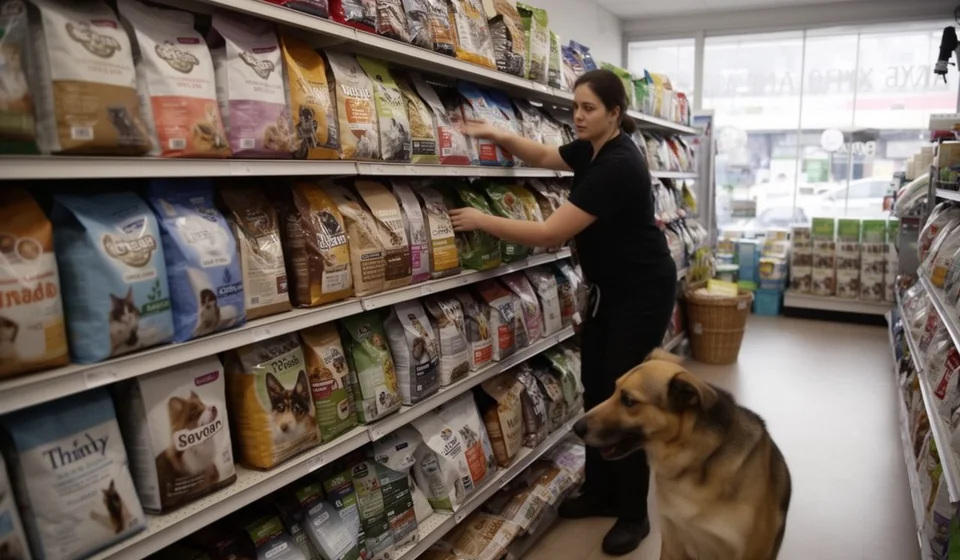
A pet shop assortment splits into two large families that demand opposite logics. The first is date-sensitive products: dry and wet food, cans, snacks, treats, supplements and, if the shop sells them, over-the-counter medications such as dewormers. These products have a real expiry date and a customer who checks it: people buying food for their dog look at the date before they pay, and rightly so.
The second family is accessories: all kinds of toys, beds, leashes, collars, litter boxes, fish tanks and aquarium gear. None of them expires, but all of them carry a very high opportunity cost. A toy that has spent six months in the storeroom is not "stored": it is freezing the money you paid for it and taking up space you could use for merchandise that actually turns. Between these two extremes there are also in-between products such as cat litter, which does not expire but weighs a lot and takes up room, or foods with shorter dates, such as wet cans and treats sold by the unit.
Food: the group where expiry dates rule
Dry pet food has a long shelf life, but not an infinite one. An open or badly stored bag loses freshness, attracts pests and can go rancid; one that stays sealed past its date becomes a product you cannot sell. Customers at a pet store are especially sensitive to this because they are feeding a family animal: a bag close to expiring or showing signs of poor handling gets returned, gets complained about and, if it happens often, the customer moves to the competition.
That is why the golden rule for food is control by expiry date, known as FEFO: first to expire, first out. In practice it means receiving with the date marked, putting new product behind older product on the shelf and displaying what expires first at the front, so the customer takes it before it runs out. It also means buying against real turnover instead of price per pound: the giant bag may be cheaper per gram, but if your shop takes four months to sell it and it expires in five, the saving turns into a loss. A medium bag that turns in three weeks costs more per pound and much less in practice.
Wet cans, snacks and treats deserve extra attention because they combine short dates with single-unit purchases. Here the right move is small, frequent orders, checking the date on every delivery and rejecting anything that arrives with little margin. If a supplier delivers product expiring in less than two months, that margin is not enough for you to turn it calmly, and the discount they gave you comes back to them as shrinkage.
Accessories: nothing expires and everything stays
On the other side is the accessory: it does not expire, it does not spoil and, precisely because of that, it deceives you. The temptation is to buy in bulk "because it does not spoil", and that is exactly where the problem builds. A batch of beds ordered by the dozen takes half of the storeroom, ties up capital and leaves you with the model nobody wants by the time the next season arrives. Pet accessories change fashion fast: the toy that was a hit in January is on sale by March.
The right strategy is to treat accessories as a slow investment and buy them against orders, against the season or against proven turnover. Before restocking a collar or a leash, check how many units you sold in the last three months: if your current balance covers two more months of sales at the current pace, you do not need to buy anything today, no matter what volume discount the supplier offers. A quantity discount only pays when turnover backs it up; otherwise you are paying "less" for an expensive product that sits still.
Fish tanks, aquariums and large litter boxes are the extreme case: bulky, expensive, slow-selling products that also take away display space. For that line, ordering against a customer's order or against a reservation is the healthy norm: the customer waits a few days and you do not freeze capital in a tank that turns twice a year.
Assortment classification and strategy by group
To keep control practical, split the assortment into groups with their own rules. This table summarizes the four typical groups in a pet shop, their main risk and the strategy that applies to each:
| Assortment group | Examples | Main risk | Control strategy |
|---|---|---|---|
| Food with expiry dates | Bags of dry food, wet cans, snacks and treats | Expiring on the shelf and becoming shrinkage | FEFO control by date: display what expires first, buy against real turnover, return to the supplier anything close to expiry |
| Treats and supplements | Single-serve snacks, bones, vitamins | Irregular turnover and short dates | Small, frequent orders; check the date on every delivery |
| Over-the-counter medications (if you sell them) | Dewormers, drops, hygiene products | Lots, dates and temperature handling | Lot-level records, controlled temperature and frequent expiry checks |
| Accessories without expiry | Toys, beds, leashes, fish tanks, litter boxes | Impulse buying and slow turnover that fills the storeroom | Buy against orders or by season, watch turnover and never restock without sales |
The key takeaway from the table is that each group needs a different tool. Food demands dates; accessories demand turnover; medications demand lots and temperature. Pretending that one generic count solves all four is the most common cause of shrinkage and idle capital in a pet store.
Over-the-counter medications: lots, dates and temperature
If the store sells dewormers, ear drops, skin products or other over-the-counter medications, stricter rules come into play. These products are managed by lot, with an expiry date printed on them and traceability: if something goes wrong or the lab issues a recall, you need to know which lot each unit you sold belongs to. On top of that, many lose effectiveness with heat: keeping them near a sunny window or in an unventilated storage area can damage the product even when the date is still valid.
For this group, record the lot and the date on receipt, keep the storage area temperature under control and check dates more often than in the rest of the assortment, because mistakes cost more: an expired medication is not only shrinkage, it is a risk for the animal and a trust problem with the customer. When expiry approaches, negotiate the return with the supplier before you are stuck with the product.
The classic mistake: "pet food does not expire"
The most dangerous sentence in a pet store is "pet food does not expire". It does expire, and customers know it: many owners check the date on the bag in the store before buying, and some compare brands to see which one has the furthest date. If your shelf holds a bag expiring in two months next to one expiring in eight, experienced customers notice the difference and the old bag stays with you.
That belief also explains why expired product always appears "out of nowhere": since nobody expects it, nobody looks for it. The monthly expired count, painful as it is, is the only way to know how much real shrinkage you are generating and in which lines. A store that records three expired bags a month is buying badly, displaying badly or accepting product with too little margin; the count exposes it and lets you fix the cause instead of repeating the mistake.
Routines that actually work in a pet shop
Controlling a pet shop does not need to be complicated; it needs to be done with discipline and at the right points. These are the routines that make the difference:
- Mark the expiry date on every package when you receive it, even if it is already printed, so it stands out during counts and on the shelf.
- Display FEFO: what expires first goes to the front and is restocked from the back, both on the shelf and in the storeroom.
- Run a monthly count of expired items by line and record the shrinkage, so you know how much you lose and on which product.
- Record sample consumption: the bag or can opened for the store dog or for tasting is a real inventory outflow, not an "invisible expense".
- Check dates on every delivery and return or negotiate with the supplier anything that arrives with too little margin.
- Buy accessories against orders or against real turnover, not against volume discounts.
Sample consumption deserves attention because it is the inventory outflow almost nobody records. The bag opened for the store dog, the treat offered so a customer's animal can try it and the snack used for training in the shop are sales that never happened; if they are not recorded as outflows, the physical count will never match and the system will show stock that does not exist.
Group control, also in the system
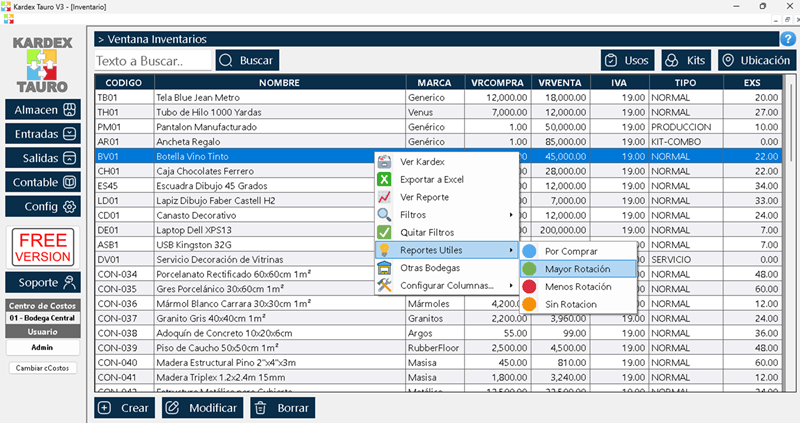
All of this is easier to sustain when inventory runs on software that lets you record dates and movements per product, instead of a spreadsheet that only adds up units. With Kardex Tauro you can keep the card record of each reference with its inflows and outflows, review which product has gone the longest without moving and keep the count up to date to know how much you have of each group. The tool helps, but the decision to manage food by date and accessories by turnover is yours, and it is what separates a profitable pet store from a warehouse of expired product and idle capital.
Next time you place an order, first ask yourself which group each line belongs to. If it expires, buy it against real turnover and display what expires first. If it does not expire, buy it against orders and against the season. With that simple rule, shrinkage drops, the storeroom empties out and your pet shop inventory goes back to being what it should be: working money, not product waiting.