Inventory for farm supply stores and agricultural input shops
Inventory for farm supply stores and agricultural input shops
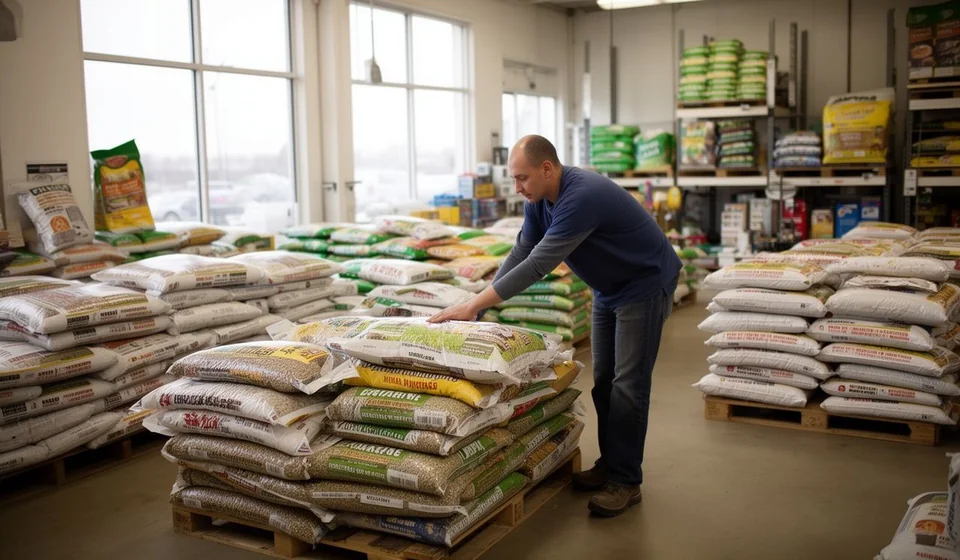
A farm supply store looks, at first glance, like any other shop, only with heavier products. But a quick walk down the aisles shows it is something else: bags of feed that expire in weeks, leftover seed bags from last season that nobody wants to buy, bottles of agrochemicals that in many countries can only be sold when the buyer's information is recorded, vaccines that require a refrigerator, and an opened sack of feed that is sold by the kilo rather than by the unit.
That mix turns inventory control into a different problem than in other businesses. It is not enough to know how many units sit in the back room: you need to know which lot they belong to, when they expire, how many kilos remain in each opened sack, and who bought each regulated product. In this article we go group by group through the inventory of an agricultural supply shop: what to track in feed, seeds, agrochemicals, veterinary products, farm hardware and pet food, plus the practical rules that keep you from holding expired stock, running out at the wrong time or losing money to shrinkage nobody records.
What makes a farm supply inventory different
Almost everything an agricultural input store sells fits into one of these five particularities, and most stores combine all of them:
- Products with expiry dates. Feed expires in weeks or a few months; seeds lose viability over time; veterinary medicines and agrochemicals also carry expiration dates. Stock that does not rotate becomes a loss.
- Regulated products. In many countries, agrochemicals and veterinary products are sold under special conditions: the buyer presents a prescription or registration, their details are recorded, or a per-lot sales record is kept. That information is part of the inventory too.
- Fractional sales. Customers do not always take the whole sack: they ask for two kilos of feed or half a kilo of seed. An opened sack stops being one item and becomes a quantity that is discounted by weight.
- Seasonality. Planting season drives seed and fertilizer sales on fairly predictable dates. Buying late means running out at the peak; buying too much means carrying the surplus through the whole low season.
- Cold chain. If the store sells vaccines, there is a product that is ruined if the refrigerator fails overnight, and that risk is managed from the inventory as well.
The practical consequence is that a farm supply stock ledger needs more data than an ordinary shop's: lot number, expiry date, a purchase unit that differs from the sales unit and, for certain products, a record of who bought them.
Product groups and how to handle them, at a glance
Before going into each rule, it helps to have the full map. This table summarizes what to watch in each group of a typical farm supply store:
| Product group | Typical examples | What to watch | Recommended handling |
|---|---|---|---|
| Feed and balanced animal feed | Feed for poultry, pigs, cattle and farm animals | Short expiry, opened sacks, shrinkage | FEFO rotation, check dates on receipt, ship the nearest-expiring lot first |
| Seeds | Corn, pasture grass, vegetables, forage seed | Viability, moisture, storage pests | Rotate by harvest date, dry ventilated storage, kept apart from agrochemicals |
| Agrochemicals | Fertilizers, herbicides, insecticides, fungicides | Expiry, lot, regulated sales | FEFO, record lot and buyer on each sale, store separately in a ventilated area |
| Veterinary products | Vaccines, dewormers, antibiotics, vitamins | Expiry, cold chain for vaccines, regulated sales | Refrigerator with temperature control, strict FEFO, sales record, return expiring stock to the distributor |
| Pet food | Dog and cat feed, pouches, treats, cat litter | Rotation by date, many pack sizes | FEFO per pack size, tidy display, count by package |
| Farm hardware and tools | Brush cutters, hoses, wire, drinkers, feeders, gloves | Many slow-moving references | Cyclic inventory by family, reorder against minimum stock levels |
Two groups concentrate the most expensive losses and deserve extra care: those that expire, like feed, seeds and veterinary items, and those that are regulated, like agrochemicals and veterinary products. We look at them separately.
Lots and expiry dates: the FEFO rule
The FEFO rule (first expiry, first out) is simple to explain: what expires first leaves the store first. It sounds obvious, but in practice warehouses fill from the front: the new order goes in front, the old lot stays behind, and nobody looks at it again until it expires.
Applying it well takes three actions. First, record the lot and expiry date of every receipt, without exceptions, because the rule does not work if you do not know what you have. Second, arrange the shelf by expiry date, with the lot closest to expiring at the front, so the person at the counter ships it without having to think. Third, review soon-to-expire products with an alert weeks in advance, not on the day they expire.
That lead time is what makes negotiation possible: many distributors accept returns or exchanges of unexpired products when they are notified in time. If the alert comes late, the lot becomes a loss or a forced discount. The same applies to feed, which expires quickly, and to seeds, where the data that matters is viability: an old seed germinates less, and the customer finds out a month later, when a return is no longer an option.
The opened sack and selling by the kilo
A customer asks for two kilos of layer feed. The clerk opens a forty-kilo sack, weighs out two and closes it. That opened sack is no longer an item: it is a fraction that is discounted by weight over several days, with its own lot and its own expiry date.
This is where the typical farm supply store starts to come up short. If several sacks of the same product are open, finish one before opening the next, or label every opened sack with its lot and remaining kilos so lots are not mixed by accident. At the end of the day, what remains in each opened sack should match what the record says, and handling shrinkage (dust at the bottom, spills, moisture) must be recorded as a real movement. If shrinkage is not recorded, the physical count will never match, and you will not know whether product is missing or was simply lost in daily handling.
A numeric example makes this clearer. This is the movement of a feed bought in forty-kilo sacks and sold by the kilo:
| Date | Movement | In (kg) | Out (kg) | Balance (kg) | Lot note |
|---|---|---|---|---|---|
| 01 Mar | Purchase | 800 | — | 800 | 20 sacks, lot C-1, expires 30 May |
| 04 Mar | Sale | — | 60 | 740 | One and a half sacks |
| 07 Mar | Sale | — | 18 | 722 | One sack left open with 22 kg |
| 10 Mar | Shrinkage | — | 0.5 | 721.5 | Dust and leftovers from the opened sack |
| 12 Mar | Purchase | 600 | — | 1,321.5 | 15 sacks, lot C-2, expires 15 Jun |
| 15 Mar | Sale | — | 40 | 1,281.5 | Shipped from lot C-1 under FEFO |
Three details of this example apply to any farm supply store. One: the purchase is made in sacks, but the record is kept in kilos, the unit actually sold, so the balance always means the same thing. Two: shrinkage appears as its own movement, which is why the final balance matches what is physically in the back room. Three: when lot C-2 arrives, shipments keep coming out of C-1, which expires first; new stock never hides old stock.
Planting season does not wait
In a farm supply store, demand is not steady through the year: planting season arrives and in two weeks you sell what you normally sell in two months. The classic mistake is buying when customers start asking, because by then the distributor is already shipping orders for the whole region and delivery times stretch.
- Build your calendar: the typical planting dates for your area and the seed and fertilizer sales peaks of previous years. If you keep sales history, use it.
- Negotiate large seasonal orders in advance, with an agreed delivery date instead of "whatever is available".
- Receive and check lots and expiry dates with margin, before the peak, not during it.
- Keep seasonal stock separate from regular stock so planting products do not mix with daily rotation items.
- Decide in advance what you will do with the surplus if the season is short: an agreed return with the supplier or a clearance discount at the end.
The same logic applies to feed if your region has summer or winter peaks, and to farm animal feed when breeding cycles begin. Seasonal inventory is planned, not improvised.
Regulated products: recording the sale is inventory too
In many countries, agrochemicals and veterinary products are not sold like any other item: the buyer presents the corresponding prescription or registration, leaves their details, or the sale is recorded with the lot shipped. The exact rules change from country to country and sometimes from region to region, so the first step is to find out which ones apply to your store and set up the record they require: a paper notebook is enough to start, but a system where each sale stays linked to its lot makes the job much faster.
That record is not just paperwork: it is traceability. If a distributor reports a problem with a lot, being able to answer "we sold that lot to these customers, on these dates" is the difference between a job of minutes and an unsolved problem. That is why the sales document should be linked to the exact lot that left the back room, not just to the product reference.
The other side of regulated products is expiry. An agrochemical can last years on the shelf, but an old lot with damaged packaging or a close date loses value and breeds distrust. Return to the distributor whatever cannot be sold within the agreed window, and do not let the expiry happen in your own warehouse.
The cold chain when you handle vaccines
Vaccines deserve their own section because their inventory carries a risk you cannot see: if the refrigerator fails overnight, the product may be damaged without any visible sign. The basic rules are few and admit no exceptions:
- A dedicated refrigerator with a visible thermometer, checking the temperature at least twice a day and always after a power cut.
- Keep the minimum stock that still allows rotation: less product in the refrigerator means less value exposed to a failure.
- Respect the temperature range indicated by the manufacturer and the transit time from the moment the product leaves your refrigerator until it reaches the customer's.
- Receive the order and put it away immediately, never leave it on the counter while you serve other customers.
- If the temperature leaves the range, isolate the product, notify the distributor and do not sell it until its condition is confirmed.
Vaccines also get the strictest FEFO in the business, because an expired lot of vaccine is not discounted: it is discarded.
Keeping control day to day
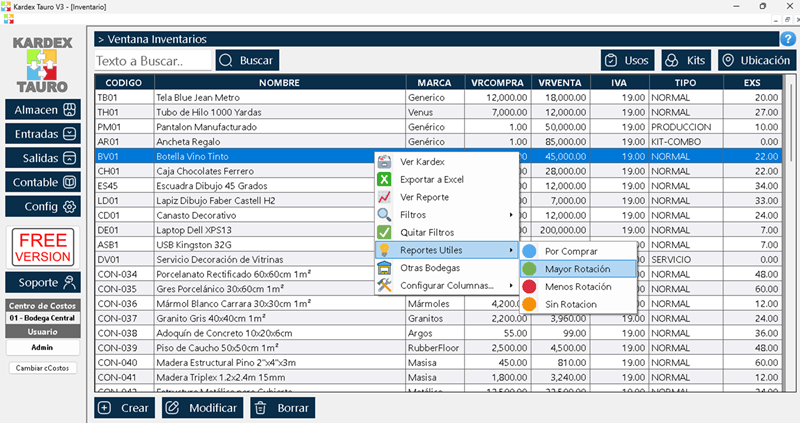
The notebook works while the store is small and memory is enough, but it falls short the moment you have to cross three facts at once: how much remains of a lot, when it expires and how many kilos were sold from the opened sack. A spreadsheet improves the math, but it depends on someone feeding it every day and it does not warn on its own. When the volume no longer fits in the notebook, it is worth evaluating an inventory program; options like Kardex Tauro are built for businesses that live on detail, and the key is that whichever one you choose handles lots, expiry dates and sales units different from purchase units, because that is, no more and no less, the inventory of a farm supply store.
No system stops a sack from expiring or a season from being short. What good control does is warn you in time: with days left to return the lot, with weeks left to order the seed, and with an exact record of who bought what. The inventory of an agricultural input shop is won in the details, the lot, the gram, the date, and lost when those details depend on memory. Tools like Kardex Tauro exist so the record does not depend on it: the discipline comes from the business, the data comes from the system.