Contract manufacturing: how to control the raw material you send out
Contract manufacturing: how to control the raw material you send out
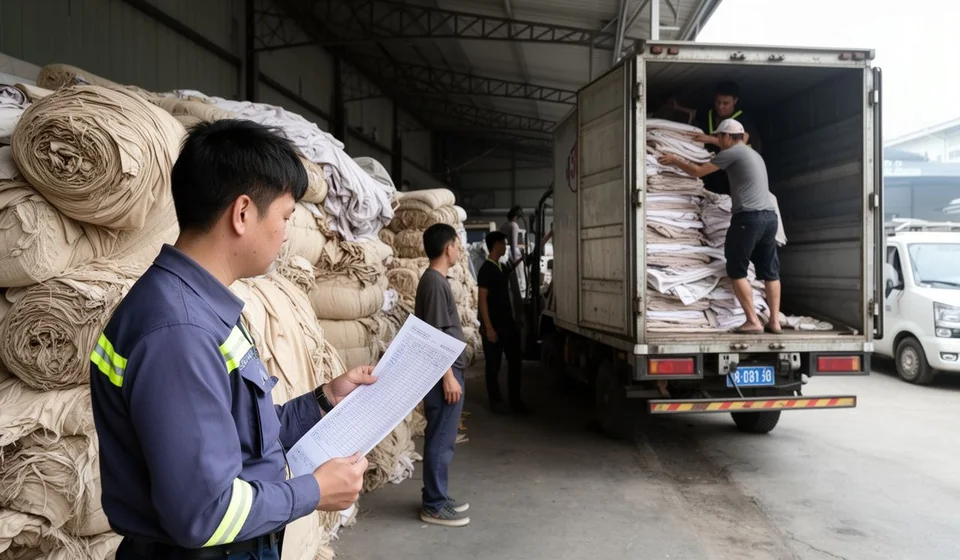
If you manufacture, you know the scene: raw material arrives, sits in storage, and part of it leaves toward an outside workshop to become finished goods. You buy the fabric and another company sews the shirts. You buy the steel sheet and a contract shop cuts, bends, and paints it. You buy the green coffee and another plant roasts and packs it under your brand. Working with contractors is a legitimate, time-tested practice: it lets you grow without buying a machine for every step or hiring staff who would only work one process. A specialist shop often delivers better quality and lower cost than doing everything in-house.
The problem is not outsourcing. The problem is outsourcing without control. When raw material leaves your warehouse and spends days or weeks in someone else's hands, you lose sight of it. And what is not measured tends to disappear: a roll that "ran out" at the shop, surplus that never came back, scrap that nobody declared, a discrepancy nobody claimed because there was no written number to claim against.
This article explains how to control the raw material you send out for transformation, using a five-step process any small manufacturer can apply with a spreadsheet or, better, an inventory system. At the end you will find a complete numerical example with the reconciliation table, so you can see exactly how the quantities should balance when the material returns.
The classic risk: material goes out and never comes back
Let us review the typical case. A clothing manufacturer sends 500 meters of fabric to a sewing contractor. Three weeks later, the shop returns 380 shirts. Nobody recorded how much fabric was consumed, how much was lost, or how much should have been left over. Now ask yourself: how much fabric did the shop actually use for those shirts? Were there usable remnants? Did they return them, sell them, or throw them away? Without an issue record, the manufacturer has no way to answer. And without an answer, any discrepancy stays silent.
When there are no numbers, the shop says "everything was consumed" and the manufacturer has nothing to push back with. The loss becomes an invisible cost mixed into overhead. You end up paying that invisible cost twice over: it shrinks your margin, or it inflates your selling price and makes you less competitive. Over time, the small shortages from every order accumulate into a steady leak of working capital.
The three concrete risks of uncontrolled contract manufacturing are:
- Nobody knows how much material was actually consumed, because the issue was never recorded and no expected yield was applied.
- Nobody knows how much material was lost, because nobody requires the shop to declare scrap or return leftovers.
- Discrepancies are never claimed, because without recorded quantities there is no basis for a claim.
The answer is not to distrust your contractor. It is to document: every shipment gets an order number, every return gets a recorded receipt, and every discrepancy gets an owner. When the process is written down, the relationship improves because both parties know exactly what is expected of the other, and nobody depends on memory.
First, understand what kind of movement an outsourcing issue really is
A common mistake is to treat the material sent to a contractor as a sale or as internal consumption. It is neither. You did not sell the fabric: it is still yours, it is just physically in another warehouse. You did not consume it either: the finished goods you will sell do not exist yet. It is an intermediate state that inventory and accounting people call "in process at a third party" or "outside processing."
Why does the distinction matter? Because it affects your numbers. If you record the issue as a sale, your cost of goods sold jumps with no revenue to back it up, and your profit looks distorted. If you simply ignore the issue, your stock says you have 500 meters of fabric that are actually at the shop, and any purchase or sale decision based on that figure goes wrong. Material sitting at a contractor is not available to sell or to produce: it is committed to an order, and your inventory should say so.
Step 1: put the work order in writing
Everything starts before the truck leaves your warehouse. The work order is the document that defines the agreement between you and the shop, and it should include at least the following:
- Which material goes out and in what quantity, with its unit of measure: meters, kilos, liters, or pieces.
- Which finished product must come back and in what quantity: for example, 380 shirts.
- The expected yield, meaning how much material each unit of product requires: for example, 0.75 meters of fabric per shirt.
- The committed delivery date and, if the cycle is long, the progress reports you agreed on.
- The price of the processing service, agreed before the work starts and stated in writing.
- The rule for leftovers (they must be returned) and how normal process scrap is declared.
The order does not need to be a twenty-page contract. A single page with those facts, signed or confirmed by email, is enough for both parties to speak the same language. What matters is that it exists before the material goes out, not afterward, when there is no way to prove what was agreed. If the shop delivers in partial lots, record each partial receipt against the same order so nothing gets lost.
Step 2: record the raw material issue
When the material leaves your warehouse, an inventory movement is generated: an issue to outside processing. In the stock card, the fabric leaves the raw material warehouse and moves to an account or location called "in process at a third party." It is a real movement: it lowers the available balance in your warehouse, but it does not touch cost of goods sold and it is not booked as consumption from your own production. It stays open until the material returns.
Recording the issue gives you three immediate benefits: you know how much material is in the shop's hands, you can trace every shipment by order number, and you have the baseline you need to reconcile when the product comes back. Without this record, the reconciliation step is impossible, because there is no figure to balance against. The record also protects you in case of loss, damage, or a dispute with the shop: the order and the recorded issue are the evidence of what you handed over.
Step 3: receive the finished goods and deduct the theoretical consumption
When the shop returns the product, two movements happen instead of one. First, a receipt of finished goods: the shirts arrive at your warehouse ready to sell or to move to the next process. Second, a deduction of raw material as theoretical consumption: based on the expected yield, those shirts consumed a calculable amount of fabric.
If the expected yield is 0.75 meters per shirt and 380 shirts come back, the theoretical consumption is 285 meters, because 380 times 0.75 equals 285. That is the amount of fabric that should have been turned into shirts. Notice the word "theoretical": it is an estimate based on a technical or historical standard, not on what the shop says it spent. The standard is reviewed and adjusted with experience, but a reference number must always exist to compare against what the contractor reports.
Step 4: reconcile what went out against what came back
Reconciliation is the heart of control. When the process ends, every unit of material that went out must be explained by one of four destinations: theoretical consumption, which is the material turned into product; returned surplus, which is the material that comes back untransformed; declared scrap, which is the normal loss of the process and is accepted in advance in the agreement; and shortage, which is what does not balance and must be investigated before the order is closed.
The formula is simple: material issued equals theoretical consumption plus returned surplus plus declared scrap plus shortage to investigate. If the equation does not close, there is a difference, and that difference is investigated before the order is closed. You check whether the real yield was worse than expected, whether the shop returned less surplus than it should have, or whether there was a counting error at receiving. If the shortage is the shop's responsibility, you charge it or negotiate it based on the order. If you do not investigate, you pay twice: once in lost material and once in reduced margin.
It is important to separate normal scrap from avoidable loss. Every transformation generates some waste: fabric offcuts, metal shavings, damaged pieces. That reasonable scrap is estimated, accepted in the order, and absorbed as part of the cost. What you should not accept is silent scrap: waste that nobody declares and that ends up inflating the shop's real consumption at the expense of your raw material.
The complete example in numbers
Let us walk through the process with a concrete case. A clothing manufacturer sends 500 meters of fabric to a sewing contractor. The fabric costs $2 per meter. The shop must produce shirts at an expected yield of 0.75 meters per shirt and must return the leftovers. When the shop delivers the order, 380 shirts and 200 meters of leftover fabric come back. The reconciliation looks like this:
| Item | Calculation | Quantity | Value |
|---|---|---|---|
| Material issued to contractor | Recorded issue | 500 m | $1,000 |
| Theoretical consumption | 380 shirts × 0.75 m/shirt | 285 m | $570 |
| Returned surplus | Received at warehouse | 200 m | $400 |
| Declared scrap | Agreed with the shop | 0 m | $0 |
| Shortage to investigate | 500 − 285 − 200 | 15 m | $30 |
The 15-meter shortage is worth $30. It looks small, but multiply it by every order in the year and you will see why small unclaimed shortages turn into large losses. In this case, the manufacturer must ask the shop what happened to those 15 meters: were they consumed because yield fell, were they damaged in the process, or were they left forgotten on a shelf at the shop? The answer decides whether the expected yield is adjusted for the next orders or whether the shortage is charged to the contractor.
Step 5: value the finished goods that come back
Once the reconciliation is settled, the cost of the finished goods is calculated clearly. The total cost of the order is the raw material actually consumed plus the processing service. In the example: the 285 consumed meters at $2 per meter total $570. If the sewing service cost $380 for the 380 shirts, the total cost of the order is $950. Divided across the 380 shirts, each shirt has a cost of $2.50 in material and service, before adding your company's indirect costs.
That figure is what tells you whether your selling price leaves a margin, and it is only reliable if the raw material consumption comes from a record rather than from what "seems" to have been spent. A miscalculated unit cost is the number one cause of selling at a loss without noticing: the price is set on a wrong cost, and the difference is discovered months later, when there is no way to charge it to anyone.
How this differs from buying the finished product ready-made
Outsourcing the transformation is not the same as buying finished goods from a supplier. When you buy 380 ready-made shirts, you pay a price that already includes the supplier's material, labor, scrap, and margin. You do not control the raw material because it was never yours: you do not care how much fabric the supplier consumed or what it did with the offcuts.
That model is simpler and sometimes better, especially at small volumes or when the shop can source materials you cannot get at the same price. But when the raw material is expensive, scarce, or strategic to product quality, it pays to buy it yourself and outsource only the transformation. You gain purchasing power by buying in volume, you secure the quality of the input, and you keep the value of the leftovers. In exchange, you take on the control work described in this article: whoever outsources with their own material implicitly accepts the responsibility of reconciling.
Practical tips for working with contractors
- Sign a simple agreement before the first shipment: materials, quantities, expected yield, dates, service price, and how scrap and leftovers are handled.
- Ask for progress reports when the cycle is long: material received by the shop, work in progress, and partial deliveries, at the frequency you agreed on.
- Make periodic visits or require reports on consumption and on the stock of material in the shop's hands.
- Receive with a real count: weigh, measure, or count the product on arrival, never "by eye," and take any difference straight to the reconciliation.
- Close each work order with its reconciliation before opening the next one, so differences never pile up or get forgotten.
- Keep the orders and receipts for at least a year, in case a difference or a late return shows up.
How a good inventory system supports this process
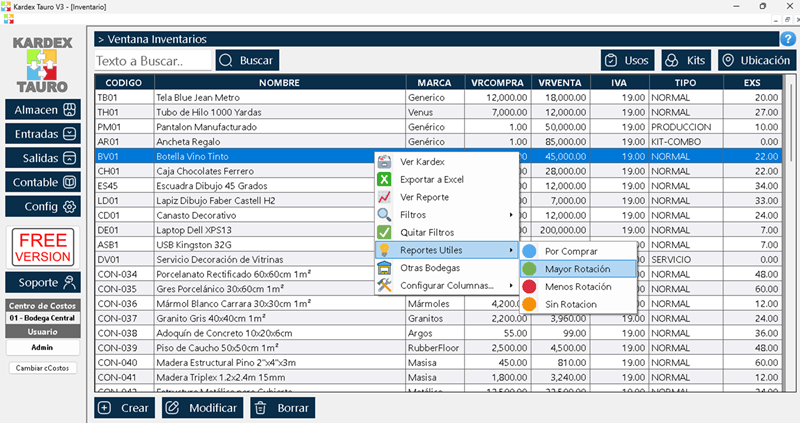
All of the above can be done on paper, but control gets fragile as the number of orders and shops grows. An inventory system such as Kardex Tauro lets you record the issue to a contractor as its own movement, different from a sale and from consumption, deduct the theoretical consumption when you receive the finished goods, and keep visible which material is in process at each third party. The tool helps, but the habit is what protects your raw material: record every issue, reconcile every return, and never let a difference disappear into silence.
Contract manufacturing is a great ally for the small manufacturer who wants to grow without investing in more plant. But the raw material you send out is still yours, and what is yours is protected with numbers. Issue the order in writing, record the issue, apply the theoretical consumption, reconcile the differences, and value the return based on data. With that cycle, the material that leaves your warehouse always comes back explained: turned into product, returned as surplus, or justified as scrap. With Kardex Tauro, every meter, kilo, or unit you entrust to a contractor is recorded from the day it goes out to the day it comes back.