Inventory for fairs and pop-up markets: what goes out and what comes back
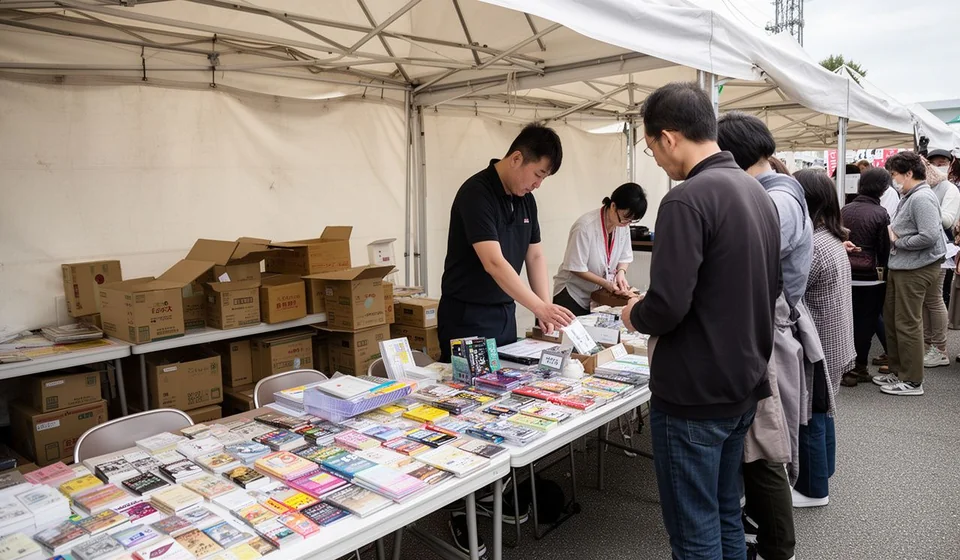
A weekend fair looks more like a concert than a store: noise, crowds and fast sales. You pack the merchandise on Friday night, set up the stall, sell all day Saturday and Sunday, and when you get back to your stockroom on Monday you realize you have no idea how much you sold or what is left in the boxes. You know the fair went well because there is money in the bag, but you cannot say which product sold best, which one came back untouched and which one stayed at the fair.
Selling at fairs, bazaars, pop-up markets and one-off events is a real opportunity for any small business, but it is structurally different from selling at your own shop: the merchandise leaves your inventory, spends two or three days outside your control, and whatever does not sell must come back in. If that exit and that return are not recorded, the event becomes a black box that you leave with cash and questions.
Here is the good news: staying in control does not require expensive technology or extra hours. It requires a four-step process, applied with discipline. This is what a business that actually knows what happened at its fair does differently.
Inventory for fairs and pop-up markets: what goes out and what comes back
The usual chaos: you took a bit of everything and lost the numbers
Admit it if this has happened to you: on Thursday you pack in a hurry and throw in a bit of everything because you do not know what will sell; on Saturday sales move so fast that writing things down feels like wasted time; on Sunday night, as you pack the boxes, the stall looks empty and it feels like a hit. Back at the stockroom, with the boxes closed, the surprises begin: you do not know how many units you sold of each product, you do not know if stock is hiding in some drawer, and you cannot answer the only question that matters: was the fair actually profitable?
And there is the uncomfortable detail: something is almost always missing. An item that shows up neither in the boxes nor in the sales. Sometimes it is carelessness, sometimes theft, sometimes a price charged wrong. Without a record of what left your stockroom, there is no way to know which one it was.
The root of the problem is not the fair. It is that the merchandise traveled without paperwork. Everything below is so that next time it travels with paperwork.
Step 1: before you leave, build the load list
The load list is a photograph of what leaves your stockroom: product by product, with quantity and selling price. It is the document that makes every later reconciliation possible. Without it, everything you do afterward is guessing.
The load list does not have to be fancy. It can be a notebook page, a spreadsheet or the product list from your inventory system. What matters is that it contains, at minimum:
- The exact product name, or its code if you use codes.
- The number of units you are taking.
- The selling price of each unit.
- A note if part of the stock is going as a special offer or in bundles.
Packing against a list changes the way you pack: instead of filling boxes by eye, you check off each product as it goes in. When you finish, you know what is inside every box without opening it. Twenty minutes of work that saves you a weekend of doubts.
Two add-ons are worth gold at the stall: price tags visible on the merchandise, or a laminated price list, and a format for recording sales — a notebook, one sheet per product, or your phone — that you will actually use on the day. Do not leave it for Saturday morning, because by then it is already too late.
Step 2: during the fair, record each sale on the spot
This is the difference between the seller who balances in ten minutes and the one who spends the night counting bills against memories: record the sale when it happens, not later. Between one customer and the next there are seconds, not minutes; if you leave the notes for the end, they will not happen.
The method depends on how you collect payment:
- If you invoice or use a point of sale: each sale is recorded by itself. At closing, the day report gives you the total and even the detail per product. You only have to match that total against the money.
- If you take card payments with a card reader or QR codes: the report from the terminal or the payment platform is your ally. Download it every night and keep it; add the cash you have and you get the day total without writing down a single sale by hand.
- If you charge in cash, or mix methods: write down product, quantity and price on the spot. One sheet per product with a tally mark per unit sold works perfectly, or a running list in the notebook. What matters is that you do not depend on memory.
Two rules prevent headaches. First: define who records. If two people attend and each one takes payment on their own side, sales will get lost; route everything through a single recording point, or give each seller their own sheet, separate and clear. Second: also record discounts and units given away with a purchase. A product handed out free as a promotion that is never written down shows up later as a shortage, and a shortage should not be the price of your sales strategy.
Nobody writes things down because writing slows down the sale. That is false: writing takes three seconds and the next customer will wait. What really slows the business down is coming back without knowing whether the fair made money.
Step 3: at the end of each day, balance the day
If the fair lasts more than one day — and it usually lasts two or three — do not wait until the end to balance. Every night, with the stall closed and before you leave, run the daily check:
- Add up the sales you recorded, meaning your log.
- Count the cash in the till.
- Add the card and QR payments of the day, according to the reports.
- Compare: recorded sales against money received. If they do not match, solve it that same night, while the memory is fresh. Looking for a shortage on Monday, three days later, is almost impossible.
The nightly check has a second benefit: it forces you to look at the merchandise left in the stall. That number, what remains after each day, lets you decide whether to bring more stock from the stockroom for the next day or whether what is there is enough. And it is the number you will need at the end for the overall event reconciliation.
The balancing formula is simple and worth writing on your sheet: final cash minus starting change fund equals the cash sales of the day. That value, plus card and QR payments, must equal your recorded sales.
Step 4: when you get back, count what returns and compare against the load list
The fair is over. Now comes the moment that separates business owners who control their numbers from those who trust their luck: counting the return. The formula is this:
What you took minus what you sold is what should come back.
If less comes back than it should, you have a shortage and it must be investigated. If more comes back, you have an overage, and that also needs an explanation, before you celebrate: it could be a sale that was never recorded, a price charged wrong, or stock that was counted twice on the load list.
The event control table summarizes the whole process in a single glance. It is filled like this: the load list, or what you took; the recorded sales, or what you sold; the return count, or what came back; and the difference, or the shortage.
The control table: took, sold, returned, missing
Here is a real example of what the reconciliation of a two-day fair looks like. The last column is calculated: took minus sold minus returned. If the result is greater than zero, there is a shortage to investigate.
| Product | Took | Sold | Returned | Missing |
|---|---|---|---|---|
| Scented candles | 30 | 22 | 6 | 2 |
| Handmade soaps | 50 | 41 | 9 | 0 |
| Body creams | 24 | 15 | 8 | 1 |
| Essential oils | 18 | 6 | 12 | 0 |
| Car diffusers | 40 | 33 | 4 | 3 |
| Total | 162 | 117 | 39 | 6 |
In this example, six units are nowhere to be found. It is not a drama, but it is information: 117 recorded sales, 39 units back and 6 gone without an explanation. Now the question is not whether something got lost, but where those six are.
When the numbers do not add up: where to look for the shortage
Not every shortage is theft. Before blaming anyone, including yourself, check the most common causes in order:
- Error in the load list: you took less than you thought. This happens when packing in a hurry and counting the same batch twice.
- Unrecorded sale: a cash sale that was never written down. Check the cash against the recorded sales: if there is extra money, the product shortage is an unrecorded sale.
- Price error: something sold for less than the list says. It happens when the price is not visible and the seller calculates on the fly.
- Unrecorded promotion or giveaway: the discount agreed by word of mouth that never reached the paper.
- Merchandise lost in the stall: the box left under the table, the bag mixed with the neighbor stall stock, the product that fell behind the display.
- Theft or carelessness: the last cause you assume and the first one you rule out when the others do not explain the number.
What matters is the attitude: a shortage is always investigated, even when it is small. A shortage of two units per event, repeated across ten events a year, is a systematic loss nobody is seeing. Small shortages are not forgiven: they are recorded, reviewed and attacked.
When you get back: review first, restock later
When the event merchandise enters your stockroom or shop, resist the temptation to empty the boxes straight onto the shelves. The right process has two steps, and the order matters.
First, review against the load list and the event reconciliation: count what came back and separate what is in good condition from what got damaged, dirty or opened at the fair. Damaged merchandise cannot count as available inventory again: define it as shrinkage or move it to a clearance route, but take it out of sellable stock.
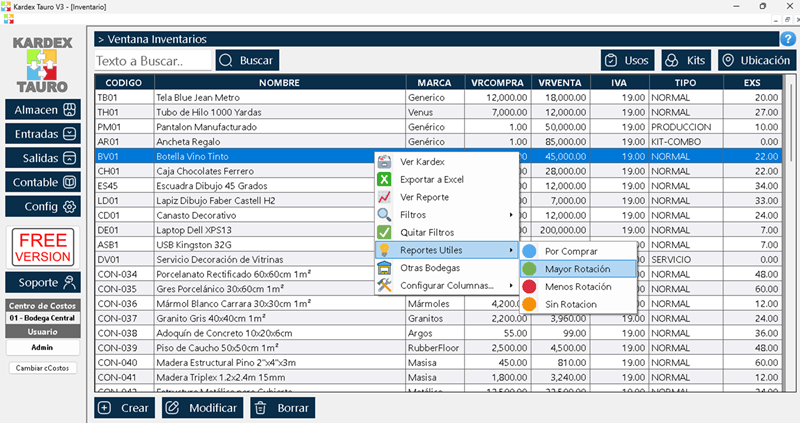
Second, the restock: what returns in good condition enters your inventory with an entry, like any other purchase or return. When you record it as an entry, your inventory system tells the truth again: available stock goes up, the event history stays documented, and the next load list is built on numbers, not on memory. With Kardex Tauro, recording that entry and keeping the event traceability takes minutes and leaves the data ready for the next reconciliation.
Never mix event merchandise with shop stock before counting it. The I will sort it out later turns into I never sorted it out with shocking ease, and the Monday after the fair is the worst day to rebuild a count that should have been done on Sunday night.
Event money does not mix with pocket money
There is a financial mistake that repeats at every fair: paying for lunch, parking or transport out of the till. It does not seem serious, because after all it is your money, but it destroys the reconciliation: if the sales till pays for personal expenses, you will never know how much you truly sold.
The solution is to separate from the start:
- Set a change fund before leaving, with bills and coins to give change. That fund is not sales: it must come back intact at the end and is balanced separately.
- Set an event expense fund, separate from the sales till. Lunch, parking, transport and last-minute purchases come out of it and are recorded as event expenses.
- At the end of each day, the sales till only holds sales: cash from sales minus the change fund. Expenses stay apart, recorded, so you know what it cost to take part in the fair.
When you separate money this way, at the end of the event you know three numbers that most fair sellers do not know: how much you sold, how much you spent to participate, and how much you actually earned.
Checklist for your next fair
To close, the full process in one list. Print it, tape it to the load box and follow it every time:
- Before you leave: complete load list with product, quantity and price; visible prices or a price list at the stall; sales recording format ready; change fund defined; expense fund separated.
- During the fair: record each sale on the spot; write down discounts and promotions; one recording point per seller; nightly balance against cash and card-reader reports at the end of each day.
- When you get back: count what returns against the load list; investigate shortages before blaming; separate damaged goods; restock with an inventory entry.
A well-controlled fair is one of the best sales channels a small business has: it concentrates customers, creates product trial and pays in cash. The difference between a fair that leaves profit and one that leaves mixed-up boxes is not the location of the stall or luck: it is the record of what goes out and what comes back. If every event is reconciled with the same process, the next fair stops being an adventure and becomes a sales channel that can be measured, compared and improved. And if you want that record not to depend on notebooks that get lost, a stock ledger system like Kardex Tauro keeps your load list, event sales and returns documented in one place, ready for the reconciliation and for the next event.