Physical warehouse security: access, keys and visitor control
Physical warehouse security: access, keys and visitor control
When people hear "warehouse security" they picture an alarm going off at midnight and a silhouette climbing over the fence. The reality is less cinematic and more uncomfortable: most of the merchandise that disappears from a warehouse is carried out by someone who has every right to be there. Employees, contractors, delivery drivers or suppliers who come and go every day. That is why this article is not about fortifying the door as if you were expecting an armed assault, but about bringing order to access, keys, visitors and counts. These measures are inexpensive, and they outperform any costly system that nobody actually reviews.
Let's go step by step, from the simplest to the most elaborate, with a table that summarizes each protection level against what it costs. You don't need to implement everything on day one: start at the basic level and move up when the numbers call for it.
The most common thief works inside
Retail and logistics surveys have been repeating the same finding for decades: a very large share of shrinkage is not explained by external theft, but by internal theft. An employee hiding merchandise during their shift, an assistant "borrowing" a spare part without writing anything down, a dispatcher shipping extra units and balancing the shortage against another outgoing order. External theft exists, of course, but the one that hurts most is internal: someone stealing from the inside knows the schedules, knows where the cameras are, knows which product is never counted and has months or years to perfect the method.
And bad faith is not even required. Many shortages begin as innocent favors, I'll take this tool home on loan, I'll leave my box here for a moment, that are never recorded and end up as a permanent loss. Physical warehouse security is, to a large extent, a set of rules that keeps favors from becoming habits.
Basic level: the door, the key and an up-to-date inventory
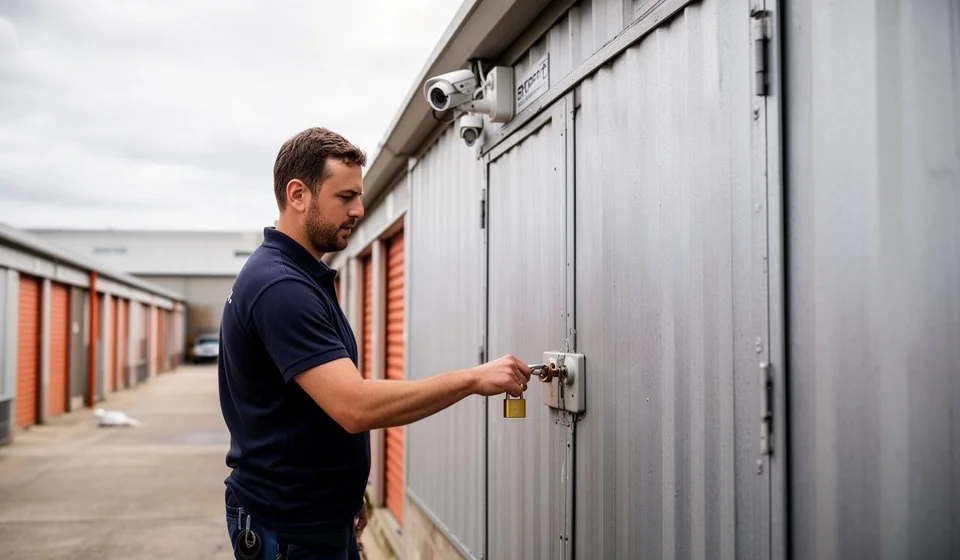
The starting point is not expensive. A solid metal door with a quality lock or padlock, windows secured with grilles or security film, and one simple policy: the warehouse stays locked whenever there is no trusted staff inside. It sounds obvious, but walk through small warehouses and you will see doors left wide open during lunch, or "open for a second, the supplier is on his way".
Second piece of the basic level: a single person responsible for the keys. Not three, not "whoever arrives first". One. That person hands out and receives keys, knows who holds them at any moment and answers for every copy. If copies circulate without control, no padlock will save you.
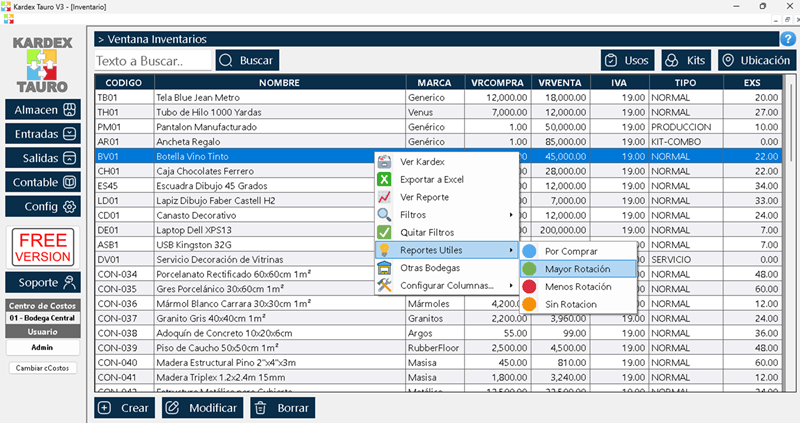
Third piece: an up-to-date inventory. If you don't know how much of each product should be on hand, no shortage will ever be noticed. And if those records live in a system like Kardex Tauro, comparing a count against the books takes minutes, not whole afternoons. Fourth piece: periodic counts of the most attractive products. Tools, spare parts, liquor, electronics and hardware items are the classics. You don't need to count everything every week: count the stealable items often and the rest less frequently.
This level costs little and eliminates opportunistic theft, which is the most common kind in small and mid-sized warehouses.
Security measures by level and relative cost
| Level | Typical measures | Relative cost |
|---|---|---|
| Basic | Quality lock or padlock on the main door; a single person responsible for the keys; secured windows; inventory recorded up to date; periodic counts of the most stolen products (tools, spare parts, liquor, electronics); warehouse locked when no trusted staff is inside | Low |
| Intermediate | Visitor control with visitors attended in the receiving area; sign-in and sign-out log for people; cameras at doors and the loading area; numbered keys or individual padlocks per zone; cycle counts of the high-value area | Medium |
| Advanced | Monitored alarms; cameras recording throughout the warehouse; electronic access control with card or fingerprint; inventory by location with an assigned responsible person | High |
Treat the table as a ladder, not a menu: the intermediate level does not replace the basic one, it builds on it. A warehouse with expensive cameras but three uncontrolled key copies in circulation is still an insecure warehouse.
Intermediate level: who comes in, when and why
The real leap in quality comes from controlling people, not just the door. The first step is visitor control. Suppliers and delivery drivers do not walk into the warehouse on their own: they are attended in the receiving area. If they need to go in, for example to deliver merchandise directly, they go in accompanied by company staff, never wandering freely between the racks.
It sounds strict, but think about what happens without the rule: a driver who walks through the warehouse while waiting for a signature can see exactly where the most expensive goods are kept, what gets counted and what doesn't, and at what time fewer people are around. That information, combined with a two-minute lapse, is worth more than any isolated loss.
Second step: a sign-in and sign-out log. A notebook or a simple spreadsheet where every visitor writes name, company, arrival time, departure time and reason. It is not personal distrust: it is a record that lets you reconstruct what happened when something disappears.
Third step: cameras where it matters. Doors, the loading area and receiving. You don't need to fill the warehouse with cameras from day one; the ones you have must cover the entrances and exits of merchandise, because that is where stolen goods go out. And a camera that is never reviewed is decoration: assign who reviews the footage and how often.
Fourth step: numbered keys or individual padlocks. Each key has a number, each number has a registered holder. If a high-value zone has its own padlock, only the authorized people of that zone open it, not everyone holding the master key.
Cycle counts and surprise counts of the hot zone
Physical control is completed with stock control. At the intermediate level, cycle counts appear: every week you count a group of products, the high-value area first, so that within a month the whole warehouse is covered without stopping operations for a full inventory.
And here comes one of the most uncomfortable and most effective rules: the surprise count is legitimate. You don't need to announce it three days in advance, or at all. A surprise count of the high-value area, done by two people, one counting and one verifying, is the test that no theft method expects.
The golden rules
- Separate duties. The person who receives merchandise is not the only one guarding it, and the person who records is not the one who counts. When the same person receives, records and guards, the line between error and theft becomes impossible to detect. The article on warehouse roles covers this in depth.
- The surprise count is legitimate and should happen every now and then, without notice.
- Differences are investigated, never adjusted and done. Balancing a shortage against a surplus in another SKU is the fastest way to hide a systematic theft.
- Distrust surpluses. A surplus is almost always misplaced merchandise: what appears today was probably hidden yesterday, waiting for the right moment to leave.
How to spot internal theft: the patterns
Internal theft is not discovered by chance; it is discovered through patterns. And patterns only show up when there is data. Some classic signs:
- Shortages concentrate on the shifts of one person or one team.
- Expensive, small products disappear: high-value spare parts, hand tools, liquor, electronic devices. Whatever fits in a bag or in a shipping box.
- Odd returns: customers returning merchandise in good condition and that merchandise getting lost before it returns to the shelf, or returns of products that were never shipped.
- Shortages show up after vacations or absences, because the method depended on one person being present to cover the hole.
- Surpluses and shortages keep offsetting each other, a sign that someone is moving merchandise around to make the numbers balance.
Each sign on its own can have an innocent explanation. Together, they deserve a serious investigation: review the visitor log, watch the footage of the flagged days and run a surprise count of the affected area.
Advanced level: alarms, electronic access and tracked locations
When the operation grows or the value in the warehouse justifies it, you move to the advanced level. Alarms with sensors and monitoring, cameras recording continuously throughout the warehouse, not only at the doors, electronic access control with card or fingerprint that records who enters each zone and when, and inventory by location: every aisle, every rack, every position has a code, and every zone has a named responsible person.
Inventory by location is the jewel of the advanced level: when the system says position A-12 should hold ten units of a spare part and there are eight, you don't just know that merchandise is missing: you know where it went missing, and that turns a hunch into a verifiable fact. Zone responsibility does the rest: if a location loses product three times, the person responsible for that zone has to explain what is going on.
This is not only for large companies. A mid-sized warehouse can adopt location logic without spending a fortune and gains enormous clarity about where the losses are.
An up-to-date inventory is your first alarm
Go back to the beginning: no camera, padlock or log replaces the data. Physical security works when outgoing merchandise is recorded, incoming merchandise is recorded and what remains can be compared with what should remain. When inventory is properly recorded, in whatever system you prefer, including Kardex Tauro, any shortage is noticed the same day and not at month-end close: the system is your first security alarm.
Invest first in the rule, then in the lock, then in the camera. With a controlled key, a locked door, visitors attended at receiving, counts that actually happen and an up-to-date inventory, you close both fronts at once: the outside thief finds no gap, and the inside thief finds no silence.