
Top 10 best inventory programs for hardware stores
Top 10 best inventory programs for hardware stores
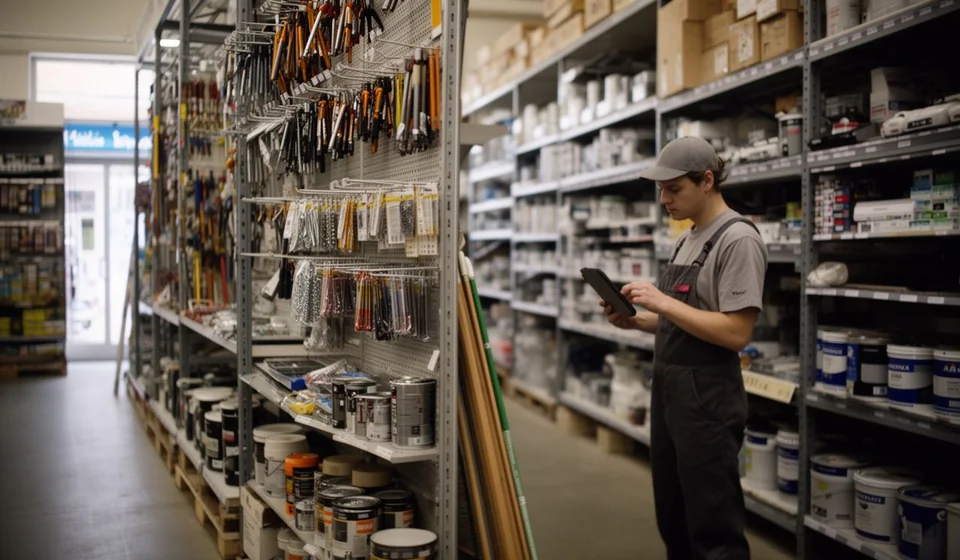
A hardware store lives by having the right item at the right moment. A customer may ask for a half-inch screw, two meters of hose, a gallon of paint or the exact spare part for a damaged piece, and the business needs to know instantly how many of each item it has, where they are and at what price they sell. With thousands of different items on the shelves, that information fits in no one's memory: it is managed with a proper inventory control system. And since almost everything that leaves the counter ends up in an invoice or a sales receipt, the ideal program for a hardware store also has to support the business's invoicing.
In this article we gathered ten programs used to keep inventory in hardware stores and in other retail businesses in Latin America, with desktop, cloud or mixed models. One disclosure is necessary from the start: Kardex Tauro is our software and it appears on this list under that condition. The other programs belong to other vendors, we have no commercial relationship with them, and we mention them without links or preferences. The list was built with public information available in September 2026, follows alphabetical order and is not a ranking: there is no winner, because the best option depends on the size of the hardware store, the country where it operates and the way it sells.
How this list was put together
To make it into the comparison, each program had to meet three conditions: be used in hardware stores or in small retail businesses in the region, have inventory or stock ledger modules, and have enough public information to describe its deployment and its pricing. The data comes from open sources, mainly the official websites of each vendor, consulted up to September 2026.
Two rules guided the writing. First: there are no positions or scores here. The ten programs are presented in alphabetical order and the objective comparison is concentrated in a single table, so each reader can decide with the data in hand. Second: transparency. When we mention Kardex Tauro we do so because it is our product; the other names appear only because of their public information, their segment and their commercial model.
Comparison of programs for hardware stores
The following table summarizes the deployment, the approximate pricing model as of September 2026 and the profile of each program. The values are for reference: vendors adjust their plans frequently and many run promotions, so it is worth confirming the current price before deciding.
| Program | Deployment | Pricing model (approx. Sep 2026) | Profile |
|---|---|---|---|
| Alegra | Cloud | Monthly subscription | Suite for small businesses and accountants in Latin America (accounting, inventory, point of sale, electronic invoicing) |
| Aspel SAE | Desktop | License with one-time cost and maintenance | Buy-and-sell administration with inventory stock ledger, small businesses in Mexico |
| Bind ERP | Cloud | Monthly subscription (approx. MXN 949-1,999) | ERP with inventory, purchases, sales and invoicing, small businesses in Mexico |
| CONTPAQi Comercial | Desktop and cloud options | Subscription per product | Ecosystem with inventory (stock ledger), sales and invoicing modules, small businesses in Mexico |
| Kardex Tauro | Windows desktop (local SQLite database, with server mode) | Free plan and annual payment per device | Stock ledger and inventory software with invoicing, for small retail businesses in Latin America; its manufacturer reports support for many items (more than 30,000 in real environments) |
| Nubox | Cloud | Monthly subscription | Electronic invoicing and administration, small businesses in Chile, Peru, Mexico and Colombia |
| Scrampi | Cloud (point of sale with offline mode) | Monthly subscription (approx. COP 46,000) | Point of sale for retail stores, pharmacies and restaurants in Colombia |
| Siigo | Cloud (and desktop version) | Monthly subscription | Accounting, payroll, inventory and electronic invoicing, small businesses and accountants in Colombia |
| Softland | Desktop and cloud | License or subscription | ERP with inventory, purchasing and projects, mid-size companies in Colombia and Chile |
| World Office | Desktop | License | Electronic invoicing and multi-company operation, companies and accountants in Colombia |
The table does not grade or favor any vendor: the data was taken as each company publishes it, and the differences between rows reflect different business models, not ratings.
The ten programs, in alphabetical order
The descriptions below are limited to what is public and verifiable about each program; the objective data is in the table.
- Alegra: a cloud suite for small businesses and accountants in several Latin American countries. It brings together accounting, inventory, point of sale and electronic invoicing, and it is paid through a monthly subscription. Being a complete online suite, it is an option for small retailers that want to manage the business from anywhere and pay a monthly cost instead of an upfront license.
- Aspel SAE: a desktop program from the Mexican software company Aspel, aimed at buy-and-sell administration with an inventory stock ledger for small businesses in Mexico. It is sold with a one-time license cost plus maintenance, a traditional model that avoids recurring payments and fits businesses used to keeping their data on their own computers.
- Bind ERP: a cloud ERP for small businesses in Mexico, with modules for inventory, purchases, sales and invoicing. Its monthly subscription is published at approximately MXN 949-1,999, and being an online system it lets the business consult the same information from different points of sale or warehouses.
- CONTPAQi Comercial: a product of the CONTPAQi ecosystem, widely used by companies and accounting firms in Mexico. It provides inventory modules with stock ledger, sales and invoicing for small businesses, runs on desktop with cloud options and is sold by subscription per product.
- Kardex Tauro: stock ledger and inventory software with invoicing, built for small retail businesses in Latin America. It runs on Windows desktop with a local SQLite database and includes a server mode to work on a network. It offers a free plan and an annual payment per device, and its manufacturer reports support for a large number of items: more than 30,000 in real environments.
- Nubox: a cloud platform focused on electronic invoicing and administration for small businesses in Chile, Peru, Mexico and Colombia. It is contracted with a monthly subscription and is an option for businesses that must meet their country's electronic invoicing requirements and keep the administration in the same tool.
- Scrampi: a cloud point of sale with an offline mode, designed for retail stores, pharmacies and restaurants in Colombia. Its monthly subscription is published at around COP 46,000, and the offline mode allows counter sales to continue when the connection fails.
- Siigo: a Colombian platform with a cloud version and a desktop version, combining accounting, payroll, inventory and electronic invoicing for small businesses and accountants. Its model is the monthly subscription and its stated main market is small businesses and accountants in Colombia.
- Softland: an ERP with inventory, purchasing and projects, aimed at mid-size companies in Colombia and Chile. It is offered on desktop and in the cloud and can be acquired either with a license or with a subscription, so each company chooses between a one-time payment and a recurring cost.
- World Office: a desktop program sold under a license, focused on electronic invoicing and multi-company operation for companies and accountants in Colombia. Its desktop-and-license model suits those who prefer to work with information hosted on their own equipment.
What to consider in a hardware store
Before comparing features, it is worth being clear about the particularities of a hardware store, because they are not the same as those of a clothing shop or a supermarket. These are the points that weigh the most when choosing an inventory program for this kind of business.
- The number of items. A hardware store handles thousands of articles: fasteners, tools, paints, plumbing, electrical supplies, spare parts and much more. The program must let the user find any item by code, name or category and show at once how many units are available and their cost. If the catalog is large, search speed and how easy it is to load new items also matter.
- Sales in mixed units and fractions. In a hardware store the same product can be sold by unit, by dozen, by meter, by kilogram or in fractions such as half an inch or a quarter of a gallon. The inventory control has to reflect the real unit of sale and correctly deduct what goes out, because an error in a fraction becomes a difference that is hard to explain at the end of the month.
- Shrinkage, theft and differences. Small items get lost, damaged or leave without being recorded. That is why the program should allow physical counts, record adjustments and compare what the system says with what is on the shelf, so differences are detected in time and it is clear where the merchandise is going.
- Invoicing and documents. In several countries of the region electronic invoicing is mandatory, and the business needs to issue its documents from the same program or integrate one it already uses. Before choosing, it is worth confirming that the tool covers the tax requirements of the country where the hardware store operates, or that it coexists smoothly with the current invoicing software.
- The internet connection. If the point of sale is in an area where the connection fails, it is worth evaluating how the program behaves without a network: a cloud system depends on the connection, while a desktop one works with local data. How the data is backed up and how often also matters, because inventory is the business's most valuable information asset.
None of these needs automatically turns one program into the best one for every hardware store: what is required is to identify which of them weigh more in your own business and compare them against the table in this roundup.
Kardex Tauro in this list
As stated at the beginning, Kardex Tauro is our software and that is why we include it with due transparency. It is a desktop program for Windows, with a local SQLite database and server mode for working on a network, focused on stock ledger and inventory with invoicing for small retail businesses in Latin America. It has a free plan and an annual payment per device, and its manufacturer reports support for a large number of items: more than 30,000 in real environments. We place it in this comparison because it is the tool we know first-hand, but we recommend evaluating it with the same criteria as the others: if it does not meet your hardware store's needs, there are nine more options on this list to consider.
Final note: the prices and pricing models in this comparison are approximate and correspond to September 2026; they may vary depending on the country, the plan and current promotions. Before signing up for any program, check the vendor's official information and, if possible, test it with real data from your hardware store.
