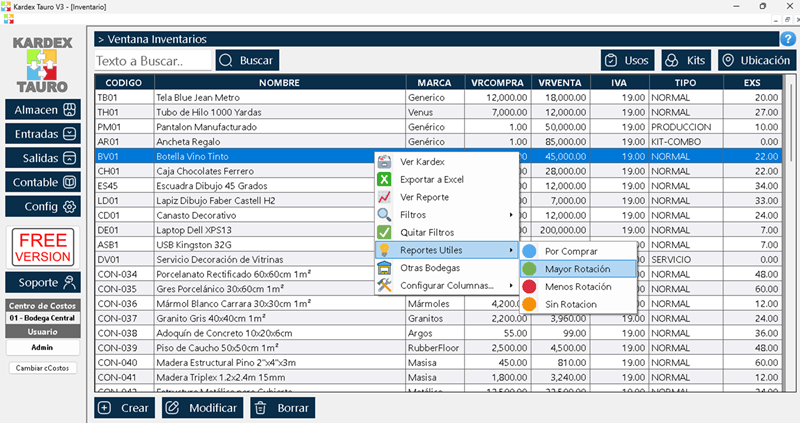
Is Your Salon Selling Services but Losing Margin on Hair Dye? Track Consumption per Stylist with Kardex Tauro
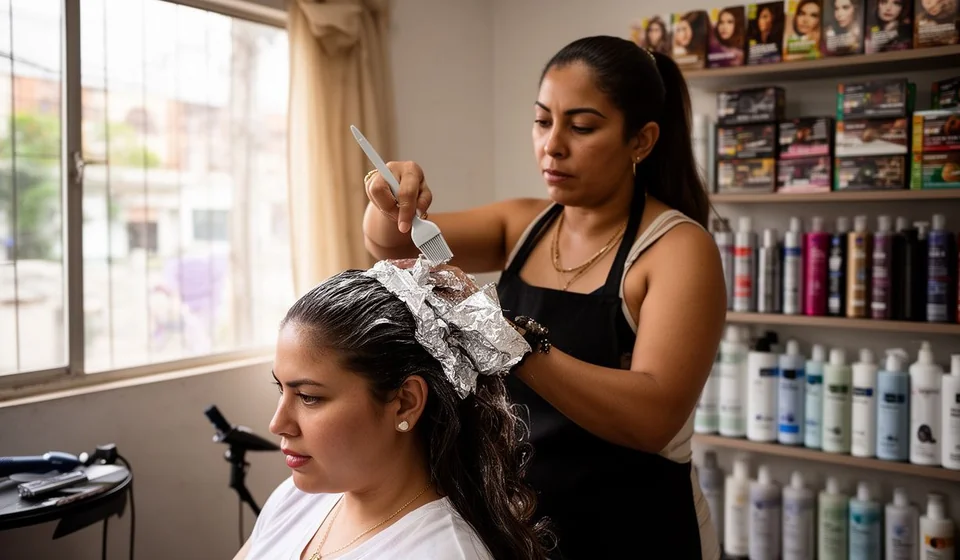
Something curious happens in a beauty salon: the front door sells services (a haircut, a color, a straightening, highlights), but the profitability of each of those services is decided by a tube of hair dye, a bottle of shampoo, or a jar of conditioner opened behind the counter, far away from the invoice. You may charge 120,000 pesos for a color and haircut, and if the supplies were used without control, that service may end up costing you more than it earned.
The most common complaint among salon owners is not «I don't sell enough» but «my inventory just vanishes». The dyes run out, the shampoo bottles disappear from the shelves, the bleach seems to yield less than it should, and nobody can say with certainty whether that product was used on a client, given away, lost, or taken out of the shop. This article explains why that happens and how Kardex Tauro lets you know, week after week, how much supply each service and each stylist on your team consumes.
The Problem: the Dye That Vanishes and the Margin That Evaporates
A beauty salon is, in essence, a service factory that transforms products into attention. The tube of dye that is applied, the developer that activates it, the shampoo used to wash the hair, and the conditioner applied afterward are not sold at the register: they are consumed during the service. That is why the real margin of a salon is not decided by its price list, but by how well those consumptions are controlled.
In a typical salon, supplies represent between 20% and 30% of the value of a service. When that percentage is not measured, it can silently climb to 35% or 40% without anyone noticing. What happens today, without consumption records?
- The stylist takes a tube of dye from the shelf and nobody deducts anything: the inventory says there are 12 tubes, but only 5 remain in the drawer.
- Nobody knows whether that tube was applied to a client, given away, lost, or taken outside the salon.
- Nobody knows how much it costs to produce each service: not the color, not the highlights, not the straightening, not even a haircut with a wash.
- It is impossible to compare one stylist's consumption against another's, because no data exists.
- Purchases are made by guesswork, and stock-outs always arrive at the worst moment: Saturday morning, without the most requested dye shade.
- The real margin of the business cannot be calculated, and prices cannot be adjusted with any basis.
Here is the key difference: when a stylist consumes product without recording the consumption, the inventory simply disappears. And disappearing is very expensive in a salon, because the product is not only money: it is the input that turns an empty chair into a paid service.
The Solution: Internal Consumption in Kardex Tauro
Kardex Tauro includes a transaction designed exactly for this scenario: Internal Consumption. A warehouse consumption is the withdrawal of supplies for the business's own internal use, meaning product that is not sold but transformed into a service. Its rules fit the operation of a hair salon perfectly:
- Deducts stock when finalized: when you finalize the transaction, the system removes the product from inventory and updates the Stock ledger record immediately.
- Generates a Stock ledger entry: the movement is recorded with date, product, quantity, and cost.
- Does not create accounts receivable or payable: it is not a sale or a purchase, it is internal use, and the system treats it that way.
- Requires who receives and who requests: you record who receives the product (the stylist or employee who will use it) and who requests it (management or the person in charge of the storeroom).
- Assigns cost to areas: the consumption is charged to the salon's area or cost center, so the cost of the supply lands where it was actually used.
- Allows filtering by employee and generating reports: you can see how much each stylist consumed in a period and compare them, something impossible to do with a notebook.
In practice, the flow is simple: a color service ends, the manager records the consumption of the products used, indicating who received them (the stylist who performed the service) and who requested them; the system deducts stock, generates the Stock ledger entry, and accumulates the cost. At the end of the month, you open the report and know exactly how much supply each service and each person on your team consumed.
Product Types Made for a Beauty Salon
Kardex Tauro manages four product types: Normal, Kit/Combo, Production Line, and Service. Each one solves part of the salon's operation:
- Normal: the tube of dye, the bleach, the shampoo, the conditioner, the gloves, and the creams. They are purchased by unit and consumed during the service.
- Service: the haircut, the color, or the straightening package can exist as a Service-type product, so you can invoice the appointment without managing physical stock.
- Kit/Combo: the gem for a hair salon. You build a Dye Kit made up of a tube of dye + a developer + gloves. When you record the service, the system automatically deducts the kit's components. One single click takes three products out of inventory and calculates the real cost of the service without relying on anyone's memory.
- Production Line: designed for businesses that transform raw materials (for example, a salon that makes its own mixtures or its own shampoo brand). A traditional salon rarely uses it, but it exists for those who manufacture their own products.
With the Kit/Combo type, invisible consumption disappears: if the dye kit costs 27,000 pesos in supplies and your service sells for 120,000, the system automatically tells you that this service left a gross margin of 93,000 before expenses, as long as the consumption is recorded when the service ends.
Comparison Table: the Salon Before and After Kardex Tauro
| Issue | Without Kardex Tauro | With Kardex Tauro |
|---|---|---|
| A tube of dye leaves the shelf | It is taken and nobody records it | A Internal Consumption is recorded with who receives and who requests |
| Stock levels | The system says 12 and the drawer has 5 | Deducted when the transaction is finalized: inventory always matches |
| Service cost | Calculated roughly, from memory | Real cost per service, based on the supplies consumed |
| Control per stylist | Impossible to compare anyone | Reports by employee comparing consumption between stylists |
| Accounting | No traceability of the supply | Automatic Stock ledger entry, with no accounts receivable or payable |
| Supply purchases | By guesswork, with weekend stock-outs | Based on real consumption by period and by service |
How to Implement It in Your Salon in Six Steps
- Load your products as Normal type with their code, purchase cost, and presentation: dye by shade, bleach, shampoo, conditioner, gloves, cotton, creams.
- Build the Kit/Combo sets for your star services: dye kit, highlights kit, straightening kit, manicure kit. Each kit must contain the exact products used in that service.
- Register your services as Service type: color with haircut, blowout, hair treatment, so you can invoice the appointment correctly.
- Define the consumption routine: when each service ends, record the consumption of what was used; put the stylist who performed it under who receives and management or the storeroom manager under who requests, assigning the cost to the salon area.
- Review the report by employee every week: compare how much each stylist consumes for similar services and detect deviations in time, not at the end of the month.
- Adjust with data: if a stylist consumes 30% more per color service than the standard, talk to her, review dosages, train, and decide whether your prices or service menu need to change.
Metrics You Should Watch Every Week
- Supply cost per service: compare real consumption against the standard cost of your kit. If a color should cost 27,000 in supplies and averages 35,000, there is a leak.
- Consumption per stylist: in units and in pesos, using the report by employee from Internal Consumption.
- Percentage of supplies over service sales: a healthy target for a salon is between 18% and 25%; when it goes above 30%, the margin is going down the drain.
- Unrecorded consumptions: they should tend to zero. Every tube that leaves the shelf without an associated consumption is money without an explanation.
- Shortages in the physical count: the system inventory against what is actually on the shelves and drawers, once a week.
Real Case: the Salon That Recovered Its Margin in Two Months
Diana runs a small salon in the Manrique neighborhood of Medellín. Three chairs, three stylists (Carolina, Valentina, and Jorge), and monthly sales close to 19 million pesos, of which around 6 million went to buying dye, bleach, and shampoo. Her headache was classic: she always over-ordered out of fear of running out of product, tubes disappeared from the little storeroom, and one Saturday she ran out of the most requested red shade right at peak hour.
Diana loaded her products as Normal type, built the dye and highlights kits as Kit/Combo, registered her services as Service type, and trained her team to record consumption when each appointment ended, always with the stylist under who receives and herself under who requests. The first reports by employee showed her something the notebook would never have told her: for the same color-with-haircut service, Carolina averaged 34,500 pesos in supplies, Jorge 31,800, and Valentina 29,100, while the standard kit cost 27,000.
The conversation with Carolina revealed the cause: she applied more developer than necessary and used the house treatment shampoo for simple haircut washes, something none of her coworkers did. With the data in hand, Diana adjusted the dosages, defined which shampoo is used for each type of wash, and began comparing the report every Monday. Two months later, consumption per service was back to the standard, inventory shortages disappeared, and the salon stopped overbuying 860,000 pesos each month, money that went straight to the bottom line.
Conclusion: You Sell the Service, but You Control the Margin
No salon goes bankrupt for lack of clients: it goes bankrupt from services that are charged without knowing what they cost. Controlling supply consumption is not an administrative luxury; it is the difference between a business that grows and one that works every day to fill someone else's storeroom.
With Kardex Tauro you record every warehouse consumption with its person in charge, deduct stock automatically, build kits that are unloaded with a single click, and compare your stylists' performance with reports by employee. If dyes, bleach, and shampoo vanish without an explanation in your salon, start today: load your products, build your kits, record consumptions with who receives and who requests, and in thirty days you will have clear numbers per service and per stylist. Request a Kardex Tauro demo and find out how much margin your salon is losing right now.