Is Your Inventory Lying to You? How Smart Product Labeling Fixes It
Good labels, inventory that finally adds up
When a stock count reveals that the quantities in your system do not match what is actually on the shelf, the problem is almost never the software: it is what happens before the data ever reaches it. Every receipt, every shipment and every count you record depends on a single piece of information: the label code. When the label is wrong, unreadable or simply missing, the mistake multiplies silently: over-ordering, shortages nobody can explain, orders going out incomplete and counts that drag on for days. The good news is that a well-planned labeling system only needs labels, a printer and discipline. This guide shows you how to build it step by step, so your inventory stops lying to you.What makes a product label genuinely good
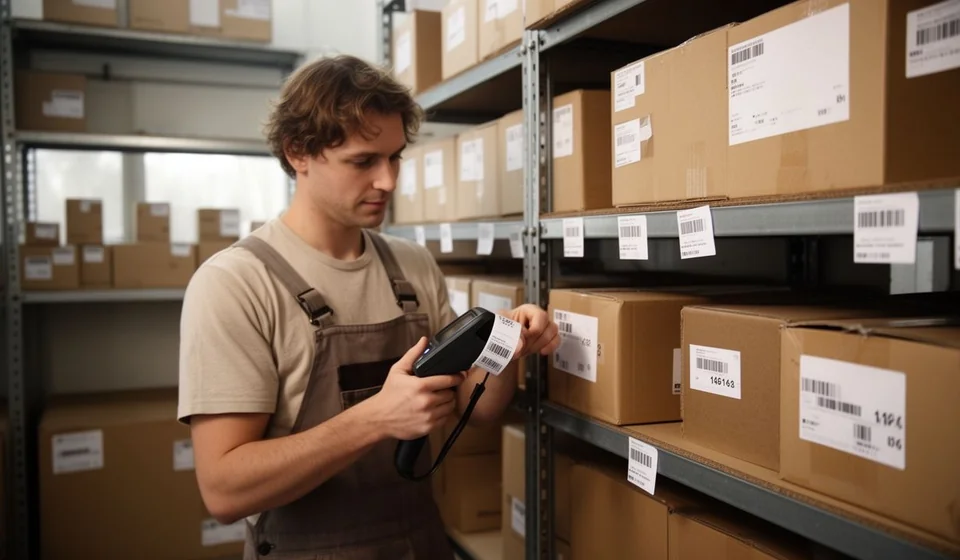
A useful label is not a decorative sticker: it is your product identity card inside the warehouse. It must let both a person and a barcode scanner identify the item without hesitation, in seconds and without having to ask anyone. A complete label carries four pieces of data:- A unique code readable by people and scanners. This is the most important part. The code appears as a barcode and, underneath, in large printed numbers, so a human can read and type it when the scanner fails or is not available.
- The standard product name. The exact name used in your catalog, with no nicknames or abbreviations that only one person understands.
- The location. The shelf, rack or zone where that product lives in the warehouse.
- Price or unit of measure. Depending on your business: the selling price if you run a store, or the correct unit (piece, dozen, box, kilogram) if you sell wholesale.
The golden rule: one unique code per product
Before you worry about printers and shelf tags, settle the most important labeling rule of all: one product, one code. Never use two codes for the same item, and never use the same code for two different items. It sounds obvious, yet it is the rule small and medium warehouses break most often. If the same item lives in your system under two different codes, its stock splits in two: part of it is bought and sold under one code and the rest under the other, so you never know how much you really have. If two different products share the same code, every scan records the movement against the wrong item and both end up with dishonest quantities. Remember that the system does not know your products by name: it knows them by code. When you record a receipt, a shipment, a transfer or an adjustment in Kardex Tauro, you always do it against a product code. If that code is ambiguous, everything you record against it will be ambiguous too. So before you print the very first label, clean up your catalog: one code per product and per presentation, period.Location tags: the labels that belong on shelves
Labels do not only go on products. Every shelf, rack or zone needs its own location tag with a clear code such as A-01-03, read as: aisle A, shelf 01, level 03. For location tags to actually work, follow these practices:- Place them on the edge of the shelf, at eye level, visible whether the shelf is full, half empty or messy.
- Use a simple logic anyone can understand: aisle, shelf and level. No cryptic codes known only to the owner.
- Record the location in the system as the official address of each product, next to its code.
- When you move a product, update the location in the system first and change the tag second. Never the other way around.
Boxes and bundles: when the product travels
Everything that moves needs a label: sealed boxes, bundles, transfer baskets and returns. A box without a label has to be opened to find out what is inside, and every opened box is lost time and another chance for items to end up in the wrong place. When labeling boxes and bundles, keep this in mind:- Label every box on at least two sides, so the label is visible no matter how the box is stacked.
- If a box holds a single product, use that product code: the box can then be recorded, transferred and received without ever opening it.
- If a box holds several products, list the contents and the quantity of pieces, or use a box code that identifies them.
- Add the destination location and the date of the move.
Side by side: correct labeling versus careless labeling
| Situation | With correct labeling | With careless labeling |
|---|---|---|
| Goods receiving | Scanned and put away in minutes | Checked piece by piece and stored wherever it seems right |
| Stock counting | Scanned and counted right at the shelf | Every name read, every quantity doubted |
| Order picking | The picker goes straight to the exact location | The picker walks the whole warehouse searching |
| Recording outbound moves | The system deducts the correct item | It deducts what you think went out |
| Inventory closing | Reconciles fast and explains itself | Mysterious overages and shortages every time |
When to reprint a label (and when not to)
Labels wear out and become obsolete, and that is normal. What is not normal is living with unreadable or wrong labels. Reprint right away if:- The label is torn, peeling, stained or blurry and the scanner no longer reads it.
- The product changed its presentation or trade name; in that case keep the original code so you do not lose the history.
- The location tag is outdated because you moved the product to another shelf or zone.
- You find two labels stuck one over the other, or an old label floating around next to the new one.
How good labeling speeds up counts, receiving and shipping
Correct labeling is not an administrative whim: it is what makes every daily operation fast and reliable. During cycle counts, your team walks through with the scanner, reads each code and counts the pieces without reading names or deciphering handwriting; with fixed locations, the count also follows the aisle in order and nobody jumps back and forth. At receiving, goods are checked against the delivery note by scanning codes one by one, so an invoicing mistake is caught at the dock instead of weeks later. When shipping, every item is scanned before it is packed, which eliminates most wrong shipments and the returns that small business owners end up paying for.Metrics a good labeling system puts on your side
- Counting time: typically drops by half or more, because manual name reading and warehouse-wide searches disappear.
- Shipping errors: fall noticeably, because every item is verified against its code before packing.
- Receiving speed: a batch that used to take a whole morning is received in under an hour when everything arrives labeled and coded.
- Inventory discrepancies: mysterious overages and shortages shrink, because every movement is tied to a unique, traceable code.
Labeling mistakes that create dishonest inventory
If your inventory never reconciles, check these patterns first; they are the ones that cause the most discrepancies in small and medium warehouses:- Two codes for the same product: stock ends up split between two records that never add up.
- One code shared by two products: every scan deducts or adds to the wrong item.
- A label stuck on the wrong product, very common with similar-looking presentations.
- Covering the code with a price tag or another label, leaving a double or unreadable code.
- Outdated shelf tags: the product moved, but the location label did not.
- Old labels coexisting with new labels of the same product on the same shelf.
- Unlabeled boxes whose contents are later guessed, with the risk of storing them wrong.
- Improvised codes created at receiving time, such as copies, sequences or abbreviations, instead of using the catalog.
Step by step: label your warehouse in one week
Setting up a good labeling system does not take a month. With this order, your warehouse can be running in a week:- Clean up the catalog: define one unique code for every product and presentation, with the standard name you will always use.
- Design the label template: barcode, code in large numbers, name, location, and price or unit of measure.
- Define your warehouse location codes: aisles, shelves and levels with clear, written logic.
- Print and place the location tags on all shelves and racks first.
- Label every product at receiving time, before putting it away; if the goods arrive with no supplier label, generate one from your catalog.
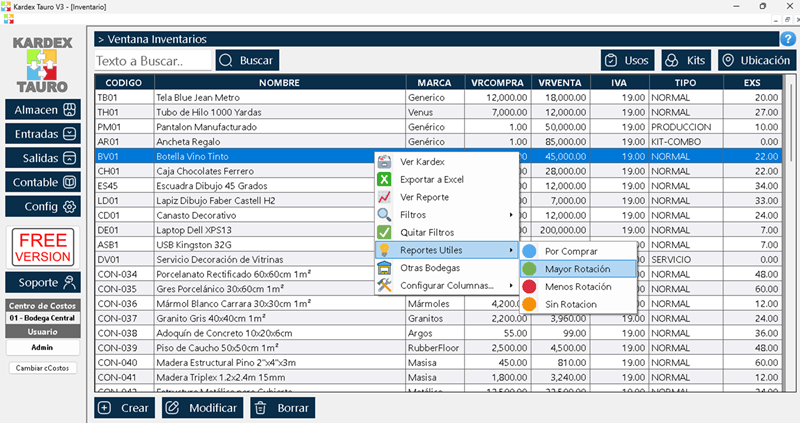
- Register every product with its code and location in Kardex Tauro before you start operating.
- Run a verification count and fix whatever does not reconcile. From then on, keep the routine: everything that comes in gets labeled, everything that moves carries a label, and every movement is recorded in the system with its code.
A well-labeled warehouse feels different: nobody runs around looking for things, counts end in hours, and inventory closing stops being a season of arguments. Your inventory can only be as reliable as its labels. A unique code, readable by people and by scanners, attached to the product, to the shelf and to every box that travels, backed by the disciplined recording of every receipt and shipment, is the difference between a warehouse that controls its numbers and one that guesses them. At Kardex Tauro we know labeling is half the job: that is why the system records every receipt and every shipment from the code on your label, with no loose spreadsheets or handwritten notes. Organize your labels, define your catalog and let the software do the rest. Request a free Kardex Tauro demo today and find out in one afternoon how much time your warehouse loses to searching, recounting and discrepancies that a good label would already have solved.