Is Your Warehouse Shipping Wrong Orders While Stock Never Adds Up? How to Pick Every Order Without Mistakes
Is Your Warehouse Shipping Wrong Orders While Stock Never Adds Up? How to Pick Every Order Without Mistakes
Opening a box the customer was waiting for urgently and finding the wrong size, the color they did not order or half the units is a bad moment. But what really hurts is not the moment itself: it is everything that follows. The customer returns the goods, loses trust and may buy somewhere else next time. And in your warehouse, someone has to correct the stock-out by hand, adjust the Stock ledger, hunt for the product that should have been sent and explain why the inventory no longer adds up. A single mis-shipped order can ruin your business's whole morning; if it happens again and again, it starts ruining your relationship with your best customers.
The good news is that shipping orders without errors does not depend on luck or on having the employee with the best memory. It depends on a method: a dispatch list, searching by location, verifying before packing, protective packaging and a dedicated area where goods leave. These are simple rules that any SME warehouse can apply starting tomorrow. In this article we walk through them one by one.
Dispatch is the moment when inventory tells the truth
In the goods cycle, the dispatch stock-out is the most delicate moment: inventory leaves your control and passes into the customer's hands. If that stock-out is recorded wrongly (the wrong product, too few or too many units), the Stock ledger starts to lie. And a Stock ledger that lies causes two problems that feed each other: you promise orders against stock that no longer exists, and you buy products that do exist but that nobody can find.
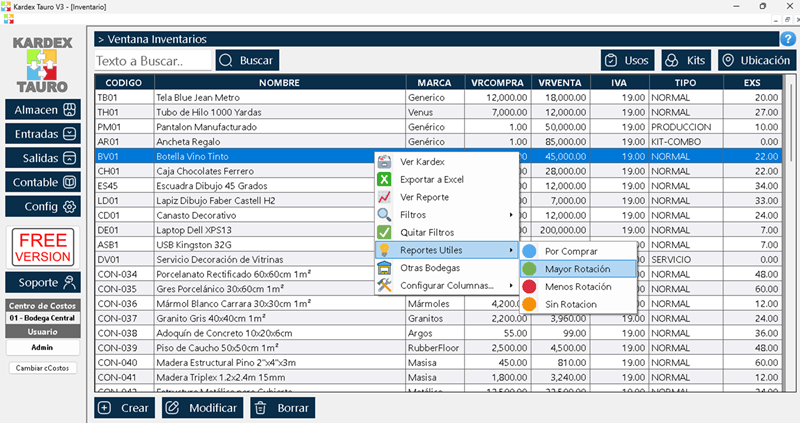
In Kardex Tauro, recording is automatic: the moment you confirm a dispatch, the system generates the inventory stock-out right then. And if you use the system to invoice, the invoice deducts stock exclusively: it only takes down the invoiced product, in the invoiced quantity, and it does so only once. No double deductions, no manual adjustments at the end of the month. The condition for this mechanism to work is that what leaves the warehouse matches exactly what the system records. That is why the method for shipping correctly starts before you touch a single product.
Start with the dispatch list, never with your memory
The classic first mistake of a warehouse without a method is picking orders from memory: "the usual order for Mr. Roberto." The problem is that Mr. Roberto changes his orders too, and the day you assume he ordered the usual, you are sending him last week's order. There is only one golden rule: no product leaves the shelf without a dispatch list in front of you.
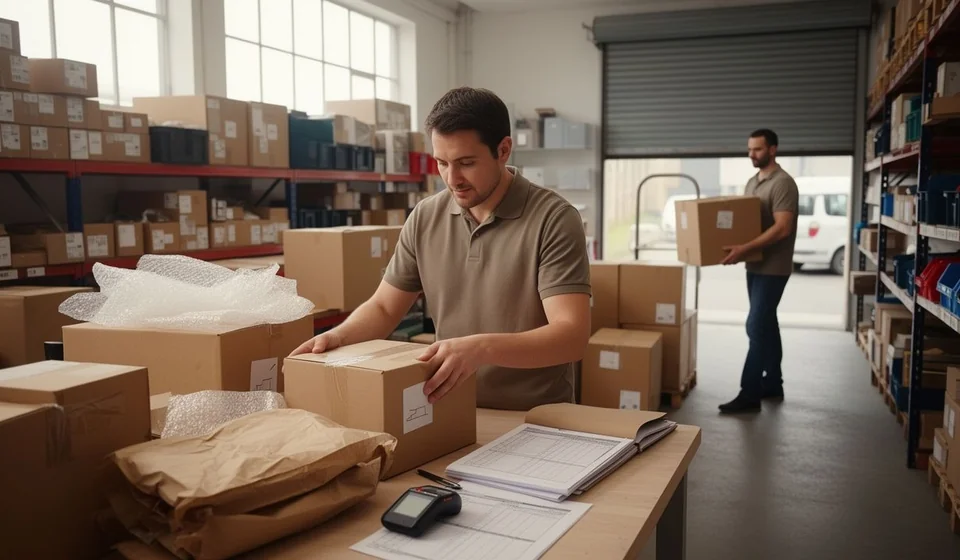
A minimum picking routine looks like this:
- Open the dispatch list for the order before leaving your workstation.
- Read the whole order once, from start to finish, so you have the full picture.
- Walk the warehouse following the list in order, without skipping lines.
- Tick each line at the exact moment you take the product.
- When you finish, check that every line is ticked before sealing the box.
Ticking each line at the moment you take the product is the key. If you tick first and pick later, or pick first and tick at the end, the classic mistake appears: "I thought I had already picked it."
Search by location, not by memory
How many times have you heard in a warehouse "it is over there, between the third and fourth shelves"? Searching from memory turns every dispatch into a treasure hunt and multiplies the odds of grabbing the neighboring product: the one with similar packaging, an almost identical presentation or the barcode right next to it.
The solution is to give every product a fixed location and record it in the system. When the dispatch list shows not only the product name but the aisle, the shelf and the exact position (for example B-3-2: aisle B, shelf 3, level 2), the picker walks straight to the spot without hesitating between two similar packages. Locating your merchandise takes one afternoon of work; the mistakes it prevents last all year.
Verify product and quantity before packing
An order has two moments of truth: when the product is taken from the shelf and when the box is sealed. The second one matters more than the first, because it is your last chance to correct.
Before packing each item, do the triple check: the product matches the line on the list, the presentation is the right one (units, dozens or boxes) and the quantity matches the one ordered exactly. Three seconds per line. A picker who prepares forty lines a day spends two minutes verifying and saves the hours it takes to sort out a return.
Protective packaging: an order that arrives broken is also a failed dispatch
The job does not end when the goods are inside the box: it ends when the order arrives complete and in good condition in the customer's hands. A jar that breaks on the way, a package that gets crushed or a delicate item traveling loose causes the same consequences as a product error: a return, a frustrated customer and a stock-out that ends up as a loss.
- Wrap fragile items one by one and mark the box as fragile.
- Fill the empty spaces so nothing moves during transport.
- Do not overload boxes: two safe boxes are better than one that bursts on the road.
- Put the packing slip or dispatch list inside the box and the recipient label outside, clearly legible.
Double-check: large orders deserve a second look
The more lines an order has, the higher the chance of an error. That is not carelessness: it is statistics. That is why large orders deserve an extra control: have another person (or the same picker on a second pass) review the packed order against the list before it is closed.
| Order size | Recommended check | Why |
|---|---|---|
| 1 to 3 lines | Simple check while packing | The risk is low and manageable |
| 4 to 10 lines | Line-by-line check before sealing | An error is caught in time |
| More than 10 lines or high value | A second person with the list in hand | A fresh pair of eyes sees what fatigue misses |
Set aside a separate dispatch area
If your warehouse packs orders on the same bench where you receive goods, restock the store and check returns, orders compete for attention with everything else and something eventually goes wrong. A fixed dispatch zone (even a table against the wall) keeps the flow tidy: goods arrive there only to be packed and shipped, and they never get mixed in with the rest.
A separate area also protects your inventory. A packed order left in the wrong area can be grabbed by mistake for another order, and at the end of the day you are missing a box nobody knows where it went. What is ready to ship should be in the only place where shipping happens.
What a bad dispatch really costs (and almost nobody adds up)
A dispatch error has a real cost that few SMEs calculate. The picture becomes clear when you add up every piece:
| Consequence | What it really costs |
|---|---|
| Return caused by the seller's mistake | Round-trip freight, repacking and a new shipment: the order can be paid for up to three times |
| A customer who received the wrong order | Winning back a lost customer costs several times more than keeping a current one; many simply never come back |
| Manual inventory correction | The Stock ledger stops reflecting reality and the warehouse loses trust in its own numbers |
| Emergency replacement | It is shipped in a hurry and without checking to calm the customer... and the error cycle repeats itself |
The quietest case is the last one: the handwritten correction. When an order goes wrong, the natural reaction is to fix it on the spot: deduct from the Stock ledger by eye, scribble in a notebook, promise the missing items will be replaced later. That unsupported correction is the mother of every mismatch. At the end of the month the inventory does not add up, nobody knows why, and the blame is spread among suppliers, theft and bad luck. The real cause was a chain of manual adjustments that were never recorded for what they were: returns, exchanges and restocks.
Speed versus accuracy: they are not enemies
The picker who rushes grabs the first package they see; the one who walks with a method grabs the right one. Accuracy creates speed: an order picked correctly the first time causes no returns, is not packed twice and requires no apologetic phone calls.
- How often errors happen: in warehouses without a method, logistics industry studies estimate that between 1% and 3% of manually picked orders go out with some kind of error.
- Cost of a return: freight, repacking and reshipping can consume between 15% and 20% of the order's value.
- Customer trust: a customer who receives the wrong order remembers the mistake far longer than they remember the correct shipments.
- Reliable inventory: with stock-outs recorded on the spot, the Stock ledger becomes useful again for making purchasing decisions instead of just filling reports.
Shipping without errors does not require a huge warehouse or expensive technology: it requires a method. A dispatch list, locations, verification before packing, protective packaging, a double check on large orders and a defined shipping area. The software closes the loop: it records the stock-out at the exact moment of dispatch and, when you invoice, it deducts stock only once and correctly.
With Kardex Tauro you can print your dispatch lists, record every stock-out and invoice with the peace of mind that your Stock ledger always tells the same story as your shelves. Try the system with your real inventory and see in the first month how many errors disappear. Your warehouse can move from saying "I hope it is right" to knowing it is right.