Surcharges and Special Contributions: When They Apply

Surcharges and Special Contributions: When They Apply
The income tax return comes out with a higher balance than projected and nobody knows where the difference came from. Or the opposite: every year the company pays a contribution that is no longer in force and nobody claims it back. Both cases come from the same oversight: treating as a tax a figure that has a different base and a different recipient. What follows separates the three figures, shows the base of each one, works an example that adds up, and gives a concrete list for deciding whether your company is liable.
Three figures that sound alike: tax, surcharge, and contribution
A tax funds the general budget and has no direct counterpart: the company pays income tax and receives nothing specific in return. A surcharge is not a stand-alone tax: it is an additional percentage added to the rate of a tax that already exists, and it is almost always settled on the same base as the main tax.
A contribution is a mandatory payment with an identifiable recipient. The parafiscal kind supports an entity or a sector and does not go into the national general budget; the special kind is paid for receiving or using something concrete, such as a public contract or a utility service.
That is where the practical confusion lives: the surcharge shares a base with the tax it is added to, while the contribution has its own base and its own pocket. Mix them up and the outcome is predictable: you pay twice, or you do not pay at all.
Who creates them and for how long
Article 338 of the Constitution sets the rule: only the law, departmental ordinances, and municipal agreements may determine the taxing authority, the triggering event, the taxable base, and the rate. A decree does not create a surcharge, it implements one. A circular interprets, and its force is argued case by case.
That gives the first filter: if someone charges you a surcharge and cannot show the rule that created it, the charge is unsupported; if the rule exists but its term ended, the charge is improper even when the invoice looks formally perfect.
The second feature is temporariness. Many surcharges are born with an expiration date, a closing condition, or a total amount that switches them off once exhausted; others are extended several times and their original text becomes outdated. So validity is confirmed in the rule for the period being filed, not in the memory of whoever paid it last year.
The third layer is territorial: a municipal surcharge applies only in that municipality. A company with offices in several cities faces different obligations for the same concept, and consolidating them into one line item is a classic source of error.
| Figure | Nature | Added to | Destination | Credit against income tax? |
|---|---|---|---|---|
| Tax | Main tax | Nothing: it exists on its own | General budget | Not applicable |
| Surcharge | Addition to an existing tax | The rate or base of the main tax | The purpose set by its rule | No: it increases the same expense |
| Parafiscal contribution | Mandatory payment with a sectoral destination | No tax: it stands apart | Sector entity or fund | No: it is an expense, not a credit |
| Special contribution | Payment for a specific contract or service | No tax: it stands apart | Entity that contracts or provides | No |
Income tax surcharges: when they appear
They are almost always drafted the same way: percentage points added to the rate and applied to taxable net income. The taxpayer computes once, with the combined rate, and remits the total on the same form.
They appear when the state needs additional revenue and wants to collect it the cheapest way: through the form, filer, and audit structure that already exist. Rather than create a tax with its own architecture, it adds a point to something that already works.
Some sectors have been subject to temporary income tax surcharges over the years; the financial sector is the one most cited in public debate. Citing it proves nothing: what matters is the rule for the period being filed. The right question is not whether the sector ever had a surcharge, but whether it has one for that specific period and how the rule is worded.
And the wording changes the result: most rules set points on the base; others set a percentage of the tax determined. Both are called a surcharge in everyday language, but they produce very different numbers.
Parafiscal contributions: who collects them and what for
They are charged on payroll, borne by the employer, to support training, family welfare, promotion, or social security entities, such as family compensation funds. They do not fund the general budget: they go to an entity with a specific destination that reports on that money.
The base is payroll, not profit. Two companies with the same net income and different headcounts pay very different amounts, and a company with a loss can still owe the contribution. That asymmetry explains why accounting and HR argue so much about this line: it does not behave like a tax.
The rate and the exemptions are set by law and change with reforms. Reliefs are tied to employer size or type of employment relationship. Confirming whether the company qualifies for an exemption matters as much as confirming the rate: overpaying costs cash flow, underpaying costs interest.
One detail gets lost: the contribution paid may be deductible for income tax if it meets causality, necessity, and support. What it never is, is a credit against the tax. It does not reduce the balance payable; it reduces the base like any qualifying expense.
Special contributions by sector
They are grouped by the event that triggers them, not by the taxpayer's sector. That is the first misunderstanding: there is no memorizable list of liable sectors, only assumptions that must be proven one by one.
By public contract. Anyone entering into a public works contract pays a contribution calculated on the contract value, going to that entity. It applies per contract, not per activity: the same construction company can have contracts within the assumption and others outside it.
By utility service. Industrial and commercial users pay a solidarity contribution that subsidizes lower-income users. The base is billed consumption. A company that changes premises or use can enter or leave the assumption without changing its activity.
By production or export. Agricultural promotion contributions are triggered by the volume produced, exported, or milled of a specific product. The base is not money but quantity, converted to pesos under the rule's formula.
By territory. Municipal surcharges, such as the one funding the fire department in some municipalities or the one applied to fuel consumption, are triggered by the location of the property, the establishment, or the operation. They change from city to city and year to year.
How they are calculated and on what base
Every figure has four data points that must be written down before multiplying: triggering event, base, rate, and recipient. If one is in doubt, the calculation is not ready. The table orders them so the discussion focuses on the missing data rather than on opinion.
| Figure | Triggering event | Base | Recipient | Who administers it |
|---|---|---|---|---|
| Income tax | Earning income in the period | Taxable net income | National budget | National tax authority |
| Income tax surcharge | Falling within the rule's assumption, in addition to earning income | The same taxable net income, unless the rule says otherwise | The purpose set by the rule | The same as the main tax |
| Parafiscal contribution | Having employees on payroll | Payroll or contribution form value | Sector entity or fund | The beneficiary entity |
| Contract contribution | Entering into the covered contract | Contract value, per the rule | Contracting entity | The contracting entity |
| Solidarity contribution | Being an industrial or commercial user | Billed consumption | Solidarity fund | The utility provider |
When the surcharge is drafted in points, the formula is a sum of rates and a single multiplication: base times the main rate plus the points. It is not two calculations or two forms. When it is drafted as a percentage of the tax, it is two steps, and the second applies to the result of the first.
Before multiplying, two decisions move the number more than the rate: which income enters the base and which discounts apply first. The surcharge is settled on the base that remains after those adjustments, unless the rule says otherwise.
The example that adds up: 500 million in net income
Assume taxable net income of $500,000,000, an assumed income tax rate of 35%, and an assumed surcharge of 3 percentage points on the same base. All three figures are for the exercise: they show the mechanism, they are not for filing. The rate in force, the points, and the base are confirmed in the rule for the period.
| Item | Base | Rate | Amount |
|---|---|---|---|
| Taxable net income | — | — | $500,000,000 |
| Income tax | $500,000,000 | 35% | $175,000,000 |
| Surcharge (3 percentage points) | $500,000,000 | 3% | $15,000,000 |
| Total due | $500,000,000 | 38% effective | $190,000,000 |
The total comes from adding, not chaining: $175,000,000 + $15,000,000 = $190,000,000. On net income that is a 38% burden: 190 divided by 500. That is why the effective rate disclosed in the notes does not match the nominal rate, and why the effective rate reconciliation needs its own line for the surcharge.
Now the common error. If someone applies the 3% to the tax instead of the base, they compute $175,000,000 × 3% = $5,250,000 and file $180,250,000. The gap against the correct calculation is $9,750,000: they underpaid. With interest and penalty, that gap becomes an assessment nobody budgeted for.
Proportion helps spot the error fast: 3 points on the base equal 8.57% of the tax, not 3%. If the additional amount on the form is less than a quarter of what was projected, the formula was applied to the wrong line.
And the parafiscal contribution does not belong in this picture. It is triggered on a different base, payroll, has its own recipient, and is not subtracted from the tax: it is an expense that reduces the base if it qualifies, not a prepayment. Adding it to the tax form total is the second classic error on this topic.
Accounting recognition and disclosure
The surcharge is part of income tax expense, in the current component. It is recognized in the period and is not deferred: it does not arise from a temporary difference between accounting and tax bases, so it creates no deferred tax. Its monthly provision uses the same projection as the tax and is adjusted at close.
The parafiscal contribution takes another path: it is recorded as operating expense in employee benefits or contributions, not in the tax account. That separation changes the tax expense indicator, the effective rate reconciliation, and the reading of operating margin.
Three disclosures are expected in the notes. The reconciliation between nominal rate and effective rate, with a line explaining the surcharge. The composition of contribution expense, with recipient and recognition criteria. And the status of contingent obligations: if a surcharge's validity is being disputed, that is disclosed.
Closing test: if the statutory auditor asks why the effective rate is 38 and not 35, the answer must be in the work paper, with the rule cited and the calculation reproducible. If the answer is "that's how it came out," the disclosure is incomplete even when the number is right.
How to verify whether the company is liable
Verification takes seven steps and is documented in that order. It does not require a new system: it requires writing down what is currently settled from memory.
- Identify the main tax and the rule that created the surcharge, with number and date.
- Confirm validity for the period being filed, not for the year the topic was learned.
- Prove the assumption: activity, sector, size, contract, municipality, or user type.
- Confirm the base and the formula: points on the base or percentage of the tax.
- Check whether an exemption or special regime applies to the specific case.
- Cross-check against the obligations registered with the tax authority and against last period's filing.
- Sign off on the conclusion: who reviewed it, under which rule, and on what date.
Step three is the most often skipped. A company can belong to a sector and not fall within the assumption, or fall within it through a single business line. The economic activity classification helps but does not decide alone: the rule may speak of revenue, contracts, users, or volume.
Step six brings the most surprises: comparing what was filed against what is required reveals obligations that were not paid and payments made without support. The second requires a refund request with its own procedure and its own deadline.
Common errors: symptom, consequence, and fix
These five show up in almost every review of this topic. They are not knowledge failures; they are process failures. Each has a symptom visible before the assessment arrives, if anyone looks.
| Error | Symptom | Consequence | Fix |
|---|---|---|---|
| Applying the surcharge to the tax instead of the base | The additional amount is a small fraction of what was projected | $9,750,000 short in the example, plus interest and penalty | Read whether the rule sets points on the base or a percentage of the tax |
| Confusing the parafiscal contribution with a tax | The item sits in the tax account and is treated as a prepayment | Distorted effective rate and poorly disclosed notes | Separate accounts by nature and disclose by recipient |
| Paying a surcharge that is no longer in force | The provision repeats every year with no rule behind it | Permanent extra cost and a slow-to-recover credit balance | Check validity every period, rule in hand |
| Not checking whether the company falls within the assumption | Cost does not match that of comparable companies | Payment of a non-existent obligation or an assessment for omission | Prove the assumption through activity, contract, or territory |
| Not disclosing the contribution in the notes | The expense is lumped into "other" | Auditor observation and lost traceability | Break it down by recipient and recognition criteria |
There is a sixth error that does not fit the table because it is about conversation, not calculation: not asking. Accounting assumes sales knows the contract rule, sales assumes accounting reviewed it, and the obligation sits in no man's land until the assessment arrives. An obligations matrix with an owner and a review date costs one afternoon.
The order of the calculations matters too. Discounts, losses carried forward, and exempt income are applied before reaching the surcharge base, unless the rule says otherwise. Changing the order changes the result even when the rate is the same.
An honest close before you decide
Every figure has its base and its recipient, and none is explained by its name. The surcharge is added to a tax that already exists and shares its base; the parafiscal contribution is charged on payroll or production and has its own pocket; the special contribution is paid for a specific contract, service, or territory. Before paying, verify: rule, validity, assumption, base, and rate. If those five are not written down, the obligation is not confirmed, either to pay it or to omit it.
This does not replace your accountant or statutory auditor, and it does not cover every case. If the company operates in several municipalities, holds public contracts, or belongs to a sector with its own regime, the obligations map multiplies and an obligations matrix is worth the effort. If a surcharge's validity is under debate, paying or provisioning is a risk decision, taken with advice, not with another company's example.
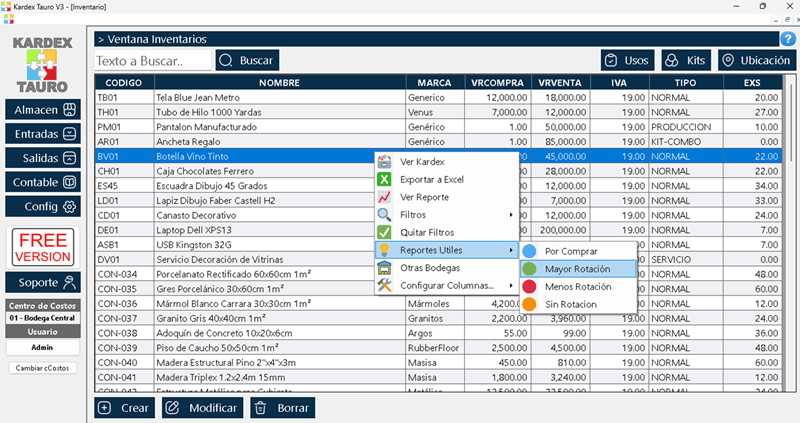
For that control, keeping the recognition and the support in one place saves half the work: Kardex Tauro lets you record the surcharge and the contribution in separate accounts and see the real cost per period, so the effective rate reconciliation is built from data instead of last-minute reconstruction.