What is a production order?
What is a production order?
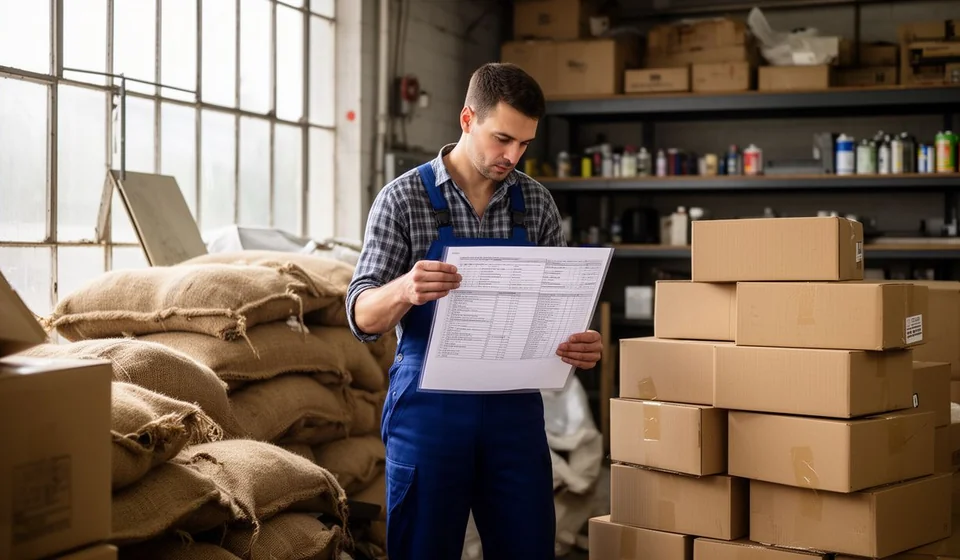
A production order —also called a manufacturing order or work order— is the internal document with which a company authorizes the manufacturing of a product or the transformation of raw materials in specific quantities, within an established deadline and with the necessary resources. In essence, it is the formal instruction that starts the work in the workshop or plant: it defines what will be produced, how much, with which materials, who is responsible and by when it must be ready.
In any business that manufactures or transforms products —a carpentry shop, a garment workshop, a metal fabrication shop or a food plant— production should not depend on verbal agreements or on the operators' memory. Each batch produced should answer to a production order, because that document is the starting point of the whole operation.
In addition, the production order is directly connected to inventory control: it makes it possible to record raw material consumption, the labor applied and the entry of finished goods into the warehouse. Understanding it well is therefore key to keeping a reliable inventory record and to ensuring that physical stock matches what is registered in the system.
What is a production order for?
The main functions of a production order are:
- Authorizing manufacturing work: no production process should start without an order backing it up; this prevents producing on impulse or making the wrong quantities.
- Organizing time and resources: it allows scheduling machines, operators and shifts, and knowing when each batch will be available for delivery or sale.
- Calculating and controlling raw material consumption: by specifying the required inputs, the warehouse knows exactly what to issue and how much consumption is expected.
- Recording the entry of finished goods: when the order is completed, the manufactured product enters inventory and becomes available for sale.
- Determining production cost: with information on materials, time and labor, it is possible to calculate how much each unit cost to make.
- Providing traceability: if a batch has a defect or a claim, the order makes it possible to identify when it was manufactured, with which materials and who was involved.
- Coordinating departments: production, warehouse and purchasing work with the same information and avoid misunderstandings.
What information does a production order contain?
There is no single format, since each company adapts the document to its operation; however, a complete production order usually includes at least the following data:
- Order number and issue date: a unique identifier for controlling and tracking the document.
- Product to manufacture: name and code of the item, together with its description or technical reference.
- Quantity to produce: the exact number of units, kilos, meters or pieces in the batch.
- List of raw materials and inputs: also called the bill of materials, it states what is needed and in what quantities to make the batch.
- Person in charge: the person, team or work center responsible for executing the order.
- Start and delivery dates: the deadline within which production must be completed.
- Order status: whether it is pending, in process, completed, cancelled or waiting for materials.
- Notes: quality specifications, packaging, internal batch or particular customer instructions.
Production order, raw materials and inventory: how they relate
Producing means transforming: the company takes raw materials and inputs, adds labor to them and turns them into a finished product. This transformation creates two opposite movements in inventory. On one hand, raw materials leave the warehouse because they are consumed during the process; on the other, finished goods come in, ready to be sold or shipped.
The typical flow of a production order is the following:
- The order is created with the product, the quantity and the required raw materials.
- The warehouse checks the availability of inputs and issues them to the production area; that issue is recorded as raw material consumption.
- The production team transforms the materials and records the progress of the order.
- When finished, the finished goods enter the warehouse and the order is marked as completed.
- The closed order remains as supporting evidence for costs, audits and traceability.
If these movements are not recorded properly, inventory gets out of balance: raw material that was already consumed may still appear in stock, or finished goods may never be entered. An organized inventory system prevents this by recording every movement with its supporting document.
Difference between a production order and a purchase order
These two documents are often confused, but they serve opposite purposes. A purchase order is issued to buy goods or services from an external supplier; a production order is issued to manufacture a product internally from raw materials. The following table summarizes their differences:
| Aspect | Purchase order | Production order |
|---|---|---|
| When it is used | When stock of an item the company does not manufacture runs low | When there is a customer order or a stock need that the company manufactures |
| Who issues it | The purchasing department | The production or planning department |
| Who executes it | An external supplier | The company's own team |
| Effect on inventory | Purchased goods come in | Raw materials are consumed and finished goods come in |
| Supporting document | Supplier invoice or delivery note | Production report and recorded consumption |
In short: with the purchase order the company acquires what it does not produce; with the production order it manufactures what it decided to produce with its own resources.
Types of production: make-to-order and make-to-stock
Depending on the origin of the demand, production orders are mainly classified into two types:
- Make-to-order production: the company manufactures only when it receives an order or contract from a customer. It is used for made-to-measure products, such as custom furniture, machinery, made-to-order garments or personalized items. Its advantage is that it does not create unsold inventory; its challenge is responding quickly to the customer's deadlines.
- Make-to-stock or batch production: the company manufactures in advance, in scheduled batches, to keep stock available and sell it later. It is typical of standard products, such as packaging, packaged foods, spare parts or mass-consumption items. Its advantage is that the product is ready when the customer arrives; its challenge is calculating batch sizes well so as not to end up with excess or shortage of inventory.
Practical example of a production order
To understand it better, let us look at an example. A metal fabrication shop receives an order for 500 L-shaped steel brackets for industrial shelving and issues the following production order:
| Field | Order details |
|---|---|
| Order number | PO-2026-0142 |
| Product to manufacture | L-shaped steel bracket for shelving |
| Quantity to produce | 500 units |
| Required raw materials | 40 sheets of 3 mm steel, 25 liters of anti-corrosion paint, 30 kg of welding electrodes and 1500 sets of fasteners |
| Person in charge | Workshop supervisor, assembly line |
| Start date | March 10 |
| Delivery date | March 24 |
| Status | In process |
When the warehouse issues the materials, an inventory issue is recorded: the raw material record subtracts the 40 steel sheets, the 25 liters of paint, the 30 kg of electrodes and the 1500 fastener sets. During production there may be waste or leftovers, which must also be recorded. When the batch is finished, 500 brackets enter the warehouse as finished goods, ready to be delivered to the customer.
Thanks to the production order, the company knows exactly how much raw material it consumed, how much it cost to make each bracket and how much finished product remained available.
Best practices for managing production orders
- Number and file every order: a unique sequence avoids confusion and makes audits easier.
- Check stock before starting: if there is not enough raw material, the order stops and delays occur; it is better to plan purchases in advance.
- Record real consumption: do not take quantities for granted; write down what was actually issued and what was returned to the warehouse.
- Record waste and leftovers: the normal losses of the process must be reflected in inventory so that costs are real.
- Close the order when finished: an order left open indefinitely distorts indicators and inventory.
- Use an inventory system: keeping control in spreadsheets or on paper becomes unsustainable as the number of orders and products grows.
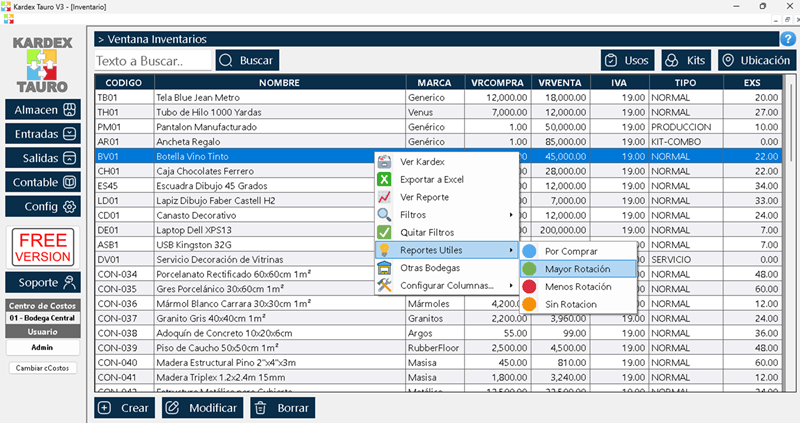
In short, the production order is the document that connects planning with execution: without it there is no reliable way to know what is being manufactured, how much it costs and what effect each batch has on inventory. If your business manufactures products and you still control these processes by hand, it is worth using a tool like Kardex Tauro, an online inventory system designed to track the issues, receipts and stock balances of your warehouse in a clear and organized way.