What is a kardex?
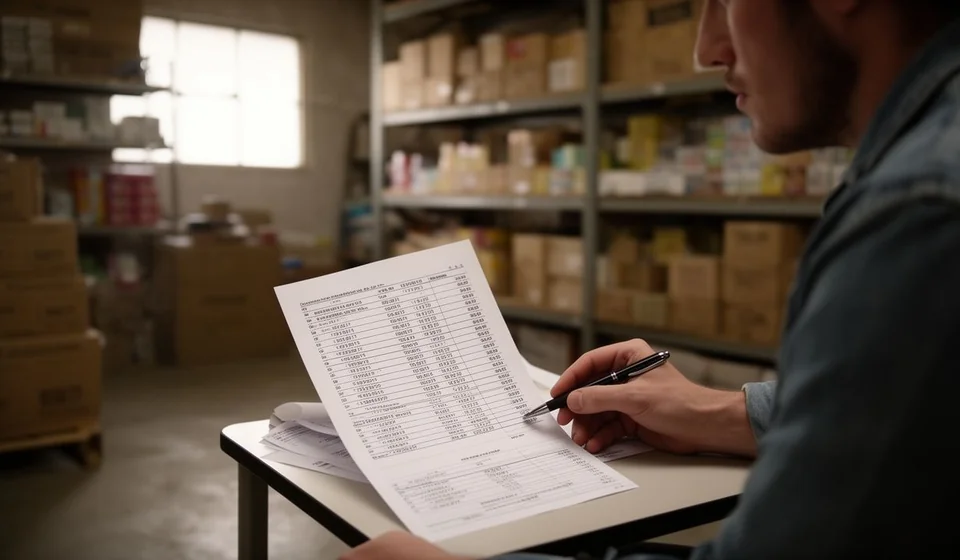
What is a kardex?
If you have spent time in a warehouse, a wholesale depot or the back office of a store in Latin America, you have almost certainly heard the word kardex. People pronounce it "CAR-dex", keep it in folders, argue about it at stock-taking time and hand it to accountants at the end of every month. The name sounds like a brand or a piece of software, but the kardex is older than most of the businesses that use it. It is a record — kept on paper cards for decades and now usually inside a computer — that shows, movement by movement, exactly what happened to each product you sell: how many units came in, how many went out and how many are left. If you are reading this in English, you may have met the word through a Latin American supplier, a franchise manual, an import-export report or an accounting file. This article explains what a kardex is, why companies insist on keeping one, what its columns look like, how it connects to the cost of goods sold and to perpetual inventory, and whether you still need one when software can do the math for you. By the end, you will not only understand the term: you will know how to read one and even how to build one.A simple definition of a kardex
A kardex is an inventory control record — originally a physical card, today usually an electronic register — that tracks every movement of a single product. Each entry that adds stock (purchases, customer returns, production, positive adjustments) and each exit that removes stock (sales, damage, returns to the supplier, negative adjustments) is written in chronological order, followed by the balance remaining after that movement. Many kardex records go further and register unit costs and values, so the same sheet that controls quantities also feeds the accounting books. The essential idea is order through detail. A shop with five hundred products does not manage one giant list; it keeps five hundred kardex records, one per product, each acting as a chronological diary of that item's life. Because movements are registered the moment they happen, the kardex is also the basic working tool of the perpetual inventory system, in which the recorded stock is supposed to match the physical stock at all times, not only after an annual count.Where does the word "kardex" come from?
Kardex began as a brand name, not as an accounting term. In the early twentieth century, the Kardex Company — later absorbed into Remington Rand — sold filing cabinets of "visible" cards designed to store and update records quickly by sliding a new card into a labeled pocket. The system became so popular that in Latin America the brand name turned into a common noun: any card that controlled stock came to be called a kardex, the way people say "hoover" for any vacuum cleaner or "kleenex" for any tissue. This history also explains why you will see different spellings. Kardex with a K is the most common form in Spanish- and Portuguese-speaking markets. Cardex with a C appears too, as a simplified variant. In plain English, the same object is usually called an inventory card, a stock card, a stock ledger card or a perpetual inventory record. When a supplier in Mexico, Colombia or Peru tells you they will send you "el kardex", they are offering exactly that: the movement history and the current balance of a product.Why a kardex matters
Without a kardex, the only way to know what you have is to count everything, and between counts you operate on guesses. With one, several practical problems disappear at once:- You know the balance without counting. The record answers "how many do I have?" in seconds, for any product, for today or for any date in the past.
- You can plan purchases. When the balance of an item approaches its minimum level, the kardex shows how fast that product has been moving, which supports the reorder decision with facts instead of feelings.
- You detect losses and errors. Comparing the physical count with the kardex balance reveals shrinkage from theft, breakage, misplacement or poor record keeping — and even helps locate the moment it happened.
- You can value your inventory. A valued kardex gives the total worth of your stock on any date, which is needed for financial statements, insurance and credit applications.
- You support your accounting and taxes. In several Latin American countries, the cost of goods sold declared to the tax authority or shown to an auditor must be traceable to supporting records, and the kardex is the standard piece of evidence.
The typical columns of a kardex
Kardex designs vary by country, software and personal preference, but almost all share the same anatomy. At the top, a header identifies the product: code, description, unit of measure, storage location, minimum and maximum stock, main supplier and the period covered. Below it, the movement table usually includes:- Date — when the movement occurred.
- Document number — the purchase invoice, sales invoice, delivery note or adjustment form that supports the movement.
- Description or type of movement — purchase, sale, return, damage, adjustment.
- Entries — quantity, unit cost and total value of what came in.
- Exits — quantity, unit cost and total value of what went out; for a sale, that total is the cost of the goods sold.
- Balance — quantity, unit cost and total value remaining after the movement.
Kardex vs inventory card vs cardex: same record, different names
Are these different things? For practical purposes, no. An inventory card, a stock card and a cardex are all names for the same kind of record, and kardex is simply the most widespread word in the Spanish- and Portuguese-speaking world. If there is one nuance worth knowing, it is that a plain bin card hung next to the shelves sometimes records only quantities, while a full kardex — the accounting kind — values every movement. When someone asks for a kardex in a business or accounting context, assume they want the valued version, quantities plus costs, because that is the one that supports financial statements and tax returns.The kardex, the cost of goods sold and perpetual inventory
Two accounting ideas are inseparable from the kardex. The first is perpetual inventory. Under a perpetual system, the inventory balance is updated continuously, after every purchase and every sale, instead of being recalculated only when a physical count is done at the end of the period. The kardex is precisely that: a perpetual, product-by-product ledger. The second idea is the cost of goods sold (COGS). The classic formula is: COGS = beginning inventory + purchases − ending inventory. A valued kardex gives you the same result in a more direct way: each time you sell, the exit column records the cost of the units sold, and the cost of goods sold for a month is simply the sum of that column. The classic formula then works as a cross-check rather than as the only method available. The unit cost used on each line depends on the valuation method the company adopts and applies consistently: weighted average cost, the most common in Latin America and accepted by IFRS (IAS 2); FIFO, first in, first out; or specific identification for unique items. Finally, at least once a year the physical count is reconciled with the kardex, and any difference is registered as an adjustment so that the record and reality agree again.A kardex in practice: a simple example
Suppose you sell a stainless steel water bottle and you use the weighted average cost method. On June 1 your kardex opens with 10 bottles purchased at $10.00 each. Every movement is then added to the table, line by line:| Date | Movement | Units in | Units out | Balance | Unit cost | Value in | Value out | Balance value |
|---|---|---|---|---|---|---|---|---|
| Jun 1 | Opening balance | — | — | 10 | $10.00 | — | — | $100.00 |
| Jun 3 | Purchase, invoice 1042 | 20 | — | 30 | $10.00 | $200.00 | — | $300.00 |
| Jun 7 | Sale, invoice 0051 | — | 15 | 15 | $10.00 | — | $150.00 | $150.00 |
| Jun 12 | Purchase, invoice 1067 | 10 | — | 25 | $13.00 | $130.00 | — | $280.00 |
| Jun 18 | Sale, invoice 0087 | — | 10 | 15 | $11.20 | — | $112.00 | $168.00 |
| Jun 30 | Ending balance | — | — | 15 | $11.20 | — | — | $168.00 |