Purchase order: what it is, what it includes and how to do it right
Purchase order: what it is, what it includes and how to do it right
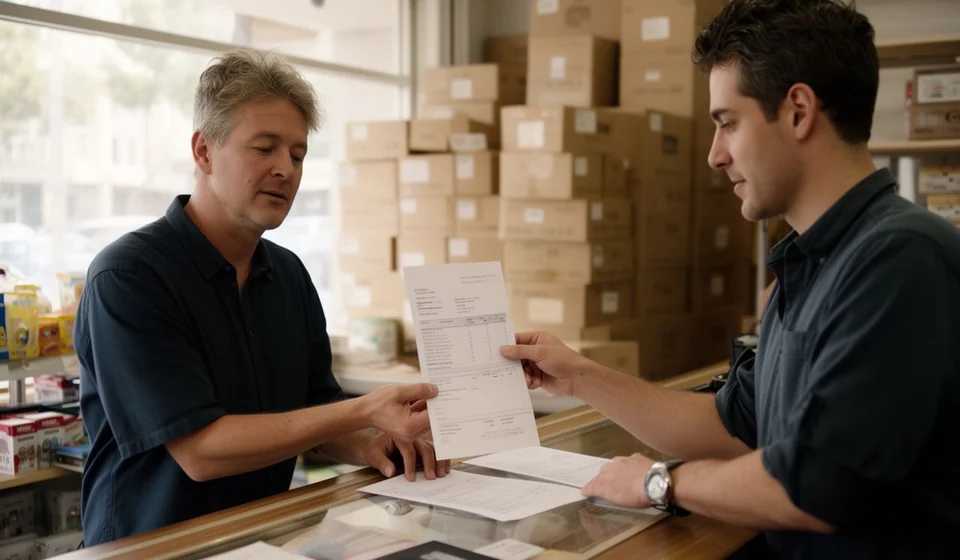
Few scenes are more uncomfortable in a small business than this one: you ordered merchandise by phone or WhatsApp, the supplier shipped it, and when the invoice arrives the prices are not the ones you agreed on. Or worse: 80 units arrive when you ordered 120, and the amount they ask you to pay is for 120. Without a written document in between, the argument comes down to your word against the salesperson's, and the one holding the invoice usually wins.
The purchase order — also called a PO — is the tool that prevents that scenario. It is such a simple document that it hardly seems to deserve a full article, and yet it is the piece that holds together the entire purchasing cycle of businesses that buy well. In this article I will explain what a purchase order is exactly, why you should issue one even with suppliers you trust, what parts it must include, what a well-made template looks like, the correct flow from ordering to paying, and what to do when the merchandise arrives different from what was agreed. At the end I give you criteria to decide whether a simple order is enough or whether your business already needs formal purchasing control.
What a purchase order is — and what it is not
A purchase order is the formal, written request you make to a supplier to provide merchandise or services under specific conditions: which items, in what quantities, at what price, by when and with what payment terms. When the supplier accepts it, it becomes a commitment on both sides: they undertake to deliver what the order says, and you undertake to receive it and pay for it as agreed.
To use it well, it helps to be very clear about what it is not. It is not the invoice: the invoice is issued by the supplier, usually after delivery, and its job is to charge you. It is not proof of payment: paying is a separate step that should happen after receiving and checking. Nor is it the delivery note or the shipping document, which document the shipment itself. The purchase order lives at the start of the cycle: it is issued before the merchandise reaches your business, which is why it is the reference against which everything else is received and paid.
Why you need a purchase order even with a supplier you trust
The most common argument for not using purchase orders is also the most dangerous: 'I have been buying from this supplier for ten years and we have never had a problem.' Trust is valuable, but it does not replace documentation — not because you should distrust your supplier, but because of the way people and businesses fail. The salesperson who serves you today is not the one who took the order; prices move without notice; quantities get mixed up; end-of-month rushes lead to partial shipments; and when something goes wrong, nobody remembers exactly what was agreed on the phone three weeks earlier.
The purchase order solves all of that before the problem starts, because it puts in writing, with a date and a number, the price, the quantity, the delivery date and the terms. The benefits are concrete:
- It locks in the price and the conditions BEFORE the merchandise arrives: if the supplier invoices at a higher price, the order is your evidence.
- It is the reference for receiving: you know exactly how much should arrive, and you can spot shortages or overages on the spot.
- It is the basis for paying and for claiming: you only pay for what you ordered, received and were invoiced, and any difference is settled with the document in hand.
On top of that, the purchase order organizes your buying from the inside: who ordered, when it was ordered, how much is expected and what is still pending. That information is worth as much as the paper itself.
What parts a purchase order includes
A well-made PO needs no design or complexity, but it does need certain fields, because each one does a job. The essential parts are:
- Consecutive number: it identifies the order and lets you reference it in receiving, invoicing and payment. Without a number, it is just another piece of paper.
- Supplier details: legal name, tax ID and the contact who handles the order.
- Issue date: when you placed the order. It sounds obvious, but it is what defines deadlines and claims.
- Promised delivery date: when you expect the merchandise. Without it, 'it is on its way' can mean anything.
- Payment terms: deadline (cash, 15, 30 or 60 days) and method. This is where you avoid the surprise of being asked for cash when you agreed on 30 days.
- Order lines: each one with code, description, quantity, unit price and subtotal. This is the heart of the document.
- Taxes and total: the amount you will actually pay if everything agreed is fulfilled.
- Delivery conditions and notes: who pays the freight, where it is delivered, how long the offer is valid and any special instructions.
When the supplier asks you to use their own format, that is fine, but check that it includes these fields. And when the supplier has no format, yours is the one that rules.
A purchase order template: this is what a good one looks like
This is what you want to see in the lines of your order. The quantities and prices are examples, in your local currency:
| Code | Description | Quantity | Unit price | Subtotal |
|---|---|---|---|---|
| CAJ-100 | Corrugated cardboard box 40 x 30 cm | 200 | 1,200 | 240,000 |
| ETQ-045 | White adhesive label, pack of 500 | 10 | 4,500 | 45,000 |
| FLM-512 | Clear stretch film, 300 m roll | 5 | 18,000 | 90,000 |
| Subtotal | 375,000 | |||
| Taxes and other charges, if applicable | — | |||
| Order total | 375,000 | |||
Notice how powerful this table becomes when the invoice arrives: if they invoice you 380,000 with no explanation, the difference jumps out and you have a concrete question to ask. And if they try to charge you a fee that was never agreed, the order says otherwise. That table is also the same one you use to receive: you count what arrives against each line, and any difference is identified instantly.
The correct flow: order, receiving, invoice and payment
The purchase order does not work alone; it works as the first link of a flow. The correct sequence is this:
- You issue and send the purchase order, and the supplier accepts it.
- When the merchandise arrives, you receive it against the order: you count, check the condition and note any differences.
- The supplier sends the invoice, and you match it against the order and against what you actually received: the three documents must tell the same story.
- Only then do you pay, and you pay exactly what matches.
This flow sounds administrative, but in practice it is money. When it is respected, it is almost impossible to overpay or to receive less than you ordered without noticing, because every step leaves a document that is compared with the previous one. When the flow is skipped, double payments, invoices nobody can confirm and inventories that never balance start to appear.
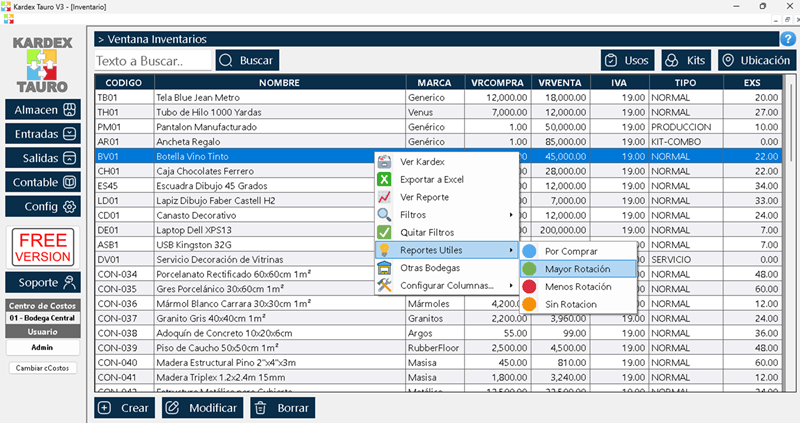
This is also where your inventory comes in: the merchandise you receive against a purchase order should become a stock receipt, with its quantities and its real cost. If you record that receipt as soon as it arrives, your inventory records reflect reality, and the next purchasing cycle is decided with data instead of gut feeling. A system like Kardex Tauro lets you record the merchandise receipt and have stock and costs update on the spot, without rewriting anything by hand.
What to do when the merchandise does not match the order
No matter how organized you are, sometimes something different from what was agreed will arrive: missing units, extra units, damaged goods or changed prices. The golden rule is never to receive blind: check against the order before signing or confirming anything and note the difference right away. If the delivery person is waiting, prefer to write it down and receive under protest rather than sign an acceptance you cannot dispute later.
| Situation when receiving | What you do | What gets recorded |
|---|---|---|
| Units are missing | Receive what arrived or mark the order as partial, and agree with the supplier on replacement or a discount | The shortage, noted on the order or in the system |
| Extra units arrived | Confirm whether they will invoice you for them; if not, arrange a return or a credit note | The actual quantity received |
| Damaged merchandise | Separate the damaged units, do not mix them with the good ones, and arrange a replacement or credit note | The condition, recorded before accepting |
| Price different from what was agreed | Do not overpay: ask them to invoice according to the order and settle the difference before paying | The order as the price reference |
Every difference settled on time is money you do not lose, and in all those conversations the purchase order is your backup: it is not your word against the salesperson's, it is a document with a number, a date and a signature.
When a simple order is enough and when you need formal control
Not every business needs the same level of formality. If you buy little, from the same two or three suppliers, and you personally receive and pay for everything, a simple written order — even a message with the number, date, quantities and prices — can work, with one condition: that it is saved and can be retrieved. The problem with WhatsApp is not the format; it is that the conversation gets lost, mixed with others, and nobody can reconcile it at the end of the month.
You need to move to formal purchasing control, with numbered orders and a record of every stage, when these signs start to appear:
- You buy in high volume or high frequency, where a price error multiplies across many units.
- You deal with several suppliers or several people place orders, and you need to know who ordered what, from whom and at what price.
- Your accounting or your inventory demands reconciliation: you need to know how much you bought this month, what you owe and what is still pending receipt.
- Claims and differences with suppliers happen often, and you want to resolve them in minutes instead of arguments.
When volume grows, formal control stops being a time expense and becomes a saving, because the information is already organized the moment you need it. Recording orders, receipts and invoices in one place, as Kardex Tauro allows, makes matching documents and reconciling suppliers take minutes instead of whole afternoons.
To wrap up
The purchase order is one of those documents that feels like bureaucracy until the day it saves you from a bad deal. Starting costs almost nothing: a template with the fields you saw above, consecutive numbering, and the discipline of issuing it before every order, even with your oldest supplier. With that alone you have prices fixed in writing, receipts that can be verified, and payments made with the peace of mind of knowing exactly what you are paying for and why.
The next time you place an order, do it with a purchase order. Your warehouse, your accounting and your pocket will thank you.
