Women in the history of accounting
Women in the history of accounting
Ask most people to name the great figures of accounting history and the names that come to mind are almost always men: friars who copied early double-entry manuals, merchants who kept their own ledgers, the authors of famous treatises and the founders of the first professional bodies. Yet for centuries there were women who kept accounts, ran businesses and answered for the money of their families and communities, almost always without leaving a trace in the manuals or in the official chronicles of the profession. This article tells that lesser-known story: the women who worked in trade from the Middle Ages onward, those who had to wait decades to be admitted to the professional institutes, those who used the world wars to move into accounting offices, and those who, now a majority in the classroom, are still making their way into senior management.
Telling this story is not an exercise in nostalgia. It helps explain why the accounting profession is organised the way it is and why some changes that seem recent, such as the massive presence of women in audit firms, took so long to happen. Behind every milestone there were real women: women who filed applications that were rejected again and again, women who passed examinations and then waited months for certification, and women who founded their own firms because nobody would hire them.
Silent work: women and accounts in the Middle Ages
Long before professional bodies existed, keeping accounts was a household task. In medieval Europe, trade and craftsmanship were domestic activities in a broad sense: the home was also the workplace, and the whole household took part, including the husband, the wife, the children, the apprentices and the servants. Merchants' wives knew the family business from the inside: they handled the correspondence while their husbands travelled to the fairs, recorded purchases and sales, managed the household money and dealt with debts and outstanding payments.
When a husband died or was away on long journeys, it was common for the widow to continue the family business. The records of the mercantile cities of Italy, Flanders and Germany show women running textile workshops, shops and trading houses; some managed inherited businesses for years and left orderly account books that courts and heirs later reviewed. In female monasteries, abbesses also performed administrative work: they managed lands, rents and provisions and had to answer for their stewardship. It was real, constant work, but almost always anonymous. The documents of the period rarely recorded the name of the woman who kept the accounts of a household or workshop, and when they did, it was as a widow or as guardian of under-age children, never as an independent professional.
The nineteenth century: a profession that closed its doors to women
The nineteenth century transformed accounting. The growth of railways, joint-stock companies and large-scale industry multiplied the demand for bookkeepers and auditors, and in England and the United States the first professional institutes appeared, with examinations, statutes and protected designations. But precisely as the craft was consolidating into an organised profession, its doors closed to women.
The barriers were both legal and social. In many countries universities did not admit women, or admitted them with restrictions, so access to higher education in commerce and economics was extremely difficult. The law of the period also worked against them: under legal systems inspired by English common law, a married woman could not sign contracts or manage property in her own name, which made it very hard to run an independent professional practice. And socially, the dominant ideal confined women to the domestic sphere; working with the figures of businessmen, clients and courts was considered improper.
The consequences are clear in the dates of the British institutes: the first woman admitted as a member of the Institute of Chartered Accountants in England and Wales (ICAEW) had to wait until 1920, and she succeeded only after a 1919 law made it illegal to exclude women on the grounds of sex. It was not a question of ability or experience. It was a legal and cultural structure that took decades to change.
The pioneers: decades of rejected applications and examinations passed
The story of Mary Harris Smith (1844-1934) sums all of this up. The daughter of a banker, she learned accounting by helping her father and, in 1887, set up her own accounting firm in London. In 1891 she applied to be admitted as a fellow of the ICAEW: her application was recommended by the relevant committee, but the institute's solicitor replied that the royal charter referred only to men. She then asked to sit the institute's examinations and was refused. She kept practising, and in 1919, when the Society of Incorporated Accountants and Auditors changed its rules to admit women, she was made an honorary member. A year later, after the law removing exclusions on the grounds of sex was passed, the ICAEW could no longer refuse her: in May 1920, at the age of seventy-five, she was admitted as a fellow and became the world's first female chartered accountant.
In the United States the path was similar. Christine Ross had worked for years at a New York agency when, in 1898, she sat the certified public accountant (CPA) examination that the state of New York had recently created and earned one of the highest scores in her group. Her certificate did not arrive, though: the state board spent about eighteen months debating whether a woman could hold the CPA title. Finally, on 21 December 1899, she received certificate number 143 and became the first woman CPA in the United States. For the rest of her career she served mainly women's organisations and female clients in the worlds of fashion and business.
After those two firsts, the following generations widened the door they had opened. In 1924, Ethel Watts became the first woman to qualify as a chartered accountant by passing the ICAEW examinations, a route that until then had only been granted to Harris Smith by honorary means. And in 1943, Mary T. Washington Wylie, who had founded her own firm in Chicago after no established firm would hire her, received her CPA certificate from the state of Illinois and became the first African-American woman to earn it in the United States; her firm later trained several generations of Black accountants.
| Pioneer | Country | Year | Achievement |
|---|---|---|---|
| Mary Harris Smith | United Kingdom | 1920 | First woman admitted as a member of the ICAEW and the world's first female chartered accountant. |
| Christine Ross | United States | 1899 | First woman certified as a CPA in the United States (New York). |
| Ethel Watts | United Kingdom | 1924 | First woman to qualify as a chartered accountant by passing the ICAEW examinations. |
| Mary T. Washington Wylie | United States | 1943 | First African-American woman certified as a CPA in the United States. |
The world wars: offices open up to women
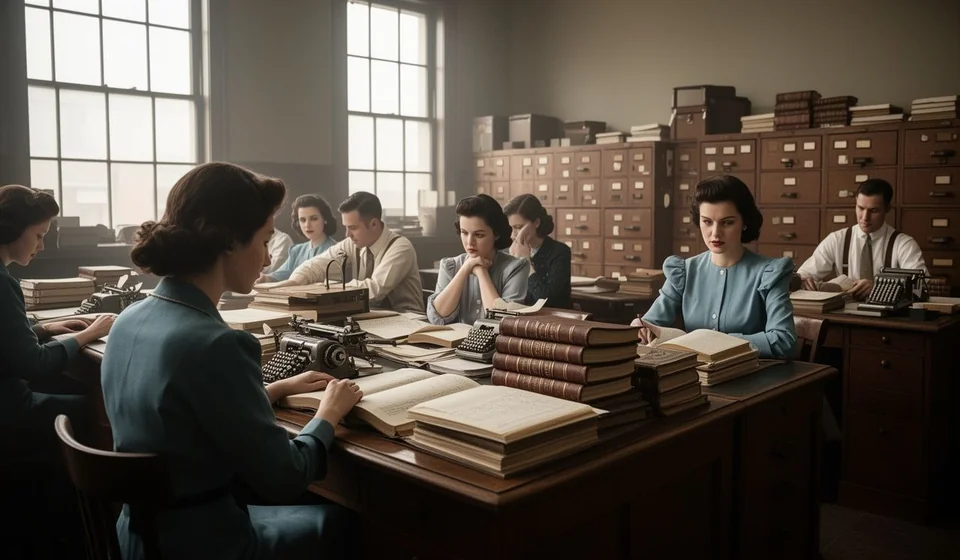
Between 1914 and 1945, the two world wars changed by force a structure that the law had not changed. With millions of men mobilised on the battlefronts, offices, banks, factories and the civil service needed replacements, and women took over, in large numbers, jobs in bookkeeping, accounting, invoicing and junior auditing in private companies and public bodies.
It was a massive and formative experience. In those years many women discovered that they could do work that society had presented as masculine, and they did it well: the statistics of the time and the testimony of the companies themselves confirm it. In Britain, the shift in social attitudes produced by the First World War lay directly behind the 1919 legal reform that opened the professional institutes to women. During the Second World War the phenomenon repeated on an even larger scale in the United States and Europe: accounting offices that had been almost exclusively male became staffed by women working with ledgers, registers and mechanical adding machines.
When the men came home, many of those women lost their jobs and returned to their households; the return to normalcy was also, in part, a step backwards. But something had changed forever. Society had watched women keep the accounts of entire companies, and many of those women were not willing to forget what they knew how to do.
The second half of the twentieth century: from the classroom to the firms
From the 1950s, and especially from the 1960s, women's entry into accounting stopped being the exception and became a sustained movement. Universities opened their commerce and accounting programmes to women, and growing numbers of young women enrolled and graduated. The audit firms, which in the 1950s barely hired women or confined them to support roles, gradually incorporated them into their professional teams.
The progress was slow and uneven, but real. Women moved into supervisory positions and corporate accounting leadership and, over time, into the partnerships of the large firms. They also began to reach the top positions of the professional bodies themselves: at the ICAEW, for instance, Sheila Masters became the institute's first female president. Each of these milestones opened the way for the next, and the generations that followed no longer found closed doors, but half-open ones.
Today: a majority in the classroom, a pending task in the boardroom
Today, in many countries, women are the majority among students of accounting and economics and make up a very significant share of those who graduate and enter the profession. In accounting offices and audit firms, entry-level teams have a female presence that would have been unimaginable to Mary Harris Smith when she filed her application in 1891.
The pending challenge lies at the top. Although classrooms and entry positions are balanced, or even led by women, their presence thins out as one moves up the ladder: there are fewer female partners at the big firms, fewer chief financial officers and fewer presidents of professional bodies. The causes are well known and complex: family responsibilities that fall unevenly, bias in promotion, organisational culture and a lack of support networks. Closing that gap is one of the most important tasks facing the accounting profession in the twenty-first century, in the name of fairness and of quality alike, since organisations that make the most of available talent make better decisions.
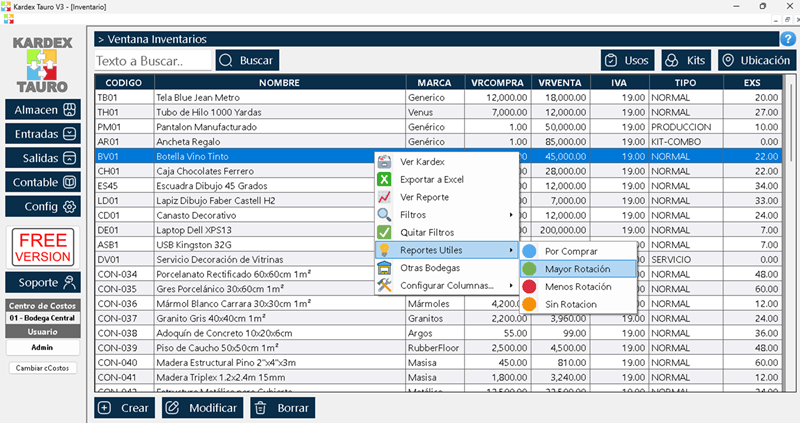
The history of accounting is also the history of the people who kept the books without ever appearing in them. From the widows who kept family businesses alive in the Middle Ages to the pioneers who insisted for decades on being admitted to the professional institutes, every generation of women widened the place that the next one would occupy. Keeping the accounts of a business still demands order, consistency and mastery of the records: the same discipline those women applied with ledgers and pens is now applied with software such as Kardex Tauro, which helps shops and companies record and control their inventories accurately. Knowing this history is a reminder that behind every well-kept figure there are people who, for centuries, fought for the right to keep it.