Work in process: how to control it in inventory
Work in process: how to control it in inventory
Between the raw material that arrives at the warehouse and the finished product that goes out to the customer there is an in-between zone that many businesses fail to control: work in process, also called WIP. It is every item that has started its transformation but is not ready to be sold yet. It does not sit on a shelf and it has no barcode of its own, but it represents money already invested, and it must be recorded and watched like any other stock.
What is a product in process?
A product in process is any material that has entered the transformation stage and has not yet become a finished product. The usual flow is: raw material, cutting or preparation, assembly and finished product. Between the moment material leaves the warehouse and the moment the finished item comes back in, there is in-process inventory at every intermediate stage, and that inventory has a real value: the raw material already consumed plus the work applied to it.
Every business experiences that process differently:
- Bakeries: the prepared dough and the pieces waiting to be baked.
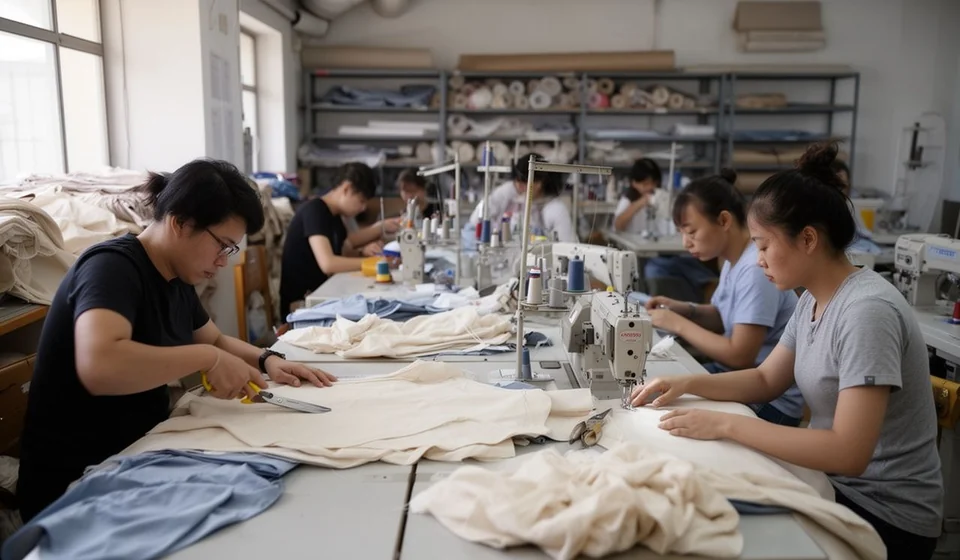
- Sewing workshops: the cut fabric and the garments that are half sewn.
- Assembly plants: the components being joined on the line.
- Woodworking or metalworking shops: the parts that are cut, welded or being painted.
What work in process looks like in four industries
The best way to understand work in process control is to see it working in different industries. In every one of them the same principle applies, knowing what is half done, which stage it is in and which production order it belongs to, but the control routine takes a different shape depending on the cycle of the business.
Bakeries: here the work in process is the dough that is resting, the shaped pieces waiting for the oven and the baked bread that has not been packed yet. The cycle is short, a few hours, and control rests on three routines: weighing the flour and the other ingredients at the start of the day against the order for that day, following progress by batches, dough ready, shaped pieces, baked, packed, and receiving each batch into inventory as soon as it leaves the oven. If the morning dough is not recorded as consumed, the next day more flour is ordered believing there is none, the cost of the batch is spread across two days and the warehouse count never matches. The control logic is clear: short cycle, immediate recording and receipt in batches the moment they finish.
Sewing workshops: the process takes days and the garments change hands many times: the fabric is laid out and cut, the bundles of cut pieces are handed to the sewers, and what is sewn moves on to inspection, ironing and packing. The cut fabric waiting its turn at the machine is the most fragile point of control: it is valuable, takes little space and easily gets mixed with another order if it does not travel with its batch ticket. The control logic: every bundle of cut pieces carries the number of the order it belongs to, fabric consumption is recorded at the moment of cutting and finished garments are received in batches, so the real progress can be read from the document: how many pieces left the order, how many have been received and how many are still on the tables.
Assembly and metalworking shops: in these shops one single component can be in three different machines at the same time, part of it cut, part welded and part being painted or treated. Work in process is not one pile but pieces scattered across the whole floor, and control leans on the routing, the sequence of operations defined by the order. The control logic: when each operation is finished, the progress of the batch is reported to the next station, materials are consumed against the order and counting is organized by operation, how many pieces went through cutting, how many through welding, how many are being painted, instead of looking for a single pile that does not exist. Even when the pieces are scattered, the document always says where each one is.
Food and beverage producers: some products do not advance along a line but wait: cheeses and cured meats maturing, dough fermenting, sauces resting before packing. During that wait the batch is work in process even though nobody is touching it, and its value can be high because it has already used raw material, energy, cold storage and processing hours. The control logic: the batch is identified as a single unit with its start date and its expected completion date, its status is checked against what the order says and it is received into inventory as soon as its cycle is complete, so it is neither sold before its time nor forgotten in the cold room until it is lost to spoilage.
The part of inventory that gets lost most often
Work in process is the link that most frequently escapes control. It is not on the shelf as raw material and it is not a finished product: it sits on work tables, between machines, drying or curing, and it changes hands many times during the day. Because nobody records it when it moves from one stage to the next, the business ends up not knowing how much half-finished stock it actually has.
That lack of control has concrete consequences: raw material is purchased that had already been consumed, pieces that were well advanced get reprocessed, material is discarded without being recorded, physical counts never match and orders run late because the work in process cannot be found. The most expensive shortage is not the one that gets stolen; it is the one that gets lost inside the workshop itself.
Controlling WIP with production orders
Controlling work in process starts with the document that orders the manufacturing. The production order identifies the batch: what will be made, in what quantity and by when. Every issue of raw material is assigned to that order instead of to the general inventory; when part of the batch is finished, it is received at once as finished product and the rest keeps its status of work in process. This way the value in process is always known: it is the raw material consumed on the orders that are still open.
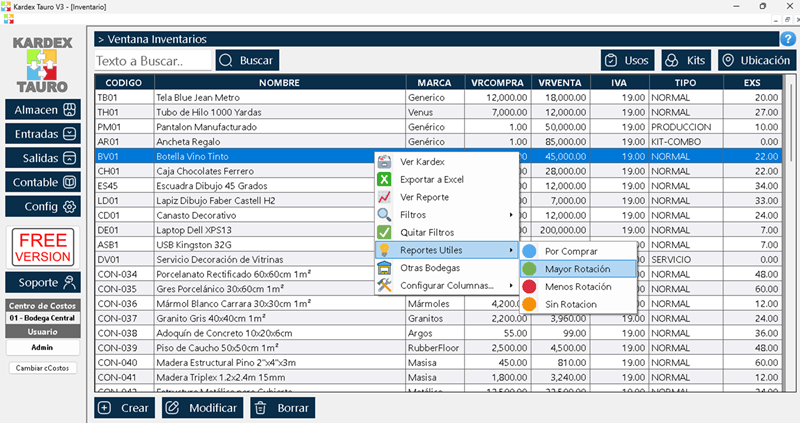
Systems such as Kardex Tauro let you manage production orders that automatically link raw material consumption to each order and support partial receipts of the finished product as production advances. The rest, defining stages, measuring progress and doing counts, is control discipline that any business can apply: registering is the first step, and verifying with periodic counts that what is recorded as in process really exists on the shop floor is the second.
Example: a batch in process
A sewing workshop receives a production order for 200 shirts. The cutting stage is complete and the fabric for the whole batch, worth 1,400,000, has been consumed against the order. Of the 200 pieces, 120 are being sewn and 80 are finished, inspected and ready to be received. The batch looks like this:
| Batch stage | Units | Value of raw material consumed | Status |
|---|---|---|---|
| Cutting and preparation of fabric | 200 | 1,400,000 | Completed; consumption already recorded |
| Sewing and assembly | 120 | 840,000 | In process |
| Inspection and finishing | 80 | 560,000 | Ready to be received into inventory |
The figures describe the same batch: the first row records the total fabric consumed, and the next two rows show how those 200 pieces are distributed between the 120 still in process and the 80 that are ready. When the 80 are received, the order will have 120 units in process and a pending material value of 840,000.
How to measure the value of what is in process
So far the value in process has been calculated as consumed raw material, and that is the correct and simplest base. But a half-sewn garment is worth more than the fabric inside it: it already carries hours of people's work and the use of machines, energy and facilities. To measure the full value of what is half done, three components are added:
- Consumed raw material: what already left the warehouse heading to the order and is now part of, or committed to, the batch.
- Direct labor: the working time already applied to the pieces, valued at the rate that work costs the company, wages and benefits included.
- Production overhead: a proportional share of what it costs to keep the workshop running, energy, maintenance, supervision, rent, even when it cannot be pointed at piece by piece.
An example makes it clearer. Let us go back to the workshop with the 200 shirts: the 120 that are still being sewn have already used the fabric that belongs to them, 840,000. Each shirt also carries half an hour of sewing, and an hour of the sewer's time costs the workshop 5,000, so the 120 pieces represent 60 hours of work and 300,000 of labor. On that base the workshop estimates its overhead at 15 percent, that is, 171,000 more. The value of the batch in process looks like this:
| Value component | Calculation | Value |
|---|---|---|
| Consumed raw material (fabric for the 120 pieces) | 120 shirts × 7,000 | 840,000 |
| Direct labor (sewing already applied) | 60 hours × 5,000 | 300,000 |
| Production overhead applied | 15% of (840,000 + 300,000) | 171,000 |
| Total value of the batch in process | Sum of the three components | 1,311,000 |
The overhead percentage and the labor rate are decisions each business makes from its own experience; the important thing is the method: first add what can be measured with documents, raw material and hours worked, then add a reasonable share of what it costs to keep production running. If that calculation feels like too much to start with, a prudent starting point is to value what is in process at its consumed raw material: it is a conservative figure, verifiable at any moment against the consumptions recorded on the orders, and enough to know whether the money invested is growing, standing still or being lost.
Which document to use in each situation
Control is sustained by clear documents for every movement of the process:
| Situation | Recommended document or control |
|---|---|
| Raw material leaves the warehouse for the workshop | Raw material consumption assigned to the production order |
| A batch of the order is finished | Production receipt: partial receipt of the finished product |
| There is leftover material in the workshop | Return of the leftover to raw material inventory |
| There is shrinkage or waste at one stage | Inventory issue recorded with its reason |
| There is doubt about what is half done | Physical count of open orders and status update |
Invisible stock: why physical counts must include what is half done
When the day of the physical count arrives, many businesses count the raw material in the warehouse and the finished product on the shelves, and leave out what is on the work tables, between the machines or in the maturing room. That is the invisible stock: it exists, it is worth money and it has moved, but it appears neither as an issue of raw material nor as a receipt of finished product. The shortage that shows up at the end is almost never a theft: it is inventory that changed shape without anyone recording it.
That is why the count must run through the whole process and not stop at the warehouses. The rule is simple: everything that is not in its usual storage place is counted where it is, identified with the order it belongs to. How it is counted changes according to the stage it is in:
| Stage of the process | How to count it |
|---|---|
| Raw material handed to the workshop, not transformed yet | Count it physically next to the order and compare it with the recorded consumption; if the consumption was not recorded, record it on the spot. |
| Cut or prepared pieces waiting for the next operation | Count the bundles or units by order and by location; every bundle must carry its ticket with the order number. |
| Units on the machine or on the assembly line | Anchor the count to a natural point, end of shift or change of batch, and note how many pieces are at each station. |
| Batches maturing, curing, fermenting or drying | Count the batch as a single unit with its start date and check that the recorded status matches reality. |
| Finished product not received into inventory yet | Receive it at the moment of the count, so it is not counted twice and is not left out either. |
The minimum recommended frequency is a monthly count of open orders and a general count at the end of the period that goes through the five stages in the table. Once what is half done enters the count, the differences that used to be blamed on theft or on supplier mistakes show up for what they are: workshop movements that were never recorded, and that is corrected with method, not with suspicion.
Frequently asked questions about work in process
Does work in process appear on the company's balance sheet?
Yes. Together with raw material and finished goods, what is in process is part of inventories: it is an asset of the company, because it represents money invested in goods that will still be sold, not an expense already lost. The exact way it is presented and the moment it turns into cost of sales depend on the accounting method and the rules of each country; what never changes is the principle: what is half done has value, and the company must be able to identify it, measure it and account for it at any moment.
Can I sell a product in process?
Normal sales are of finished product: what is half done does not meet the specifications the customer expects, and delivering it early brings complaints, returns and rework that cost more than waiting. If an item in process is going to be sold as a second, as surplus or as scrap, it must first be received under that condition and leave the inventory with an issue reason, so the value stays recorded in the right document and does not disappear from control.
How often should I count work in process?
There is no single frequency, because it depends on the cycle of the business. A workshop whose orders last weeks can count its open orders every week or every month; a line that produces every day should anchor the count to the end of shift; whoever manages maturing batches checks each batch when its cycle is complete. There is a practical signal that never fails: if the count of raw material or finished product does not match, review what is in process first, because that is where the difference is almost every time.
What do I do with the work in process of a cancelled order?
A cancelled order does not disappear by itself: consumed raw material and half-finished pieces are left behind, and that value must be defined in the document. First, return to the warehouse the raw material that was not used; then decide what to do with what is left in process: finish it if little is missing, take it apart to recover the materials, or discard it if recovering costs more than the material. Every movement is recorded with its reason and the order is formally closed; leaving it open forever inflates the value of work in process with things that will never be finished.
Is it possible to control work in process without a specialized module?
Yes: with a written order for every batch, consumptions recorded against that order, receipts in batches and periodic counts you reach a complete basic control. What a production order module adds is that all those movements stay linked to each other and the value in process is calculated by itself, without parallel spreadsheets that go out of date as soon as somebody stops filling them in.
Tips to keep the control in place
- Record consumption as soon as material leaves the warehouse, not at the end of the month.
- Receive production in batches: do not wait until the whole order is finished.
- Review open orders and their progress every week.
- Train the team to report everything that moves between stages.
- Investigate count differences before adjusting them.
Work in process is not a problem: it is the sign that the business is actually producing. The risk lies in not knowing how much there is, where it is and what it is worth. With production orders, assigned consumptions and timely receipts, in-process inventory stops being a black hole and becomes one more number you can watch and plan every week. If your inventory system records the orders and the workshop movements, as Kardex Tauro does, half of the work is already done.