Company introduction letter template for Word (free download)
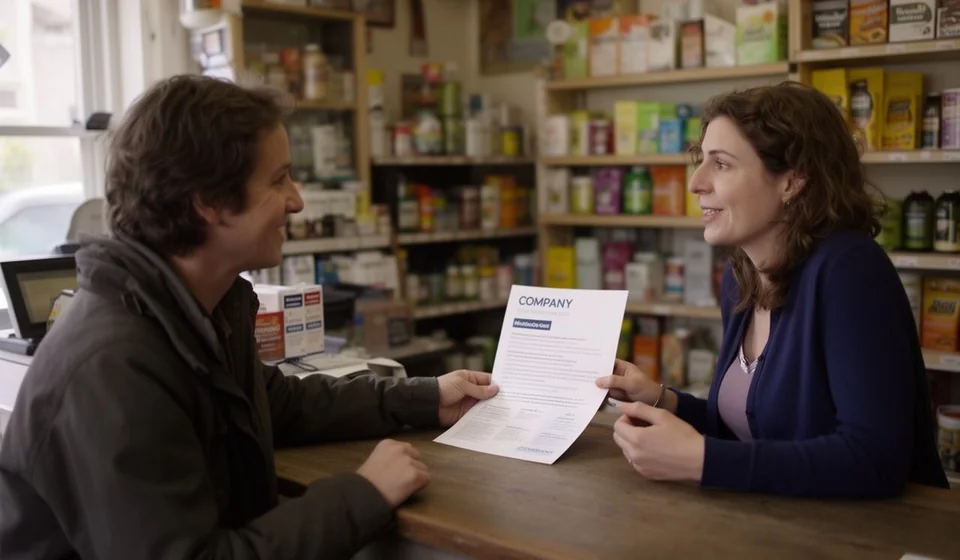
Company introduction letter template for Word (free download)
A company introduction letter is the first impression your business leaves in writing. It is not a catalogue and it is not a quotation: it is a single sheet on company letterhead where you explain who you are, what you do and why it is worth sitting down to talk. Sales teams use it when they visit a new company, representatives use it to get a foot in the door with a large client, and small businesses use it when they need something more serious than a chat message to answer a request for references.
This Word template comes with the blocks already laid out: letterhead, date, recipient details, subject line, greeting, the introduction paragraphs, the what-we-offer table, the meeting proposal, the closing and the signature with contact details. You only replace the text with your own. The file fits on one page, needs no special software and works both for printing and handing over in person and for sending by email as a digital file.
The sections below explain when to use this letter, what information you need before writing it, how to fill it in step by step and what to check before sending it. Further down you will find the download link and an honest note on when it pays to move from loose documents to a system.
⬇ Download company introduction letter (.docx)
What this letter is, and what it is not
A company introduction letter is a short, formal document: one page, a clear subject line and three or four paragraphs. Its job is to open a door. It does not replace the quotation, it does not replace the price list and it does not replace the sales conversation; what it does is earn that conversation. When it is well written, the person receiving it understands within a minute what the company does and what problem it can solve for them.
It helps to tell it apart from the documents it is often confused with. A quotation answers a specific request and carries prices and terms. A payment reminder claims an overdue invoice. An internal circular speaks to people who are already part of the company. The introduction letter, by contrast, travels outwards, to someone who does not know the business yet, and for that reason it has to be warm, concrete and free of filler.
For a business that handles stock, warehousing or distribution, this letter has a very practical use: showing that the company works in an orderly way. It is the moment to say that records are kept, that the team knows what is available and that delivery dates are given without improvising. That promise, written on letterhead, carries far more weight than the same sentence said from memory at a warehouse door.
When to use this letter
- When you visit a potential client for the first time and want to leave your details on an orderly sheet of paper.
- When a new client asks for trade references and you need something more formal than a message.
- When you are aiming to become a supplier to a large company and they ask for a written introduction.
- When you take part in a trade fair or a business matchmaking event and later send a summary of who you are and what you offer.
- When you open a new sales point, a warehouse or a new product line and want to tell your whole network.
- When a distributor or an agent is going to represent you and needs a document to hand to their own clients.
What you need before you write
Gather the information before you open the file. Without these details at hand the letter ends up with blank gaps that nobody fills in later, and the document loses its force.
- The company legal name and trading name, together with the city where the head office sits.
- The years in business or the founding year, to give context without exaggerating.
- The kind of clients you serve today: hardware stores, restaurants, construction firms, corner shops or other companies.
- The specific products or services you want to highlight, each with one sentence explaining what it is for.
- The real, verifiable advantage: stock availability, city deliveries, handling of small orders, your own warehouse or your own transport.
- The name, position, phone, email and city of the person signing, plus the same details for whoever will handle the account.
- The full name of the person or company the letter is addressed to, with their position and city.
What the template includes
The template follows the classic order of a business letter. These are the blocks you will find when you open the file.
| Block | What goes there |
|---|---|
| Letterhead | Company name, company ID, address, city, phone, email and website. Replace it with your own details. |
| City and date | The city the letter is sent from and the full date of the day you hand it over. |
| Recipient | To, the recipient company, attention line with the person and their position, address and city. |
| Subject | Presentation of our company, in a single line and with no decoration. |
| Greeting | A cordial greeting addressed to whoever will read the letter. |
| Who we are | Main activity, years of experience, city or region and the type of client you serve. |
| What we do | Main products or services and the concrete advantage over other suppliers. |
| Lead-in sentence | A short line announcing in how many areas the company can contribute to the recipient. |
| What we offer table | Three rows with the product or service and, next to it, what it does for the client. |
| Meeting proposal | An invitation to a short meeting, with a willingness to fit the client date, time and place. |
| Closing | A line of thanks and of readiness to answer any question. |
| Signature | Full name, position, company name, phone and contact email. |
| Copy | The internal area that should be kept informed of the delivery, for example the sales area. |
The letter also contains its own table of what the company offers. This is how it looks when filled in, with three examples taken from a supply and warehousing business:
| Product or service | What it is for |
|---|---|
| Office supplies and consumables | Keeps the office running without last-minute emergency orders. |
| Storage and order fulfilment | Lets the client buy without owning a warehouse or hiring extra staff. |
| Scheduled city delivery | Stops the client from piling up stock and frees space in their own premises. |
How to fill it in step by step
- Replace the letterhead with your own details: name, company ID, address, phone, email and website. Check the footer as well, because many templates repeat the company name and the city down there.
- Write the city and the date of the day you are going to hand the letter over; do not leave the sample date in place.
- Complete the recipient block with the company name, the attention line with the person and their position, the address and the city.
- Adjust the subject line so it reads presentation of our company and nothing more. If you wish, add your business name.
- Draft the who-we-are paragraph with two or three hard facts: activity, years of experience and type of client.
- Write the what-we-do paragraph and leave the concrete advantage for the end, in one short and verifiable sentence.
- Fill the what-we-offer table with three products or services. If you have more, keep the three most important ones and mention the rest in the closing.
- Review the meeting proposal, the closing and the signature with phone and email, then save the file under a clear name, for example company introduction followed by the client name and the month.
Common mistakes and final check before sending
- An out-of-date letterhead or an old address: it is the detail that breeds the most distrust in an introduction letter.
- Long paragraphs that talk about the company and never about the recipient. Shift the focus: what you can do for the person reading the letter.
- Unsupported adjectives such as leading, the best or guaranteed quality. Replace each one with a fact that can be checked.
- A what-we-offer table listing products or services the company cannot actually deliver right now.
- Incomplete contact details or a phone number that no longer works. Check the email address before sending.
- Spelling mistakes, especially in the name of the recipient and in the name of your own company.
- Sending the same letter, unchanged, to ten different companies: it shows, and it costs you credibility.
Before handing it over, one last read out loud helps you catch sentences that sound like filler. This template is a general guide for internal use: adapt it to your tone, your company name and the commercial policies you follow.
When it pays to move to a system
An introduction letter sells a promise: availability, reliability and order. The trouble starts when that promise grows and the company is still writing down its stock in notebooks and loose spreadsheets. If you promise city deliveries and then do not know what is sitting in the warehouse, the letter turns into a credibility problem. That is where an inventory system begins to make sense.
With Kardex Tauro the sales team can check stock before promising a date, and the warehouse records entries and issues from the same set of data. The point is not to change the letter: the letter is still a sheet in Word. The point is that what the letter claims should be easy to confirm from the inside. Many small businesses do perfectly well with the template and one simple warehouse; others, once they run several warehouses or serve many clients, need Kardex Tauro to stay in control.