Colombia's local business tax (ICA): what it is, how to calculate and file it
Colombia's local business tax (ICA): what it is, how to calculate and file it
A company sells 20% more than the year before, closes the year at a loss, and still receives a demand from the city for the industry and commerce tax. Nothing failed in the system: ICA does not look at profit, it looks at revenue. That detail explains most of the cash surprises that appear when the tax calendar arrives, and it also explains how a company can be liable in three municipalities without ever noticing.
ICA (impuesto de industria y comercio) is a municipal tax on industrial, commercial and service activities. It is assessed on gross revenue for the period in each jurisdiction, at a rate the municipality sets by activity and expresses per thousand. What follows covers what goes into the base, how the amount due is built, what happens when a sale crosses a municipal border, and a full worked example of a two-month period with exports and withholdings.
What ICA taxes and what it leaves out
It taxes the pursuit of an industrial, commercial or service activity inside a municipality. The word that matters is pursuit: it does not tax the existence of the company or its net worth, but the activity it carries out and the revenue that activity produces. A company incorporated in one city but operating only in another does not pay ICA where its registered office sits; it pays where it acts.
Revenue that does not come from the taxed activity stays out. The most cited case is VAT collected: if the company sells one hundred and charges the corresponding VAT, its revenue for ICA purposes is one hundred, not one hundred plus VAT. That tax is money the company handles for DIAN (the Colombian tax authority), not revenue of its own. Adding it to the base inflates the tax and produces one of the most frequent gaps between the income statement and the return.
Refunds, export revenue and certain items listed in the municipal tax statute also stay out, depending on each municipality's rules. That phrase — depending on municipal rules — is not a graceful way out: it is the central warning. ICA is not a tax with one rulebook; it is a tax with twenty similar and different rulebooks.
| Item for the period | In the ICA base? | Reason |
|---|---|---|
| Invoicing from the taxed activity | Yes | It is the revenue the activity produces |
| VAT collected from customers | No | It is passed on to DIAN; not revenue of its own |
| Refunds and credit notes | No | They reduce period revenue, where municipal rules exclude them |
| Export sales | No, where the municipality excludes them | Specific treatment that must be checked in the local statute |
| Revenue unrelated to the taxed activity | No | It does not meet the municipality's taxable event |
The base is gross revenue, not profit
The base is gross revenue for the period in that municipality, before costs, expenses and deductions. It is not profit and not margin: it is the money that came in from the activity, with whatever exclusions local rules allow.
That produces the consequence hardest to absorb: the tax grows with sales even when the business loses money. A distributor selling one billion with an 8% margin generates eighty million in profit; at the rate used later in this article — six per thousand — it pays six million in ICA, equal to 7.5% of that profit rather than the 0.6% the rate suggests. The thinner the margin, the heavier the tax relative to earnings. And if the period closes in the red, the ICA is still due.
There is a second cash detail worth confirming with your accountant: whether the municipality measures revenue on invoicing or on collection. When the base runs on invoicing, the company pays tax on sales it may not have collected yet, and the gap shows up in months with slow receivables.
Rates per thousand: what six per thousand means
The rate is expressed per thousand because the tax is small against the base. Six per thousand is six pesos for every thousand pesos sold, that is 0.6%, or six thousand pesos per million. Ten per thousand is 1%. The conversion looks trivial, and yet it is where one-digit errors worth millions get made.
Each municipality sets it, by activity, and it varies widely between cities. The same company, with the same revenue and the same activity, can pay considerably more in one municipality than in another. There is no national reference rate you can provision against: the one that applies is in the tax statute of the municipality where the activity is carried out, and it changes when the council amends the local ordinance.
Because the rate depends on the activity, it also depends on how the activity is classified. A taxpayer registered under a code that does not match what it actually does ends up assessing at a rate foreign to its operation, and the difference accumulates until a review finds it.
Timing: every two months or annually, depending on where you are
ICA is filed every two months or annually. Frequency is set by the municipality and by the taxpayer's revenue level: two-month filing is usually required above a threshold, while smaller taxpayers may file annually. The threshold and the dates are local.
There is no single national calendar. Each municipality publishes its own due dates and two cities can set different dates for the same period. A company with several jurisdictions ends up with an agenda of overlapping dates that should live in one place: filing late carries a cost that is never recovered.
A well-built ICA return always carries the same components: taxable base for the period, rate applied, tax assessed, signage and billboards surcharge, withholdings applied to you, and the balance payable or in your favour. If one of those lines is missing, the result will not reconcile with the accounting and the gap has to be explained later.
Signage and billboards: the surcharge almost nobody separates
Signage and billboards (avisos y tableros) is a municipal surcharge that usually accompanies ICA and is assessed as a percentage of the tax, with a cap on that tax. It is not a separate tax filed on its own: it travels in the same return and is paid with it.
The typical error is not calculating it badly, it is forgetting it. The company wires the ICA and leaves the surcharge as an open line nobody watches. By the next period the difference is already in the municipality's records, with the applicable late charge.
The cap is worth checking in the local statute: it stops the surcharge from growing without limit. For provisioning, the practical rule is a single pot for both items.
Territoriality: the same sale in two municipalities
ICA is paid where the activity is carried out, not where the head office is. Almost every problem with this tax comes from that rule. A company can owe ICA in several municipalities at once, each with its own base, rate, calendar and return.
Picture a company with a plant in one municipality, a warehouse in another and a sales team visiting customers in a third. This is the normal operation of a company that has grown. If invoicing always records the head office address, the system produces a comfortable and false data point, and the municipality where the activity actually took place goes unfiled.
| Situation | Where it is filed | What to check |
|---|---|---|
| Own plant or warehouse in another municipality | In the municipality where that site operates | That the jurisdiction is open and filings are current |
| Staff serving customers in another city | Depends on where the activity is carried out | Local rules and the nature of the service, with your accountant |
| Work or contract performed away from head office | In the municipality of the work | Evidence of performance and start date |
| Sale delivered in another city | It does not move by itself; it depends on where the activity happens | Do not presume; document the criterion applied |
There are two symmetrical risks. The first is filing everything at head office and later receiving a demand from the omitted jurisdiction, with tax, penalty and interest for periods you thought were closed. The second is the opposite: counting the same revenue in two bases and paying twice for one sale. Both come from the same source, a system that does not record the place of performance.
The fix is not accounting, it is operational: one file per municipality with revenue, withholdings, returns and supporting documents. With that file, a discussion with the municipality is settled with paper; without it, it is settled by paying.
ICA withholdings: the advance someone already took
Large taxpayers withhold ICA from their suppliers. It is an advance on the tax: someone has already paid the municipality part of what you owe, on account of your return. That amount is deducted in the return of the municipality that made the withholding.
The support is the withholding certificate, per municipality and per period. Ask for it when the payment happens, not at year end, and reconcile it every two months against the withholding account. When certificates from two municipalities are missing in December, claiming them already costs a procedure.
If the amount withheld exceeds the tax assessed, the return shows no balance payable but a surplus. How that surplus is treated — offset in later periods, refund, carry-forward — depends on municipal rules and should be confirmed before you count it as recovered.
One detail often missed: a withholding from one municipality cannot be offset against another municipality's tax. Each jurisdiction has its own account, and mixing them produces returns that reconcile in neither.
A full worked example for the period
Commercial company, one municipality, gross revenue for the two-month period of $300,000,000. The rate used here is six per thousand, taken only as a calculation example: the rate that applies to you is the one in your municipality's statute for your activity. Signage and billboards is assessed here at 15% of the ICA, subject to the cap set by local rules.
- Taxable base for the period: $300,000,000.
- ICA: $300,000,000 × 0.6% = $1,800,000.
- Signage and billboards: $1,800,000 × 15% = $270,000.
- Total tax: $1,800,000 + $270,000 = $2,070,000.
- Less ICA withheld from you: $600,000.
- Balance payable: $2,070,000 − $600,000 = $1,470,000.
Now the same period with one change: of that $300,000,000, $50,000,000 is exports and the municipality excludes them from the base. The base drops to $250,000,000 and everything else is recalculated.
| Line | Without exports | With $50,000,000 of exports excluded |
|---|---|---|
| Gross revenue for the period | $300,000,000 | $300,000,000 |
| Less export revenue | $0 | $50,000,000 |
| Taxable base | $300,000,000 | $250,000,000 |
| Example rate | 6 per thousand | 6 per thousand |
| ICA assessed | $1,800,000 | $1,500,000 |
| Signage and billboards, 15% of ICA | $270,000 | $225,000 |
| Total tax | $2,070,000 | $1,725,000 |
| Less withholdings | $600,000 | $600,000 |
| Balance payable | $1,470,000 | $1,125,000 |
The export exclusion is worth $345,000 in a single period. Multiply by the six periods in the year: a badly built base is not a matter of form, it is a cash leak with the tax's own frequency.
Look at the proportion too: $2,070,000 on $300,000,000 is 0.69% of sales. That is the figure to take into your cash projection, not the 0.6% rate. The gap between the two is the surcharge.
ICA and income tax: deduction is not the same as credit
ICA actually paid is deductible for income tax purposes: it enters as an expense and reduces the base on which income tax is calculated. And part of that same ICA may be taken as a tax credit, which subtracts directly from the tax. They are two different benefits and they are confused all the time.
The difference is in the effect. A deduction of $1,000 saves whatever the income tax rate is worth on that $1,000: at a 35% rate the saving would be $350. A credit of $1,000 saves $1,000, because it comes off the tax already assessed. That is why the credit is worth more per peso, and why the law limits it to a portion of the ICA paid.
The same portion cannot travel both routes. If it is taken as a credit, it is not deducted as an expense; if it is deducted, it is not credited. The proportion and conditions change with the rules, so the treatment is confirmed each year before building the income tax return, not after.
ICA under the simple regime: consolidated, not gone
A company in the simple regime (régimen simple) does not file a separate ICA return. The tax is consolidated in the SIMPLE return, alongside the other components of that regime. It is a change of vehicle, not an exemption: the tax still exists and is still paid.
It has two practical effects. In cash, a single consolidated payment instead of several municipal ones, which simplifies the operation but hides how much of it is ICA. In control, the absence of a separate return does not remove the need to keep the detail by municipality in order to reconcile.
How ICA works inside SIMPLE depends on the jurisdiction and on the taxpayer's conditions. Before assuming the regime settles the municipal question, confirm with your accountant which local obligations remain and which records must be kept.
Common errors and what each one costs
ICA errors are almost never calculation errors: they are base, jurisdiction or forgotten-line errors.
| Error | How it shows up | What it costs |
|---|---|---|
| Including VAT collected in the base | The return does not reconcile with net sales in the income statement | Overpayment every period, hard to recover later |
| Filing everything where head office is | A demand arrives from another jurisdiction | Tax, penalty and interest for periods already closed |
| Not excluding exports | The base exceeds domestic revenue for the period | Overpayment, period after period |
| Forgetting signage and billboards | A gap between what was assessed and what was paid | An open balance that grows with late charges |
| Not claiming withholdings | Balance payable higher than the certificates show | Cash tied up and late claims |
| Misclassifying the activity | The rate applied does not match the municipal statute | A difference either way, depending on the case |
| Not reconciling accounting, tax and ICA base revenue | Three different figures for the same period | Paying too much, or owing, without knowing |
The most expensive one is the reconciliation, because it is invisible. Accounting says one thing, the income tax return another and the ICA base a third; until someone crosses them, the company does not know whether it overpaid or owes.
An honest close before you file
None of this replaces your accountant or the reading of your municipality's tax statute. ICA depends on the activity, the place of performance, the size of the taxpayer and the local rule in force: four variables that change from one company to another and from one year to the next. What was explained here is the mechanism, and the mechanism applies differently in each jurisdiction.
Before signing a return, have four things at hand: the revenue file by municipality, the reconciliation between accounting, income tax and the ICA base, the withholding certificates for the period and the rate in force for your activity in that municipality. With those four, the return explains itself. Without them, any difference becomes a discussion you win with documents or lose by paying.
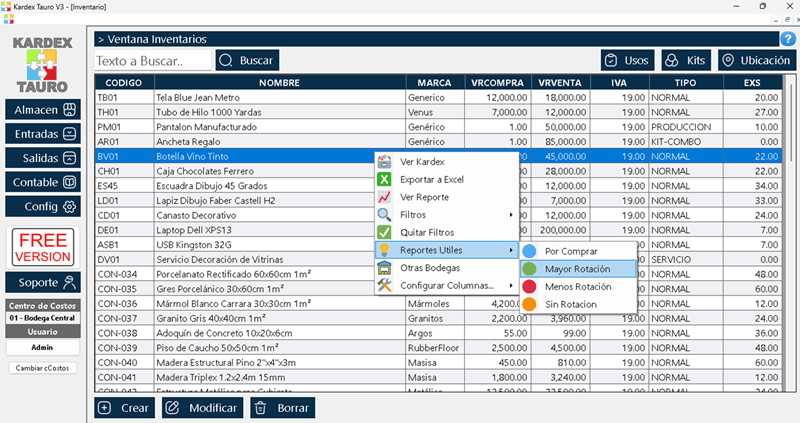
If your company operates in a single municipality, with a single activity and no exports, you only need the base, the rate and the timing. If it operates in several, control by jurisdiction is what prevents the demand; an invoicing system that records the municipality of each transaction — as Kardex Tauro does from the sales document — turns that control into a report instead of a last-minute reconstruction.