Colombian payroll levies: SENA, ICBF and family compensation funds

Colombian payroll levies: SENA, ICBF and family compensation funds
There is a payroll cost that never shows up on the employee's payslip and that many small-business owners discover late: the parafiscales, Colombia's payroll levies. Three contributions the company pays every month — 2 % to SENA, 3 % to ICBF and 4 % to the family compensation fund — adding up to 9 % of payroll. They do not reduce anyone's wages: they are added on top. Here is what each one costs, which base it is calculated on, who may stop paying part of it, and why that 4 % for the fund is never waived. At the end, a full worked example in pesos, with and without the exemption.
What the levies are and whom they fund
A parafiscal contribution is a mandatory payment a company makes into a system, without the money passing through the employee's pocket. It sits alongside the treasury rather than inside it: it is neither a national tax nor a contribution that builds anyone's pension or health coverage. It funds services the company uses or on which its workforce depends.
The difference from social security is practical. Health, pension and workplace risks are contributions that build individual rights for the employee. The levies fund technical training, early childhood services and family welfare. Both groups are paid on the same form and share the same calendar, which is why they get confused; but they are calculated separately and follow their own rules.
The original mistake is treating them as a deduction. They are not. If an employee earns $2,000,000, the company does not subtract levies: it pays the $2,000,000 and sends another $180,000 to the system. That 9 % is an employer cost, and it is why a payroll of $40,000,000 actually costs $43,600,000 before benefits are added.
The three contributions, one by one
They are calculated on the same base and paid at the same time, but they go to different recipients and fare differently when the exemption applies.
| Contribution | Rate | What it funds | Exempt? |
|---|---|---|---|
| SENA | 2 % | Technical training and employment programmes | Yes, if employer and employee meet the conditions |
| ICBF | 3 % | Early childhood, nutrition and child protection | Yes, in the same cases |
| Family compensation fund | 4 % | Family subsidies, housing, recreation and credit | No, never |
SENA funds technical training and employability programmes. ICBF runs early childhood, nutrition and child protection services. The compensation fund administers subsidies, housing, recreation and credit for the employee and their family. All three are mandatory for the employer, even though the employee never sees the line on a payslip.
Add it up: 2 + 3 + 4 = 9. That 9 % is incurred in full every month on payroll, unless the exemption applies. And the exemption only touches two of the three boxes. The third is paid always, in every case, without exception.
The base is the IBC, not the salary agreed in the contract
The IBC — the contribution base income — is the amount on which contributions are calculated. It does not always match the basic salary: it captures whatever constitutes salary and moves when there are commissions, overtime or regular payments that remunerate work. That is where the first difference appears between two companies that believe they pay the same.
The IBC has a floor and a ceiling: it is calculated between 1 and 25 legal monthly minimum wages. Below the floor, contributions are paid on 1 minimum wage even if the employee works part time. Above the ceiling, the excess generates no contributions. Both values are updated every year: check the minimum wage in force before you calculate and do not carry over last year's figure.
The practical consequence is simple. Any change in the IBC moves all three contributions in the same proportion. A salary increase does not only raise salary cost: it also raises the 9 %. And a payment believed to be non-salary, if it ends up inside the IBC, makes payroll more expensive without appearing in the conversation about raises.
The Law 1607 of 2012 exemption: what it covers and what it does not
Law 1607 of 2012 created an exemption that relieves a good part of the load. It covers the health contribution payable by the employer, the 2 % for SENA and the 3 % for ICBF. It does not cover pension, it does not cover workplace risks, and it does not cover the compensation fund.
It is not an automatic exemption based on company size. It applies to certain types of employers and, in addition, to employees whose salary is below a threshold expressed in minimum wages. That threshold is updated and must be verified every year. The right question is not whether the company is exempt, but whether this employee, in this month, incurs SENA and ICBF.
Two working rules follow. First: the exemption is decided per employment relationship, not per company; one payroll can end up half exempt and half not. Second: it does not apply to partners or to certain payments, so extending it to the whole payroll without reviewing the case is a decision that gets paid for later, with interest.
If you are unsure whether you qualify, check three things: the type of employer, each employee's salary against the threshold in force, and the documentation supporting how it was applied. An accountant settles it in an afternoon; an audit settles it in months.
The family compensation fund is always paid
Of the three contributions, the fund is the only one with no exemption. Its 4 % is always paid: with the exemption, without it, with a large payroll or a small one.
It is not money lost. The fund gives back in services: family subsidies, housing programmes, recreation, credit and support. For the employee it is the contribution with the most visible return; for the company it is the one that sustains enrolment and access to those benefits.
That is why the most expensive mistake in this area is bookkeeping rather than legal: seeing the word exempt on the form and assuming all three boxes switch off. If the 4 % was not paid, it is owed in full, with late-payment interest, and the employee loses access to subsidies while the arrears stand. There is no partial exemption for the fund — not by agreement, not by size.
How they are paid: one form, one calendar
The levies have no form of their own. They are calculated and paid inside the same social security form, on the same calendar. A single transaction covers health, pension, workplace risks, SENA, ICBF and the fund.
That saves paperwork and multiplies the damage of a mistake: if the filing is wrong, it is wrong all the way through. Correcting one employee forces a review of the levy line, and a difference in the IBC propagates to all three contributions at once.
The payment date depends on the company's tax identification number and on the year's calendar; it is not the same for every employer. Confirm it before paying and do not infer it from last month: a single day late already triggers interest.
One habit that avoids surprises: reconcile the filing against payroll before paying, employee by employee, IBC against IBC. The filing is what charges; payroll is what explains. When they do not match, the problem is almost never at the bank.
What happens when the levies are not paid
Arrears do not stop at the amount left unpaid. They start a chain that reaches operations, paperwork and the ability to sell to the state.
| Consequence | How it shows up |
|---|---|
| Late-payment interest | Accrues on the balance and grows daily; the original amount stops being the problem |
| Clearance certificate | The company cannot obtain it, and procedures that require it are blocked |
| Public contracting | Arrears can prevent bidding in public processes and signing contracts |
| Employee benefits | Without contributions up to date, access to subsidies and fund services is affected |
| Earlier years | One month's finding usually uncovers all twelve of that year and the year before |
None of these consequences is solved by paying quickly once a formal request has landed. Interest is calculated on the outstanding balance and time runs from the date payment was due, not from the date someone noticed.
The expense is deductible, but it needs support
The levies are deductible for income tax as part of labour costs. The 9 % is not only a cost: it also reduces the income tax base, just like salaries.
The practical condition is documentation. The paid filing is the proof of the expense; a spreadsheet calculation is not. If the deduction is questioned, what gets reviewed is the payment receipt and the link between the amount paid and the IBC reported.
Hence a simple recommendation: file the month's form together with payroll and the bank receipt. When the review arrives — next year or three years later — that package is what saves you from rebuilding the story out of emails and statements.
Example without the exemption: monthly payroll of $40,000,000
Payroll with a total IBC of $40,000,000, no exemption. All three contributions are calculated on that same amount.
| Item | Calculation | Monthly amount |
|---|---|---|
| SENA | $40,000,000 × 2 % | $800,000 |
| ICBF | $40,000,000 × 3 % | $1,200,000 |
| Compensation fund | $40,000,000 × 4 % | $1,600,000 |
| Total | $40,000,000 × 9 % | $3,600,000 |
To see it per employee: someone with an IBC of $2,000,000 generates $40,000 for SENA, $60,000 for ICBF and $80,000 for the fund. Total, $180,000 a month, $2,160,000 a year. Multiply by headcount and the 9 % stops looking like a payroll detail.
Example with the exemption: the 4 % that never goes away
The same $40,000,000, now with the SENA and ICBF exemption. The $2,000,000 from those two contributions disappears and only the fund remains.
| Scenario | SENA | ICBF | Fund | Total |
|---|---|---|---|---|
| No exemption | $800,000 | $1,200,000 | $1,600,000 | $3,600,000 |
| Full exemption, entire payroll below the threshold | $0 | $0 | $1,600,000 | $1,600,000 |
| One employee above the threshold, IBC of $6,000,000 | $120,000 | $180,000 | $1,600,000 | $1,900,000 |
The third scenario is where most mistakes happen. A single employee with an IBC of $6,000,000, above the threshold, incurs SENA and ICBF again: 2 % and 3 % of that $6,000,000 are $120,000 and $180,000. The fund does not move, because it is still 4 % of the $40,000,000 and that contribution has no exemption.
Compare the three: full exemption saves $2,000,000 a month, $24,000,000 a year. The partial exemption in the example saves $1,700,000 a month. And the mistake of exempting the fund as well saves nothing: it creates a $1,600,000 monthly debt that surfaces at the next review, with interest on top.
The employee who crosses the threshold mid-year
The threshold is compared against each employee's salary, and salaries move. A mid-year raise, a change of working hours or a regular payment entering the IBC can push someone above the line.
When that happens, the employee stops being exempt and incurs SENA and ICBF again from the month of the crossing. It is not an annual adjustment: it is reviewed month by month. A payroll with ten exempt employees in January and nine in July forces a recalculation of that 5 % for that month, not a wait until the income tax return.
It works the other way too: an employee whose IBC falls may become covered again. The rule runs in both directions, which is why the calculation belongs in the system rather than in the memory of whoever runs payroll.
Partners and apprentices: two cases that get resolved badly
Partners. The exemption does not cover partners or certain payments they receive. Treating them as exempt employees pushes the problem into the following year, when data matching shows the missing 5 %. If a partner also has an employment contract, the analysis doubles: you must separate which payment is salary and which is not.
SENA apprentices. They have their own rules for engagement and contributions. They are not calculated like an ordinary employment contract, and the exemption does not apply by reflex. Before putting an apprentice on payroll, review the contract type and which contributions it triggers.
Common mistakes and how to spot them
The five that cost the most money, each with the symptom that gives it away before a formal request arrives.
- Exempting the fund along with SENA and ICBF. Symptom: the form shows zero in all three boxes. Consequence: a debt of 4 % of the entire payroll, month after month, with interest.
- Applying the exemption to the whole payroll without checking each relationship. Symptom: nobody knows for sure which employee is above the threshold. Consequence: 5 % missing in the months the threshold was crossed.
- Believing the exemption covers pension or workplace risks. Symptom: the filing falls short on two other lines. Consequence: social security arrears, a separate and more serious problem.
- Calculating on basic salary instead of the IBC. Symptom: commissions and overtime never appear in the base. Consequence: a small monthly difference that stops being small over twelve months.
- Ignoring the mid-year threshold change. Symptom: December payroll is calculated with January logic. Consequence: retroactive adjustment plus interest.
An honest close before you calculate
This text explains the mechanism, not your case. What a specific company pays depends on the type of employer, each employee's relationship, their IBC and the threshold in force for the year. Before changing a line on the filing, confirm it with your accountant and keep a record of the decision.
If your company has partners on payroll, apprentices, or employees who cross the threshold during the year, the generic calculation will not do: it has to be reviewed employee by employee. And if you have never reconciled the filing against payroll, start there; there is almost always a difference that has been growing quietly for months.
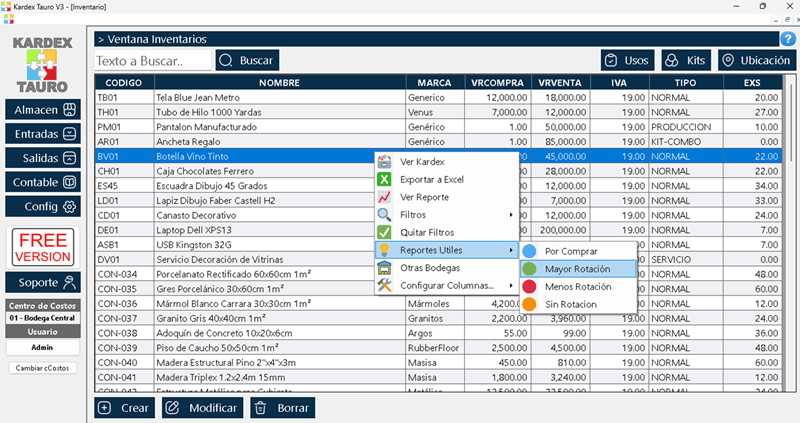
When payroll and accounting live in the same system, as in Kardex Tauro, that monthly reconciliation is checked against the payment receipt rather than against a separate spreadsheet.