Colombia's pension solidarity fund: when it applies and how it is calculated

Colombia's pension solidarity fund: when it applies and how it is calculated
If your payroll shows an extra percentage point on the pension contribution for high salaries, that point is the Fondo de Solidaridad Pensional, Colombia's pension solidarity fund. It is not a payroll error or a misconfigured withholding: it is a mandatory contribution levied on the same contribution base (IBC, ingreso base de cotización) and paid together with the other social security items. It is calculated in salary brackets and starts at four minimum wages.
The amount looks small. One point on a high base is tens of thousands of pesos a month, which is why it goes unnoticed for years. The problem appears when the base is wrong, when the bracket was applied with last year's table, or when someone assumed the money went back to the employee. Here is what it is, who contributes, how the brackets work, how it is paid, what changes for employees and self-employed workers, how it is deducted for income tax, and a full example with a high salary.
What the pension solidarity fund is and what it is not
It is a contribution added to the pension contribution, borne by people with high incomes. It is added to the 16 % mandatory pension contribution; it does not replace it, reduce it or offset it. Its destination is a common fund that finances minimum pensions for people who do not manage to contribute enough for a pension of their own.
That nature changes the whole analysis. There is no individual account, no statement in the worker's name, no balance that can be withdrawn or transferred. The money leaves the contributor's assets. It is solidarity with a technical name, not savings. Nor should it be confused with voluntary savings, which does belong to the contributor and follows its own rules.
Who contributes: the four minimum wage threshold
The fund does not apply to the entire payroll. It is triggered when the contribution base reaches four minimum wages (SMMLV). Below that threshold, the contribution does not arise. Above it, the rate of the corresponding bracket applies.
The threshold is measured in minimum wages, not in fixed pesos. That means the boundary moves every year when the minimum wage is set, and an employee with the same nominal salary can enter or leave the fund without any change to their contract. If your company updates the rates in January but never looks at the threshold again, it is probably applying the fund to someone who no longer qualifies, or failing to apply it to someone who does.
Two concepts are easy to confuse. The threshold is the point from which the contribution arises; the cap is the maximum contribution base on which social security is paid. Both are expressed in minimum wages, both change every year and both affect the result. A base capped incorrectly can leave the contribution below what is due even with the right rate.
How the brackets work without guessing the rate
The calculation has three steps and none is optional: determine the IBC, place it in the corresponding minimum wage bracket, and apply that bracket's rate to the IBC. The result is added to the pension contribution on the same line of the period.
The bracket table and rates change with pension regulation. Before you run payroll, confirm the version in force for the year. The table below uses example rates to show the mechanism; they are not figures to calculate with and do not replace the rules.
| Bracket (minimum wages) | Example rate | Applied to | What it means |
|---|---|---|---|
| Under 4 | 0 % | — | The contribution does not arise |
| 4 to 8 | 1.0 % | IBC for the period | First bracket with a contribution |
| Over 8 up to 12 | 1.2 % | IBC for the period | Intermediate step |
| Over 12 up to 16 | 1.4 % | IBC for the period | Intermediate step |
| Over 16 up to 20 | 1.6 % | IBC for the period | Intermediate step |
| Over 20 | 2.0 % | IBC for the period | Maximum rate in the table |
Two warnings about this table. First: both the rates and the cut-offs are examples; the real ladder may have a different number of steps and different limits. Second: the rate applies to the IBC, not to the excess above the threshold. A base of eight million at one percent contributes eighty thousand pesos, not one percent of the difference against four minimum wages.
That second point explains why the contribution jumps when the IBC crosses a cut-off: it is not a gradual increase, it is a change of rate over the whole base.
The base rules: a wrong IBC drags everything with it
The fund has no base of its own. It is calculated on the same IBC as health, pension and workplace risk insurance. If the IBC is wrong, every contribution is wrong in the same proportion, and the error repeats month after month until someone finds it.
The origins are well known: non-salary payments that get included, allowances that are salary and get excluded, commissions forgotten in the month, sick leave and other leave settled on the previous month's base, hiring or termination changes applied late.
| Error in the IBC | Effect on pension (16 %) | Effect on the fund (1 % example) | How it shows up |
|---|---|---|---|
| Understated by COP 500,000 | COP 80,000 less | COP 5,000 less | The filing balances, but the contribution is low |
| Overstated by COP 500,000 | COP 80,000 more | COP 5,000 more | You overpay, and recovering it is hard |
| Cap not applied | Excess contribution | Excess contribution | Large difference, stands out in a review |
| Below the threshold by mistake | No effect on the fund | Contribution never arises | High salary with no deduction |
The proportion is the practical key: for every peso the IBC moves, the pension moves sixteen times more than the fund at a one percent rate. Fixing only the fund leaves the filing inconsistent; fixing the base corrects all five items at once.
It is paid on the same filing, not on a separate receipt
The fund travels with the social security filing. It is declared together with health, pension, workplace risk insurance and payroll levies, for the same period and with the same payment date. There is no separate form and no separate transfer for this item.
| Item | Calculation base | Where the rate comes from | Where it is filed |
|---|---|---|---|
| Health | IBC | Rate in force for the year | Same filing |
| Pension | IBC | 16 % | Same filing |
| Pension solidarity fund | IBC, by minimum wage bracket | Table in force, verify | Same filing |
| Workplace risk insurance | IBC | By risk class, verify | Same filing |
| Payroll levies | Payroll or IBC, depending on the item | Verify under the applicable rules | Same filing |
Because everything goes into the same declaration, a base error does not stay in the fund: it spreads to all five items. And because the filing is paid in full in a single operation, correcting it later requires a correction process, not a quiet adjustment the following month.
The employer withholds and pays. If it fails to do so, it is liable for the difference. That liability does not shift to the worker through a signed authorisation or an internal agreement: before the system, the party liable is the one that files.
Employees: payroll deduction and employer liability
For an employee, the contribution is withheld from salary and paid with the period's filing. It appears on the payslip as one more deduction, next to health and pension, and it reduces the net amount received.
There is a detail that generates conversations: the worker sees less money and receives nothing in return in an account of their own. It is worth explaining when hiring someone on a high salary, because the first payslip usually raises the question. It is not an improper deduction: it is a mandatory contribution.
If the employer skips the withholding and the payment, the employer is the one liable. Recovering later the amount that should have been withheld is a separate problem, and in practice it often is not recovered.
Self-employed workers: same bracket, different way of declaring it
A self-employed worker with high income contributes to the fund under the same bracket logic. There is no employer to withhold: the person who invoices calculates and declares the contribution on their own IBC.
The self-employed worker sets the IBC from the period's income, under the rules that apply, and from that base come health, pension, workplace risk insurance where applicable, and the fund. A base error has nobody reviewing it before payment.
The practical consequence: anyone whose income level changes during the year must review the bracket every time the IBC moves, not only in January, and keep the working papers for the calculation, because that is what will be needed if the contribution is later deducted for income tax.
The month the IBC crosses the threshold
With a fixed salary the bracket is stable and the calculation becomes routine. With commissions, overtime or variable bonuses, the IBC moves every month and the fund arises only in the periods when the base reaches the threshold.
A salesperson who exceeds four minimum wages in three months of the year and not in the other nine has a fund contribution in three months and not in nine. If the company averages and withholds every month, it withholds too much; if it ignores the high months, it withholds too little.
Controlling it is simple: when closing each period, compare the IBC calculated against the year's threshold and against the next bracket's cut-off. Two comparisons per employee, before generating the filing. It is cheaper than a correction.
Not individual savings: where the money goes
The fund is not credited to the worker's account, generates no return for them and is not recovered at retirement. It goes to a common fund that finances minimum pensions.
The difference with the mandatory contribution is one of destination, not of form. Both are calculated on the IBC, both are paid in the filing and both are mandatory. But the 16 % builds the contributor's own pension; the fund supports someone else's.
Two consequences follow. There is no balance in the worker's favour for this item, so no refund request will succeed. And there is no individual statement to show when someone asks how much they have accumulated: what exists is the payment record in the filing and the contribution certificate, which is the support for the income tax deduction.
The income tax deduction and the support behind it
The fund is deductible for income tax as a mandatory contribution, within the limits set by the rules. It is not a free expense: it has a cap and conditions.
Two things are needed for the deduction to hold: the contribution must actually be paid, and there must be supporting documents. The filing and the contribution certificate are the proof. A deduction without evidenced payment collapses in a review, and the tax benefit with it.
In a company there are two effects worth separating. For the worker, the contribution reduces their taxable base within the limits. For the employer, the amount paid is a payroll expense with its own support. Mixing the two in the books is a classic source of differences.
Check the limit for the year. Deduction caps are expressed in UVT and move with the UVT, so a deduction calculated with last year's limit is wrong by definition, even if the contribution was paid correctly.
Example with a high salary, step by step
An employee with an IBC of COP 8,000,000. For this exercise we assume that amount equals five minimum wages; the implied minimum wage is therefore COP 1,600,000. That figure belongs to the example, not to current law.
Step 1: locate the bracket. Five minimum wages falls in the four-to-eight bracket, which the example table assigns 1.0 %. Step 2: calculate pension. COP 8,000,000 × 16 % = COP 1,280,000. Step 3: calculate the fund. COP 8,000,000 × 1.0 % = COP 80,000. Step 4: add them. The contribution for the period is COP 1,280,000 + COP 80,000 = COP 1,360,000.
Step 5: annualise. COP 80,000 × 12 = COP 960,000 a year for the fund alone. If the same worker were in the 2 % bracket, the contribution would be COP 160,000 a month and COP 1,920,000 a year. The difference between one bracket and the other, over twelve months, is COP 960,000.
| Item | Calculation | Monthly | Annual |
|---|---|---|---|
| IBC | Assumed at 5 minimum wages | COP 8,000,000 | — |
| Pension, 16 % | 8,000,000 × 0.16 | COP 1,280,000 | COP 15,360,000 |
| Fund, 1 % example | 8,000,000 × 0.01 | COP 80,000 | COP 960,000 |
| Total contribution | Pension + fund | COP 1,360,000 | COP 16,320,000 |
| Fund at 2 %, comparison | 8,000,000 × 0.02 | COP 160,000 | COP 1,920,000 |
| Difference between brackets | 160,000 − 80,000 | COP 80,000 | COP 960,000 |
The calculation is replicated by changing the IBC and the bracket rate; the order does not change: base, bracket, multiplication.
On relative impact: with a base of eight million and a one percent rate, the fund represents 6.25 % of what is paid for pension. It is not the item that breaks a company, but it is the one that shows up as a difference in a payroll filing review, because it repeats every month.
Common mistakes and how to spot them
Mistakes with the fund are almost never arithmetic. They are about the base, the bracket or the version in force. These are the most frequent, with the signal each one leaves.
- Applying it below four minimum wages. Symptom: a deduction on payrolls that should not have it. Consequence: refunding what was withheld and differences in the filing.
- Stopping it when the IBC crosses the threshold. Symptom: an employee with raises who never entered the fund. Consequence: missing contributions with interest, borne by the employer.
- Using last year's table. Symptom: the rate does not match the bracket. Consequence: a monthly difference that accumulates twelve times.
- Calculating on basic salary instead of the IBC. Symptom: the fund bears no proportion to the pension. Consequence: the contribution is understated in months with commissions or overtime.
- Correcting only the fund and leaving the pension as it was. Symptom: an internally inconsistent filing. Consequence: the correction is rejected and has to be repeated.
- Treating it as the worker's savings. Symptom: promises at onboarding that cannot be kept. Consequence: a labour dispute and a false expectation that takes years to undo.
- Deducting it without proof of payment. Symptom: the deduction exists in the return but not in the filing. Consequence: it collapses in a review, with the corresponding adjustment.
None of these mistakes is spotted by looking at the filing total. They are spotted by comparing the IBC against the threshold, the bracket against the table in force, and what was withheld against what was declared. Three comparisons that fit in a spreadsheet.
An honest close before you run payroll
This text explains the mechanism; it does not replace your accountant and is not labour, tax or legal advice. The bracket table, the minimum wage threshold, the IBC caps and the deduction limits change with regulation and with the year. Before you run payroll, confirm the version in force and document it with the date you checked.
If your company has few employees above four minimum wages, the risk is low but not zero: a single payroll calculated wrong repeats every month and the accumulated amount is surprising. If you have a high payroll with variable commissions, the risk multiplies, because the bracket can change from one period to the next. If you are self-employed, the risk is yours and nobody reviews it before you pay.
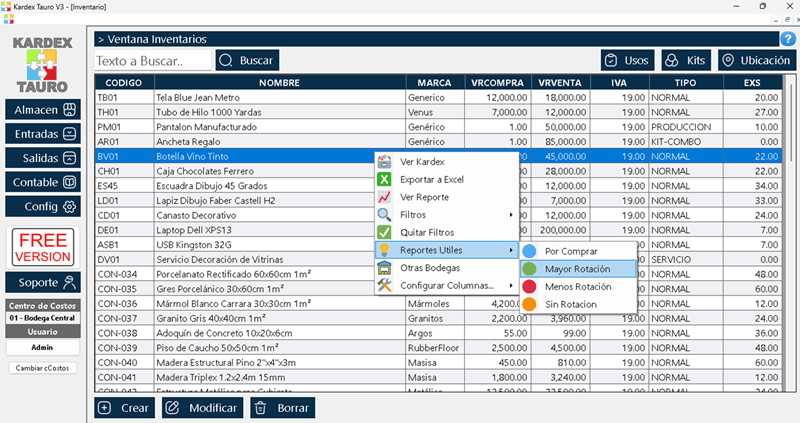
The minimum to keep at hand: the IBC calculated with support, the bracket table in force with its date, and a monthly reconciliation between what was withheld and what was declared. With those three elements the fund stops being an invisible point on the filing. Tools such as Kardex Tauro help payroll and contributions be calculated from the same record, so that the base you calculate is the base you declare.