Tariff classification: how to find a product's subheading
Tariff classification: how to find a product's subheading
The tariff subheading is the ten-digit code that identifies your product before customs, and that code determines the duty, the prior permits, the quotas and even whether the goods can be cleared at all. You find it by reading the nomenclature in order and applying the interpretation rules, never by picking the code that sounds like the commercial name. What follows is the full procedure: how the code is built, which criterion wins when there is doubt, how the decision is documented, and what a mistake costs.
What the nomenclature is and why it has ten digits
The tariff nomenclature is a hierarchical catalogue that sorts every good traded in the world. It does not group by industry or by supplier: it groups by nature, function and material, from the most general to the most specific. Each level has its own number and its own legal text, and that text is what governs.
The first six digits are international: they come from the Harmonized System and match across most trading countries. The next four do not. Each regional bloc and each country opens the nomenclature according to its own production and tariff policy. Colombia goes to ten digits: eight from the Andean nomenclature and two from the national opening. That is why a six-digit code sent by a foreign supplier can be correct and still insufficient: the missing four digits are decided here.
The second reason for ten digits is control: a country needs to know not only that it imported furniture, but what kind of furniture, and for that the code has to be fine-grained.
The structure: chapter, heading, Andean subheading, national code
The code reads left to right, and each pair of digits inherits the meaning of the one before. A product filed under the wrong chapter is not fixed further down: the error travels to the end of the chain.
| Level | Digits | What is defined there | How to recognise it |
|---|---|---|---|
| Section | None, it uses Roman numerals | Groups broad economic activities | Section heading and section notes |
| Chapter | 2 | Broad family of goods | First two digits and the chapter note |
| Heading | 4 | Concrete family, with its own text | Heading text and its first dash |
| Harmonized System subheading | 6 | First level comparable between countries | First dash inside the heading |
| Andean subheading | 8 | Common opening for the Andean region | Second dash |
| National subheading | 10 | The code declared in Colombia | Third dash; it may end in zeros |
A heading is the four-digit level; a subheading is any opening below it, although in daily use the word refers to the full code. It also pays to separate the code, which locates the product, from the duty, which is the tax that code pays. Changing the code changes the duty, but also the prior permit, the technical standard and the import regime.
The interpretation rules and how to read them in order
There are six interpretation rules and they apply in sequence: the second only comes in if the first did not settle the matter, and so on to the sixth. A seasoned classifier almost always resolves at the first, reading the heading text and the legal notes.
- First: the heading text and the section and chapter notes govern. If the product fits literally, there it stays.
- Second: covers incomplete or unassembled products and mixtures. An article missing a part is classified as complete when it keeps its essential character.
- Third: settles competition between two headings. The most specific wins; if neither is, the one giving essential character; if neither, the last in numerical order.
- Fourth: the analogy rule, for goods with no heading of their own. Used rarely and with care.
- Fifth: covers containers and packing. The case sold with the product follows its fate; transport packing is not classified separately.
- Sixth: applies the same ideas inside the heading, to choose the right subheading.
One detail decides many cases: section and chapter notes can expressly exclude a product. The phrase “this section does not cover” is worth more than any reasonable resemblance. Before searching for the heading, read the notes of the chapter where you think the product sits, and those of the section containing it.
What weighs more: function, material or presentation
The short answer: function governs when the product exists to do something; material governs when the product is the worked material; presentation governs in narrow cases, such as sets and retail containers. There is almost never a single clue, and reading in order keeps you from choosing on instinct.
Think of three objects made of the same material. A plastic sheet is classified by its material. A plastic container is classified by its packaging function. A chair with a plastic shell goes to the furniture chapter, because its function is to seat a person.
| Doubt that appears | Criterion that settles it | Where to look first |
|---|---|---|
| It is plastic, does it go in the plastics chapter? | Function defines the finished article; material defines the basic form | Chapter of the finished article, reading its exclusions |
| It arrives unassembled or missing a part | Essential character of the complete article | Second rule and heading text |
| It is a set or an assortment for sale | Classified as the article giving essential character | Third rule and the set note |
| It is a spare part for a machine | An identifiable part for exclusive use follows the machine; a general-purpose item goes by its material | Notes of the machinery section |
| It comes in a presentation case | The container follows the contents when sold together | Fifth rule |
| Two headings describe it | The most specific; if tied, essential character | Third rule, in its order |
Products that look alike and are not
Three classic pairs. An office chair and a vehicle seat both look like seating; the first is furniture, the second is a vehicle part and follows the vehicle. A kitchen knife and a hunting knife share a blade and a handle; intended use separates them. Surgical gloves and garden gloves look identical in a photo; material, sterility and intended use put them in different chapters.
The pattern repeats: popular names group things, the nomenclature separates them. Spare, accessory, input and part are trade words, not nomenclature words; on an invoice they must be translated into a technical description before you look for the code.
Three products and their classification path
An exercise with three cases is worth more than twenty definitions. All three arrive with a commercial name and no technical sheet, which is how they almost always arrive.
| Product | What the supplier says | Trait that decides | Reading path |
|---|---|---|---|
| Office chair with metal base and plastic seat | Ergonomic chair | Seating function, office use | Furniture chapter; the plastics chapter is ruled out by its exclusion note |
| Set of six kitchen knives in a case | Knife set | Goods put up for retail sale with a common function | Set rule; if it does not apply, each knife is classified on its own |
| Loose screw for a packing machine | Spare part | General-purpose item, not exclusive to that machine | By its material, not by the machine |
The chair is decided by function. The supplier calls it ergonomic and the invoice says metal frame with plastic seat; neither is a classification criterion. What counts is that the article is designed for a person to sit on. The plastic does not drag it into the plastics chapter, because the furniture note covers the finished article and excludes loose parts.
The knife set forces a prior question: they are sold together, in a case, for one use. If the set meets the assortment test, it is classified as the article giving essential character. If not, each knife goes its own way and the case by itself. That decision changes the number of lines on the declaration and the total duty.
The screw is the case most often failed. It arrives as a spare for a packing machine and the reflex is to classify it as a machine part. But a screw is a general-purpose item: it serves that machine and any other equipment, so it goes by its material. The part designed only for that machine, by contrast, follows the machine, and the manufacturer must prove exclusivity with the drawing or the manual.
How to document the classification before importing
Classification is not supported by an opinion: it is supported by a file. Before the first shipment, build one folder per product with these items.
- Manufacturer's technical sheet: what it is, what it is for, what it is made of and how it works.
- Composition with material proportions, when the product is a mixture, a textile or an alloy.
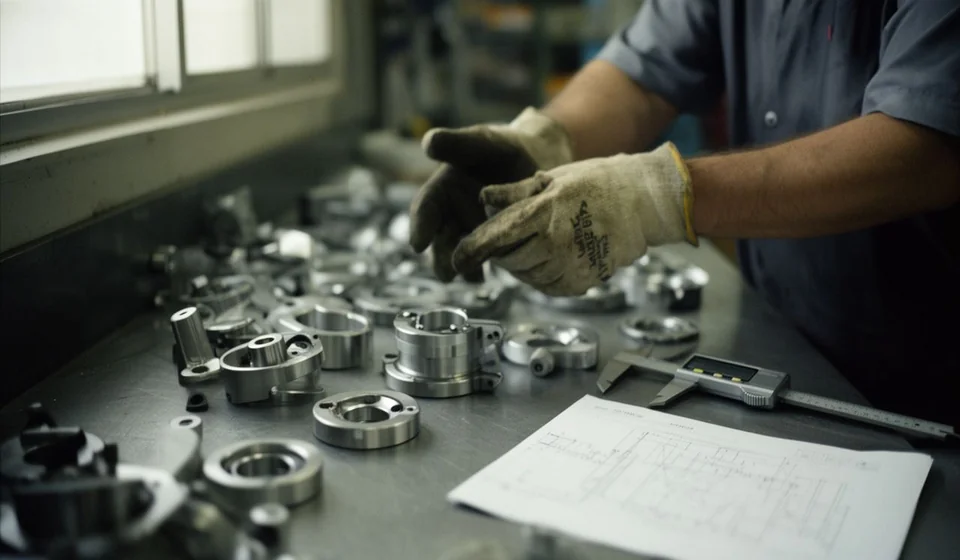
- Photos of the product alone, disassembled and in its packaging, with a visible scale.
- Manual or catalogue, with the page describing intended use.
- Proposed subheading, quoting the heading and subheading text relied on.
- Section and chapter notes reviewed, with the discarded exclusion written down.
- Date, owner and version of the criterion. If the nomenclature is updated, it is reviewed.
That file has two uses. Outward, it answers a customs request without improvising. Inward, it stops two people from classifying the same product two different ways in two consecutive shipments, which is the most expensive error in the medium term.
A formality that saves arguments: the goods description on the declaration must match the technical sheet. If the sheet says stainless steel and the declaration says metal, the inspector has a fair reason to ask.
Queries and rulings: whom to ask and with what support
When the doubt is real, there are formal channels. The customs authority answers classification queries and can issue a ruling; a customs broker with experience in the goods brings operational judgement; industry associations usually hold their sector's reference classification. An informal phone call orients you, it does not decide.
A written ruling is worth two things: it fixes the criterion before shipment and it defends you if a discussion starts later. It is not mandatory to import and it does not always arrive in time, but for products with a history of dispute — chemicals, textiles, machinery, processed food — it changes the conversation.
To request one you need the same as for the file: technical description, composition, use, photos and the proposed subheading with its support. A query that asks how much a chair pays cannot be answered; one that describes the chair, its structure and its use can. And read the whole answer: a ruling favourable to a product with a different composition does not cover yours.
What happens if the declared subheading does not match
The mismatch surfaces at inspection, in a later review or in an audit. The consequences add up: the duty is reassessed on the customs value, VAT is recalculated on a larger base, the applicable penalty is charged and the goods sit in storage while it is settled. Every day in storage costs money.
The example, with round hypothetical figures, shows the size of the problem. Customs value of USD 40,000. The correct subheading pays a hypothetical 5 % duty; the declared one, 15 %. Ten points of difference. VAT in the exercise is taken at 19 %, also hypothetical.
- Correct duty: 40,000 x 5 % = USD 2,000.
- Declared duty: 40,000 x 15 % = USD 6,000.
- Duty difference: USD 4,000.
- VAT on the inflated base: 4,000 x 19 % = USD 760 extra.
Exercise total: USD 4,760, before penalty, fees, storage or the commercial cost of a late delivery. If the business margin is 20 %, that USD 4,760 is equivalent to selling an extra USD 23,800 just to recover the blow. And the problem does not end with that shipment: the subheading stays in the importer's history and later declarations are read more closely.
The duty you pay once you have the code
With the subheading in hand, the duty is read in the national tariff, not in the product name. It can be a percentage of the customs value, a fixed amount per unit of weight or quantity, or a combination of both. Each behaves differently: the percentage rises with the price; the specific duty hits cheap goods harder.
On top of the duty sit other layers that depend on the code and the origin: preferences under trade agreements, quotas, countervailing duties, specific taxes. A preference does not apply by itself: it requires certifying origin and meeting the agreement's origin rule. A product with the right subheading and unproven origin pays the full duty.
Hence a practical warning: comparing two subheadings only by their percentage is comparing badly. The total cost includes VAT, other taxes, prior permits, storage and time, and sometimes the subheading with the higher duty clears faster and ends up cheaper.
Common mistakes
The mistakes are not born of ignorance: they are born of haste. Almost all of them come from taking the commercial name, the supplier's invoice or last shipment's code as if they were a source of law.
| Mistake | Symptom | Consequence | Correction |
|---|---|---|---|
| Classifying by the commercial name | The code changes depending on who looks | Overpaid duty and inspection mismatch | Describe the product by function, material and use |
| Copying the supplier's subheading | Six foreign digits or another country's code are declared | The national digits have no support | Use the supplier's code only as a lead |
| Ignoring section and chapter notes | The product seems to fit in two places | The wrong heading is chosen | Read notes and exclusions before deciding |
| Hunting the lowest duty without support | The code cannot survive a technical question | Reassessment, penalty and delay | Back the criterion with the sheet and the rules |
| Not writing the criterion down | Each shipment is classified differently | Inconsistent history and disputes | One file per product, dated and owned |
| Switching subheading between shipments | Two declarations of the same product disagree | System alerts and repeated inspections | Freeze the criterion, review it on legal change |
There is a seventh mistake that is not technical: leaving classification to whoever assembles the paperwork, with nobody from the technical or commercial side describing the product. The code is a business decision with a tax effect, not a last-minute formality.
When classification is not enough
This path solves most cases for a small importer, but not all. If the product is a chemical mixture, a processed food, a textile with several fibres or a machine with combined functions, the technical argument is finer and specialist support pays. If anti-dumping measures, quotas or prior licences apply, the code is only the first step.
It does not replace the accountant or the customs broker either: classification is a technical criterion, the declaration is an act before the authority with legal responsibility, and whoever signs needs to see the support.
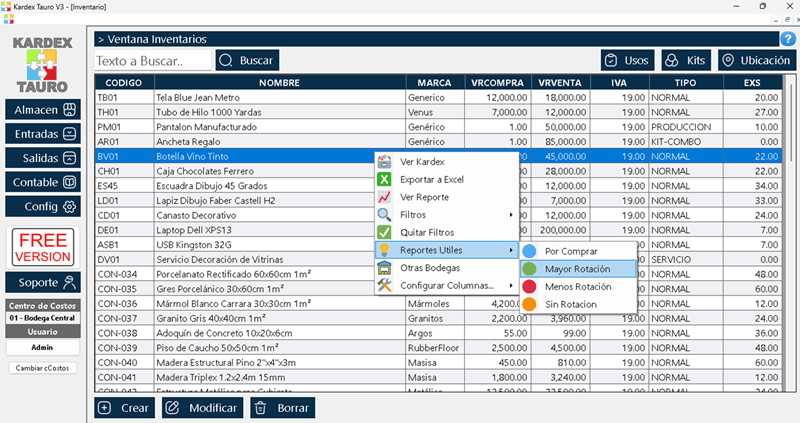
What any company can do is put the base in order: one sheet per imported product, with its subheading, its support, its documents and the date of the last review. That file turns an opinion into a defensible criterion and lets you answer within a day when customs asks. In Kardex Tauro, inventory, invoicing and operations share the same product record, so the code the goods enter with is not lost when they change warehouse.