Special tax regime: what it demands from a nonprofit entity

Special tax regime: what it demands from a nonprofit entity
The special tax regime is not granted because an organization calls itself a foundation or because its purpose sounds noble. It is granted to a nonprofit that proves, year after year, that it does not distribute surplus, that it applies the surplus to its meritorious activity and that it can back this up with bylaws, minutes and a tax return. When one of those pieces fails, the entity falls back into the ordinary regime and that year's profit becomes taxable.
Here is what the law requires, where substance ends and form begins, what can be done with the surplus and how the benefit is lost. No rates or caps are quoted: they change with every reform and every tax year, so they are explained as a mechanism and you confirm the current figure with your accountant. The figures in the example are working assumptions.
Which entities can qualify
The first filter is legal nature. The law lists the types of entity that may belong to the regime: corporations, associations, foundations, cooperatives and other nonprofits incorporated under Colombian law, with legal personality and domicile in the country. A commercial company does not qualify, even if its bylaws promise that profits will not be distributed.
The second filter is purpose. The entity must carry out a meritorious activity within the sectors the law names: health, education, culture, science, sports, social welfare, environment, among others. A purpose drafted as "any lawful activity" is the first sign that the organization is not clear about what it does.
The third filter is formal: registration as a nonprofit with the chamber of commerce where the law requires it, an up-to-date RUT (the tax registry) and the governing bodies set out in the bylaws. Without an assembly or board that decides, nobody approves where the surplus goes, and without that approval there is no way to prove the requirement.
One warning: belonging to the regime does not turn the entity into a "non-taxpayer". It is an income taxpayer, with its own rules and a special rate. The difference lies in how the tax is calculated, not in disappearing from the system.
Substantive requirements: no distribution and destination of the surplus
The core requirement is negative: the surplus is not distributed. The ban covers founders, members, board members, administrators and their relatives, in cash or in kind, directly or indirectly. It also covers deferred distribution: payments above market value to related parties, loans that are never collected, entity assets used for personal purposes.
The second requirement is positive: the surplus is applied to the meritorious activity, to the programs that carry it out or to the reserve the law allows in order to pursue the purpose. Saying it was reinvested is not enough; you have to state in which program, for how much and in which period.
The third is sustainability: the entity must cover its costs, expenses and debts with the income of the period. A repeated deficit is not only a financial problem: it signals that the operation cannot sustain itself on what it earns.
The fourth is patrimonial: assets must be committed to the meritorious activity; if part of them is used for something else, you have to explain why and what income it generates.
These four points are substantive: they cannot be fixed with a form or a signed certification.
Formal requirements: bylaws and qualification
The bylaws must contain an express clause against distributing surplus; state that, on liquidation, the remaining assets go to another nonprofit of a similar nature; and define who approves the financial statements and the destination of the surplus. If the no-distribution clause is missing, the first step is not to request qualification: it is to amend the bylaws.
Qualification is the act by which the entity asks the DIAN (the Colombian tax authority) to be included in the regime and registered in the RUT, with the documents that prove compliance. It is neither automatic nor permanent: it is an administrative decision based on what the entity declares and proves, and it can be reviewed later.
Consistency between the registry and reality is part of the requirement. If the purpose, the bylaws or the activities change, the RUT must reflect it. An entity invoicing consulting while its registry says "training" has a substantive problem, not a paperwork one.
And there is a document that is often forgotten: the minutes. The governing body must approve, every year, where that period's surplus goes, with the amount and the program identified. No minutes, no decision; no decision, no destination to prove.
How each requirement is proven
The regime rests on the evidence of the year being filed, not on the incorporation deed. The table summarizes which document proves each requirement.
| Requirement | Document that proves it | What it must show |
|---|---|---|
| No distribution | Assembly minutes and financial statements | No payments to founders by virtue of that status, and related parties charged at market value. |
| Destination of the surplus | Minutes allocating the surplus | Program, amount and approval date, before the year-end close. |
| Covering costs and debts | Comparative financial statements | Sufficient income and positive equity; the deficit explained when there is one. |
| Assets committed | Asset inventory and register | Assets used for the purpose and not for the benefit of third parties. |
| Meritorious activity | Management report and program delivery | Beneficiaries, coverage and spending per program. |
| Qualification | RUT and qualification decision | That the regime is recorded and the registered activity matches reality. |
| Tax return | Income tax return filed | That the period was filed and the figures match the accounting. |
A missing document is not a filing detail: it is a requirement without proof, and a requirement without proof is treated as breached.
What can and cannot be done with the surplus
You can reinvest in the meritorious program, build the reserve the law allows, cover deficits from prior years, acquire assets committed to the activity and fund programs in other regions with the same purpose.
You cannot distribute the surplus, pay founders for being founders, grant soft loans to related parties or carry expenses unrelated to the purpose. The line between an allowed expense and a disguised distribution is not in the account name: it is in who receives the money and in exchange for what.
| Use of the surplus | Allowed? | Condition |
|---|---|---|
| Reinvest in the meritorious program | Yes | Must be in the minutes and executed in the planned period. |
| Reserve to pursue the purpose | Yes | The law allows it under conditions; it is not free savings. |
| Cover deficits from prior years | Yes | Explained in the financial statements and the minutes. |
| Distribute among founders | No | Breaks the substantive requirement and loses the regime. |
| Pay "incentives" or bonuses for being a founder | No | Distribution under another name, even if booked as an expense. |
| A loan to a related party that is never collected | No | Deferred distribution; the actual cash flow is reviewed. |
| Luxury expenses unrelated to the purpose | No | Not meritorious activity and read as personal benefit. |
Income from activities other than the meritorious one
Many entities sell goods or provide services that are not their meritorious purpose and that help fund it. The law tolerates this up to a point, expressed as a proportion of total income for the year: a relative cap, not a fixed amount, which changes with each reform. Check the current percentage and which income enters the calculation.
Some income is left out of that calculation because the law itself excludes it, and the detail sits in the regulation. That is why the calculation is not done from memory or from the total revenue line: it is done on a working paper that separates meritorious income, income from other activities and excluded income.
Exceeding the cap is a ground for failing the permanence requirements. But there is an earlier risk: if the other activity is habitual and competes with commercial companies, the discussion stops being arithmetic. The nonprofit nature of the operation is called into question, and with it the qualification.
One confusion that costs dearly: belonging to the income tax regime does not exempt the entity from Colombian VAT, from municipal business tax or from invoicing. These are separate regimes. A foundation can hold the special regime for income tax and still be liable for VAT on a taxed activity.
Permanence and loss of the regime
The regime is not won once and forgotten. It is kept year by year, and each period the permanence requirements are reviewed: no distribution, destination of the surplus, covering costs and debts, committed assets, the cap on income from other activities, the return filed and the minutes approved.
If one year is breached, the consequence does not only look forward: the tax is triggered for the period of the breach and the entity files under the ordinary regime. The loss can be acknowledged by the entity when it corrects, or determined by the authority in a review.
There are four typical causes: distributing surplus, failing to document or execute the destination, exceeding the cap on income from other activities and failing to file. The regime is also lost by converting into a commercial company or by liquidating.
Requalifying is possible, but it does not erase the breached year: that period stands filed under the ordinary regime, with the applicable penalties.
Formal obligations and the return
The duty to file does not depend on there being tax payable. The qualified entity files an annual income tax return even when the result is zero, and that return triggers the review of the requirements. Not filing is, in itself, a breach.
- Annual income tax return, within the calendar set by that year's resolution according to the last digit of the tax ID.
- Certification of compliance with the permanence requirements, signed by the legal representative and by the statutory auditor where one exists, attached to the return.
- Minutes of the governing body allocating the surplus, approved before the close and reconciled with the financial statements.
- Accounting under the technical framework applicable to the entity, with comparative financial statements and notes.
- Electronic invoicing where the entity is an invoicing party, and information reporting within the deadlines set by the authority.
- Renewal of the commercial registration and of the nonprofit registration, where applicable.
Do not confuse the income tax return with the income and equity return: the first is filed by taxpayers, the second by entities that are not. A qualified entity is a taxpayer with a special rate and files an income tax return.
Calendar dates change every year and depend on the tax ID: confirm the current resolution before scheduling the filing.
A full example: 80 million in surplus and three decisions
Take a job-training foundation with income of 500,000,000, costs and expenses of 420,000,000 and a surplus of 80,000,000. These are round working figures, meant to show the mechanism.
First case: in November the assembly approves allocating the 80,000,000 to next year's training program, with minutes, a budget per workshop and a reconciliation against the financial statements. The destination complies and the regime is kept.
Second case: the assembly allocates 50,000,000 to the program and distributes 30,000,000 among the founders "in recognition of their work". That distribution breaks the substantive requirement: the entity loses the regime and the year's surplus —including those 30,000,000— becomes taxable under the ordinary rules, plus the applicable penalties. The minutes recording the distribution are, at the same time, the proof of the breach.
Third case: the foundation provides consulting services for 120,000,000 on top of its meritorious activity. That income is close to 19% of the 620,000,000 total for the year. Whether it exceeds the cap depends on the current percentage and on which income is included, so the right step is to calculate it with that year's rules and keep the working paper. The consulting income is also reported and may carry VAT.
| Item | Case 1: reinvests | Case 2: distributes | Case 3: consulting |
|---|---|---|---|
| Income for the year | 500,000,000 | 500,000,000 | 620,000,000 |
| Surplus | 80,000,000 | 80,000,000 | 80,000,000 before consulting |
| Destination | 80,000,000 to the training program | 50,000,000 to the program and 30,000,000 distributed | No distribution; extra income from consulting |
| No-distribution test | Met | Not met | Met |
| Destination test | Met | Not met: the minutes do not cover the 30,000,000 | Met, if the surplus is applied |
| Effect on the regime | Kept | Lost; the year's surplus becomes taxable, plus penalties | The cap and the VAT on consulting must be reviewed |
The control that makes the difference: minutes allocating the surplus approved before the close, reconciled with the financial statements. If the minutes and the income statement show the same figure, there is a story; if not, the argument is already lost.
What happens to founders and employees
Founders keep political control, not economic control. They decide in the assembly, appoint administrators and steer the purpose; they do not receive the surplus and do not share in the remaining assets on liquidation, which pass to another entity of a similar nature.
That does not stop them from working for the entity or being paid for it. A founder may hold an employment contract or provide professional services, with documented pay comparable to what the market would charge for that role. What they cannot do is be paid for being a founder.
The delicate point is high salaries for related parties. Pay well above market, with no support in duties, reads as a disguised distribution even if it is booked as payroll. The question is not how it was recorded, but what the person received and why.
For employees the rule is the ordinary one: wages, benefits and contributions are expenses of the meritorious activity. What changes is the setting: every payment to a related party is examined closely.
Common mistakes
The five mistakes that most often end in loss of the regime share a pattern: someone made a reasonable decision and did not document it, or documented something reality did not support.
| Mistake | Symptom | Consequence | Correction |
|---|---|---|---|
| Distributing surplus "as an incentive" | Payments to founders with no contract or duties | Loss of the regime and tax on the year's surplus | Return the payment, correct and file under the ordinary regime |
| Not documenting the destination with minutes | Real reinvestment but no approval by the body | Requirement without proof; treated as breached | Approve the minutes before the close and reconcile with the statements |
| Invoicing commercial activities without measuring the effect | Growing other income with no working paper | Risk of exceeding the cap and losing the nature | Separate income by line and compute the relative weight |
| Treating the regime as a total exemption | No provision for VAT or business tax | Omitted returns and penalties on other taxes | Review VAT, business tax and invoicing separately |
| Stop filing because "there is no profit" | A period with no return filed | Formal breach and loss of permanence | File at zero where that is the case, within the calendar |
Before deciding: what this regime does not solve
The regime rests on governance and minutes, not on the incorporation deed. The deed says what the entity meant to be; the minutes, the financial statements and the return say what it did.
This does not replace your accountant. If your entity really distributes, if commercial activity is the heart of the business or if the founders expect a return, the regime is not the problem: the model is. If the case is a small entity with a single program and no statutory auditor, the work is simpler, but the minutes are still mandatory.
Before acting, check four things: the bylaws contain the no-distribution clause, the RUT reflects the real activity, there are minutes allocating last year's surplus and the figures in those minutes match the financial statements. If all four are in order, the qualification has something to stand on.
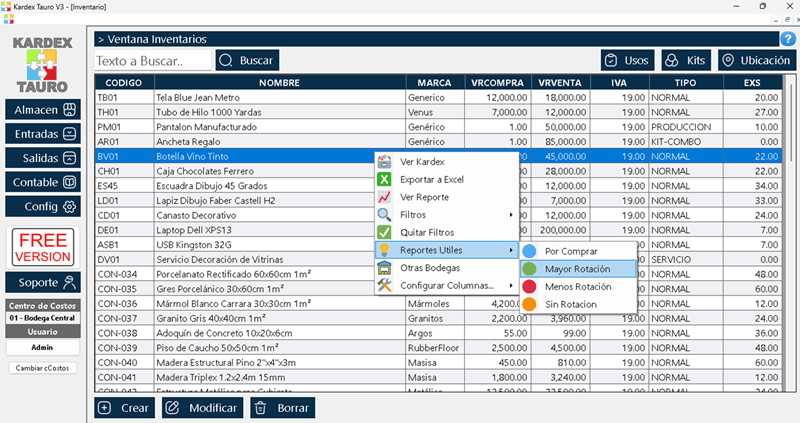
To keep that trail, accounting software helps more than it seems: Kardex Tauro lets you record income by program and reconcile the surplus with the financial statements, so the minutes and the books tell the same story when the review arrives.