What is work in process inventory?
What is work in process inventory?
If your company makes what it sells, your warehouse holds three very different kinds of inventory. The first one is easy to recognize: raw materials that have not been touched yet, sitting on shelves or in the receiving area. The second one is just as easy: finished products, packed and ready to be delivered to a customer. But between the two there is a third category that many small factories do not measure, do not value and therefore do not control: work in process inventory. In this article we explain what it is, why it forms, how much it is worth, and how you can keep track of it with an inventory program such as Kardex Tauro, without loose sheets of paper or handwritten notebooks.
What exactly is work in process inventory?
Work in process inventory, also called work in progress, or WIP for short, is made up of all materials that have started their transformation but have not yet become a finished product ready for sale.
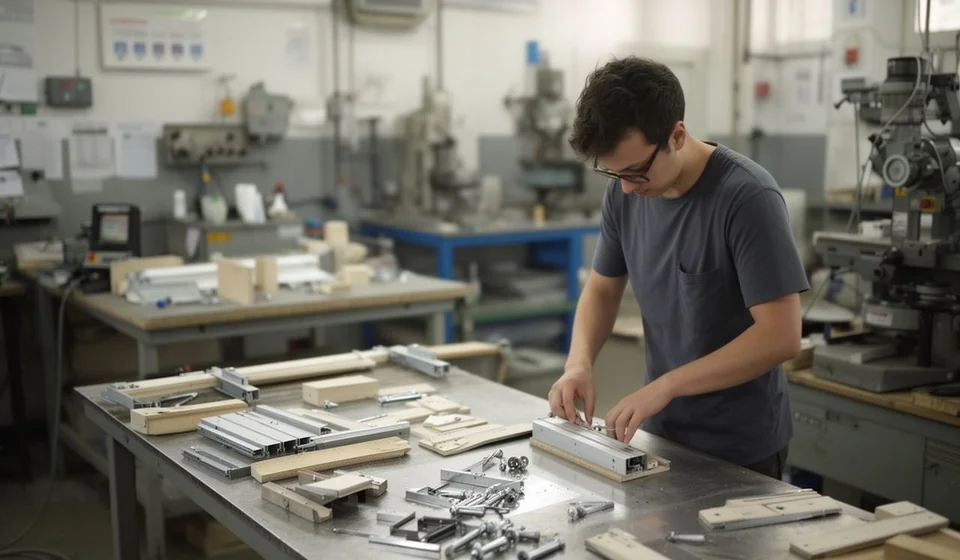
A product enters this category the moment it leaves the raw materials warehouse and begins to be worked on: when it is cut, mixed, assembled, sewn, baked or painted. From that instant it stops being raw material, but it is not finished product yet either, and that in-between situation is precisely the hardest one to control in small companies.
From an accounting point of view, work in process inventory includes three components: the cost of the raw material consumed, the direct labor applied to it and the associated manufacturing overhead, such as electricity, maintenance or workshop rent. This means that, while a production order stays open, company money is "parked" in the production area, and that money must be identifiable, measurable and accounted for.
An example to understand it better
Imagine a woodworking shop that makes wooden chairs. Its warehouse holds planks, nails, glue and varnish: that is raw material. In the shipping area there are finished chairs, sanded and varnished, ready to deliver: that is finished goods. But on the shop floor there are planks already cut to size, half-assembled frames and legs waiting to be sanded, each waiting for the next step. That batch of incomplete chairs is, no more and no less, the company's work in process inventory.
The key detail is that this batch is not "lost" or "up in the air": it belongs to a specific production order that states how many chairs are being made, what stage they are at and which materials have been applied to them. If the shop does not record those stages, its owner will only see in the inventory an amount of wood that does not match what is actually in the warehouse, and will not know whether the difference is half-worked material, waste or even loss.
The three inventories of a manufacturing company
To place work in process within the full picture, it helps to see the three types side by side:
| Inventory | What it is | Example | How it is controlled |
|---|---|---|---|
| Raw materials | Purchased inputs that have not yet been transformed. | Planks, nails, glue and varnish in the warehouse. | Receipts are recorded on purchase and issues are recorded when the workshop withdraws material. |
| Work in process | Materials that have started their transformation and have labor and other costs applied. | Chairs cut, half-assembled or in the middle of varnishing. | Each raw material issue is linked to an open production order and its value stays attached to that order. |
| Finished goods | Completed goods, ready to sell or ship. | Finished chairs, packed in the shipping area. | The receipt into inventory is recorded when the production is received from the order. |
Raw materials and finished goods have clear documents behind them: the purchase and the sale. Work in process, on the other hand, can only be supported by the production order and by the material issues charged to it. That is why, in practice, it is the link most often neglected in small manufacturing businesses.
How much is work in process worth?
Valuing work in process is simpler than it seems when you do it per production order. Suppose a furniture factory opens an order to produce 50 desks. The materials charged to that order, including boards, hardware and paint, add up to 2,500,000. The week's direct labor adds 900,000, and estimated overhead (electricity, machine maintenance, proportional rent) comes to 350,000. The accumulated work in process cost is then 3,750,000, and that value stays attached to the order until the desks are finished and received into the finished goods warehouse.
That exercise has two benefits. First, it tells you how much capital is tied up in production at any given moment, which is critical for a small company where cash is scarce. Second, it avoids cost distortion: if you only recorded raw materials when you bought them, your results would show misleading profits in months without production and artificial losses in months of heavy activity.
The full cycle: how work in process is born and how it closes
In an orderly system, work in process follows a four-step cycle:
- A production order is created stating which product will be manufactured and in what quantity.
- With the order open, every issue of raw material to the shop floor is recorded as a consumption linked to that specific order; the consumption deducts the warehouse stock.
- As long as the order remains open, the value of the materials consumed, plus labor and indirect costs, is the company's work in process inventory.
- When the order is finalized, receiving the finished product is enabled; it enters the warehouse and becomes available for sale, closing the cycle.
Common mistakes when managing work in process inventory
- Not opening any production order: the workshop withdraws material without leaving a record of what it is for or which batch will use it.
- Recording consumptions in a generic way, without linking them to the order that originated them, which makes it impossible to know what each batch really costs.
- Treating a product that is still in process as finished, inflating finished goods inventory and showing stock that does not exist.
- Forgetting work in process when valuing the company or applying for credit, leaving out real capital that is working on the shop floor.
- Reconciling inventory only once a year, when discrepancies are already impossible to trace.
How Kardex Tauro supports work in process control
Kardex Tauro is an inventory program designed for small businesses, up to 50 employees, that manufacture, transform or assemble products and need control without complications. When it comes to work in process, the program does not ask you for complex engineering valuations: it asks you to work with order and gives you the tools to do so.
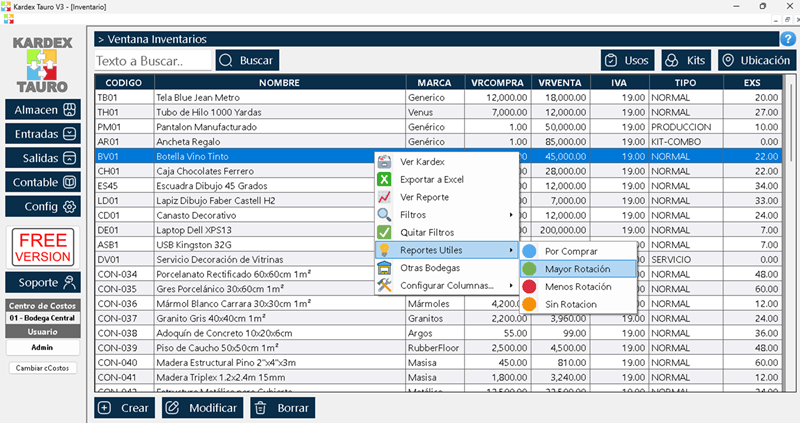
When you create a Production Order, the system understands that this open order represents work in process. The raw material consumptions recorded while the order is open are linked to that specific order: the program knows which material left the warehouse, in what quantity and for which production run. The Internal Consumption window records that issue and automatically deducts the stock, and the stock ledger of each product keeps its corresponding movement.
When the order is finalized, receiving the finished product is enabled. The manufactured product enters inventory as a receipt, the stock ledger records that receipt, and the order stops representing material in process and becomes finished product available for sale. The whole journey, from raw material issues and accumulation on the order to the receipt of finished goods, stays documented and searchable, without relying on anyone's memory.
Conclusion
Work in process inventory is not a textbook concept: it is your company's money working on the shop floor. If you do not know how much material is halfway through its transformation, or which order it belongs to, you do not know how much it costs you to produce, how much you really have or how much you can sell. The solution is not one more form pinned to the wall, but a systematic record kept by production orders, the kind Kardex Tauro puts within reach of a small business without requiring a sophisticated accounting department.
If your business manufactures, assembles or transforms products, try Kardex Tauro with the first production order you open: you will see your raw material leave the warehouse, your work in process stay identified and your finished product arrive in inventory, all with a clear trail in the stock ledger. That is the first step toward producing with real knowledge of your costs and your inventory.
