Payment reminder letter template for Word (free download)
Payment reminder letter template for Word (free download)
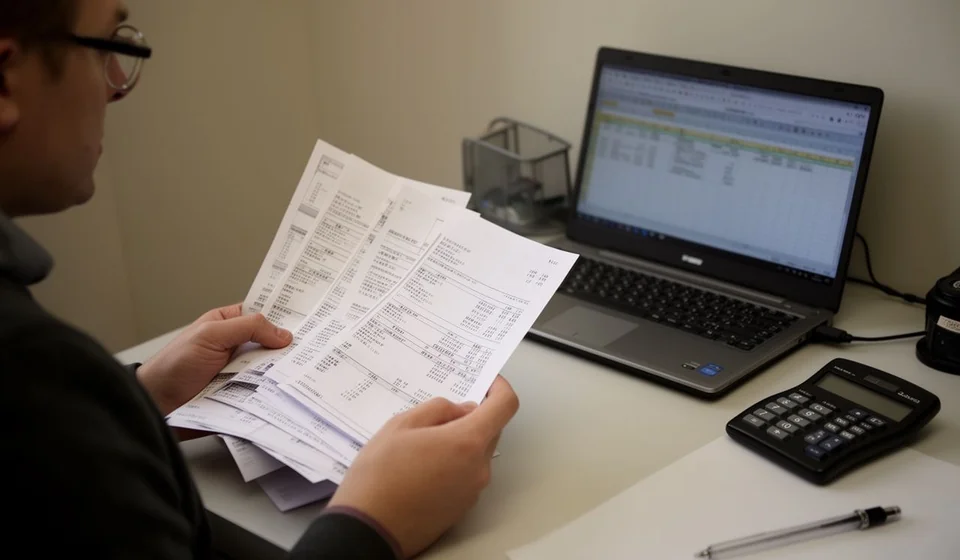
Collecting overdue invoices should not depend on anyone's memory. Once an invoice slips past its due date, a friendly phone call or a chat message helps for a while, but it fades: nobody remembers exactly what was said, on which day, or what the customer promised. A payment reminder letter fixes that. It turns the reminder into a dated document that lists what is owed and asks for a specific commitment.
In practice, the payment reminder letter sits in the middle of the collections process. It is not a legal claim yet, and it is not a decision to end the commercial relationship, but it is no longer a casual nudge either. It is the formal communication that tells the customer: we have reviewed the account, these invoices are overdue, we need a payment date, and if there is no answer, this is what happens next.
This Word template comes complete and ready to use: a three-line letterhead, the recipient block, the subject line, an opening paragraph, the table of outstanding invoices, the paragraph that asks for a payment date or a written agreement, the paragraph you use when the customer has already paid, the paragraph stating the deadline before escalation, and the closing with signature, copy line and notice. All you have to do is replace the text in brackets and adjust the tone to your company's style.
⬇ Download payment reminder letter (.docx)What a payment reminder letter is, and how it differs from other documents
A payment reminder letter is a formal communication that a company sends to a customer who owes money, to remind them that invoices are overdue and to ask for payment or a payment plan. It is signed by someone with authority to commit the company: finance, accounts receivable or management. That is why it should not be written in a hurry or sent without checking the balance first. The letter speaks for the company.
It is not the same as a statement of account. A statement of account is a periodic listing of everything that moved on the account: invoices, credit notes, payments and the closing balance. A payment reminder letter is specific: you send it when something is overdue and it asks for a concrete action. Many companies send statements believing they are collecting, and the customer files them away unread because nothing is being requested.
It does not replace a reconciliation either. If the customer replies that they already paid, or that they have an unapplied credit note, the letter does not fix the difference: it surfaces it. That is useful too, because it puts the disagreement on the table at the right moment and not after the case has already escalated.
There is one value that is almost never mentioned: traceability. With the date of the letter, the name of the person who signed it and the list of invoices included, anyone can reconstruct the collection effort months later. That trail is what turns collections into a process instead of a handful of loose calls that depend on who happened to make them.
What it is used for
A well-written payment reminder letter works for the company in several ways at once:
- Formally reminding the customer that one or several invoices are past due, with the number, date and amount of each document.
- Asking for a specific payment date or proposing a written payment plan, instead of leaving it in a phone conversation that nobody can later prove.
- Leaving a record of the collection effort: date sent, person responsible, invoices included and the customer's reply.
- Clearing up the case when the customer has already paid or applied the payment to another invoice, so the information can be matched without an argument.
- Stating the consequences of non-payment in an orderly way, such as holding pending deliveries or moving the case to the receivables team, without threats or an aggressive tone.
- Feeding the monthly receivables report, the collections meeting or the review with the accountant, with written evidence for every action taken.
The right tone for each stage of collection
The tone changes with the stage. On the first reminder, when the invoice has just come due and the customer has a good history, the letter should read as a reminder and not a complaint: you assume good faith and ask them to confirm a payment date. On the second reminder, the text refers to the earlier communication, repeats the invoice detail and asks for an answer by a specific date.
On the third or final reminder, the letter states plainly what will happen: pending deliveries are held, the case moves to the receivables team, or it goes to whichever step the company has defined. What matters here is not how harsh the language is, but whether the company follows through. If the letter announces something, the company must be ready to do it.
- First reminder: a courteous note with the invoice detail and a request to confirm the payment date.
- Second reminder: a reference to the previous contact, a short deadline and a request for a written payment plan.
- Final reminder: a clear statement of the consequences and the next step, copied to the sales team.
A practical rule: the tenser the relationship, the shorter and more concrete the letter should be. Long paragraphs of reproach do not collect anything; the exact figure does.
What the template includes
The template follows the real structure of a payment reminder letter. These are its blocks and what goes in each one:
| Block of the letter | What goes there |
|---|---|
| Three-line letterhead | Company name and tax identification, address and city; telephone, email and website. This is the first block to replace. |
| City and date | City of issue and the full date. The date starts the clock on the deadline you grant. |
| Recipient block | Company name, attention line with the contact's name and job title, address and city. |
| Subject line | Collection of overdue invoices, listing the invoice numbers included. |
| Greeting | A formal salutation to the contact. Adjust it if your relationship with the customer is more informal. |
| Opening paragraph | Two or three lines of context: in what capacity you are writing and how long the invoices have been outstanding. |
| Outstanding invoices table | Columns for invoice number, issue date, due date and amount, with a total outstanding row at the end. |
| Confirmation paragraph | Asks the customer to confirm a payment date or to propose a written payment plan with workable instalments and dates. |
| Already-paid paragraph | Used when the customer paid between the receivables cut-off and the date of the letter: it asks for the receipt so the record can be updated and the matter closed. |
| Deadline paragraph | States how many days are granted before pending deliveries are held or the case is moved to the receivables team. |
| Closing and signature | A courteous close with full name, job title, company and contact details of the signer. |
| Copy line | Receivables team and the salesperson or account manager, so the action is recorded on more than one front. |
| Closing notice | A note that this is an internal receivables model and that the contract terms and collection steps should be reviewed before escalating the case. |
What you need before you write it
Before opening the template, have these details at hand. Most mistakes in a payment reminder letter come from writing without them:
- The updated receivables list, with the overdue invoices, their issue date, their due date, their amount and the real balance of each one.
- The customer's statement of account, or the detail of the payments and credit notes applied, so you do not chase money that has already been paid.
- The full name, job title and contact channel of the person who receives the letter, plus the address or email where the communication is filed.
- The history of previous actions: calls, emails, earlier agreements and promises to pay, so you do not repeat the same message or contradict what was already said.
- The company's own criteria on deadlines and consequences: how much time is granted and what happens when there is no answer.
- Who signs the letter, in what role, and which areas receive a copy.
How to use it, step by step
- Download the file and open it in Word. Before typing anything, save a blank copy, so the original template stays intact for next time.
- Replace the letterhead: company name, tax identification, address, city, telephone, email and website. Check the document footer as well, since it often still carries the template details.
- Complete the city and the date. If the letter is sent several days after it is written, adjust the deadline paragraph so the days granted still count from the real date of sending.
- Fill in the recipient block with the company name, the contact's name and job title, the address and the city. If you send it by email, keep the block anyway: the letter must be printable and archivable.
- Write the subject line with the invoice numbers included. If there are many, mention the first, the last and the total outstanding.
- Fill in the invoice table. Check every amount against the statement of account before writing the total: one wrong total undermines the authority of the whole letter.
- Write the deadline paragraph with the number of days the company is actually willing to grant, and with the real consequence: hold pending deliveries, move the case to the receivables team, or both, according to your internal procedure.
- Sign it, proofread the spelling and the customer's name, assign the sequential number or document code if your file carries one, and log it in the communications register. Save the file with a name you will find again, such as the customer name and the date.
Common mistakes and what to check before sending
- Chasing a balance that has already been paid or that has an unapplied credit note. Check the statement of account on the day you send, not the day you drafted the letter.
- Sending the letter without invoice numbers, without dates or without the total. Without those details the letter loses precision and forces a follow-up call.
- Using the same text for every customer: copying and pasting drags in details that do not belong to the case, and the customer notices.
- Announcing consequences the company will not actually apply. If deliveries are never held, do not write that they will be: the next letter will not be taken seriously.
- Leaving brackets unreplaced or the deadline paragraph unfinished. It is the most common mistake and the most visible one.
- Sending without a signature, job title or a copy to the sales team and receivables, and keeping no copy or record of the date sent: without that record there is no way to show the communication ever existed.
When it is worth moving to a system
With a handful of customers and a few overdue invoices a month, this template is enough: it takes a few minutes to fill in and it leaves written evidence of the action.
As the receivables balance grows, the problem stops being the wording and becomes the information. You need to know which invoices are overdue today, how many days late they are, what was promised on the last call and which customers have already received a third reminder. At that point the letter becomes the easy part and keeping track becomes the hard part.
Inventory and receivables software such as Kardex Tauro keeps invoices, payments and balances in one place, works out days overdue without opening file after file, and keeps the communication history next to each customer. The template is still useful: it drafts the message, while the system tells you who to chase and when.
This model is an internal receivables guide: before escalating a case, review the contract terms and the collection steps your company has defined with your adviser.
⬇ Download payment reminder letter (.docx)