Personal recommendation letter template for Word (free download)
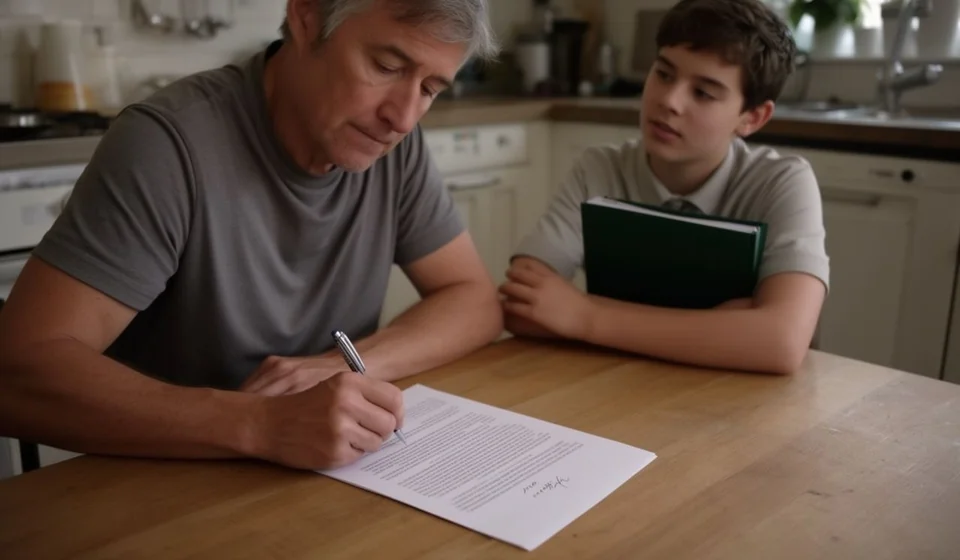
Personal recommendation letter template for Word (free download)
There comes a moment in almost everyone's life when somebody asks for a favour that money cannot settle: a recommendation. It is the nephew looking for his first job, the student applying for a scholarship, the neighbour who needs support for a rental application, the young person joining a volunteering programme, the colleague applying to a graduate school abroad. The person who signs is not a company: it is an individual who puts a name and a reputation behind somebody else.
And that is where the usual problem starts. The letter gets written on a blank sheet, from memory, without exact dates, with two spelling mistakes and with a phone number that changed months ago. Worse still: many times the applicant never warned the person who was going to recommend them, so the reader calls to confirm and reaches somebody who has no idea what they are talking about. This personal recommendation letter template for Word exists so that the favour is done well and fast: specific, orderly and, above all, verifiable.
It is a single-page letter. It carries the city and the date, the opening line “To whom it may concern”, the subject with the applicant's name, a paragraph explaining how long and in what capacity the signer knows them, a table with the applicant's details, a paragraph of qualities with one concrete example, a paragraph of recommendation and willingness to confirm it, the closing paragraph with city and date, the farewell, the signature block with position, institution and contact details, the copy line and a closing note. Every field in brackets is meant to be replaced; nothing else has to be invented.
⬇ Download personal recommendation letter (.docx)What this letter is and what it is not
A personal recommendation letter is a short document in which one person who knows another —through study, work, the neighbourhood, a community group or family— states in writing what they have seen and stands behind that statement. It is not signed by a company acting as an employer: it is signed by a teacher, a former manager, a community leader, a volunteering coordinator or a colleague. That is why the weight of the text does not rest on letterhead, but on the credibility of the signer and the precision of what the letter says.
The value of the document depends on three things: that the relationship is real and can be checked, that the length of time the signer has known the person is stated clearly, and that the qualities come with a fact attached. “She is a responsible person” says nothing; “for two years she led the neighbourhood youth group and never missed a meeting without warning in advance” says everything. The second version is what an admissions committee, a landlord or a recruiter can verify with a two-minute phone call.
It is also worth clarifying what this letter is not. It is not an employment certificate, it does not replace a proof of income, and it does not force anyone to hire or to accept an application. It is a statement of opinion backed by facts, and whoever signs it must be able to defend it if somebody calls. That is exactly why the template itself insists on one point: write only what you can support.
What it is used for
A personal recommendation is requested at specific moments, almost always when the applicant still has no formal track record to show. These are the most common uses:
- Looking for a first job, when there are no previous managers or employment certificates to present.
- Supporting an application to studies, scholarships or academic exchanges.
- Accompanying a rental application for housing or a place at an educational institution.
- Introducing a candidate in a selection process that has already asked for a personal reference.
- Backing an application to volunteering, sports, cultural or community programmes.
- Showing good standing in a procedure before an institution, when that institution does not require a specific form and a letter from the signer is enough.
In all of these cases the letter does the same job: it lets a third person who has never met the applicant read, in a few lines and from an identifiable source, who that person is, who stands behind them and on what facts. That is why the letter should be written thinking about the reader, not about the person who signs it.
What the template includes
The table below summarises the real blocks of the file, in the order in which they appear. Each row is an element you see when you open the document in Word.
| Block of the letter | What is written there |
|---|---|
| City and date | The place and the date of signing. They must match the date repeated in the closing paragraph. |
| To whom it may concern | An open opening line, for when the letter goes to an institution or to a person whose name is not yet known. |
| Subject | One short line with the applicant's full name and the reason: personal recommendation. |
| Paragraph of acquaintance | How the signer knows the person and since when, with the number of years and the type of relationship. |
| Table of the applicant's details | Name, identity document and relationship to the applicant. These three items identify the person without ambiguity. |
| Paragraph of qualities | Two or three qualities, each one supported by a concrete, verifiable example. |
| Paragraph of recommendation | The recommendation itself and the signer's willingness to confirm it if it is considered necessary. |
| Closing paragraph | City and date of signing, and the note that the letter is issued at the applicant's request. |
| Farewell and signature | Full name, position, company or institution, phone number and a current email address. |
| Copy | Who receives a copy of the letter, normally the applicant's own file. |
| Closing note | A reminder that the recommendation must be specific, verifiable and limited to what the signer can support. |
Many people confuse this letter with a work reference, and they are not the same thing even though they look alike. The difference is who signs and what each one backs up:
| Point | Personal recommendation | Work recommendation |
|---|---|---|
| Who signs | Someone who knows the applicant through study, community or direct contact | The manager, the director or the human resources area of the company where the person worked |
| What it talks about | Conduct, responsibility, discipline and initiative | The role, the duties, the performance and the period of employment |
| What it backs up | The person's behaviour and personal record | The work experience and the results obtained |
| Who it helps | Someone seeking a first job, a scholarship, a rental or a place in a programme | Someone with work history seeking a new position or a proof of experience |
| How it is signed | With the signer's name, position and institution, even if it is not their employer | With the company letterhead and seal that certifies it |
If the applicant needs both, the right move is to hand in two separate letters: the personal one signed by whoever knows them closely, and the work one issued by the company. Mixing them into a single text weakens both.
How to fill it in, step by step
The whole process takes less than fifteen minutes when the information is at hand. This is the order that works:
- Ask for the details before you write: the applicant's full name, identity document number, what they are applying for and who the letter is addressed to. Without that context, every paragraph drifts.
- Check the facts against your own records: how many years you have known the person, in what setting and how often you dealt with them. If a detail is not certain, state it with less precision instead of inventing it.
- Replace the city and the two dates in the letter: the one in the opening block and the one in the closing paragraph. When the dates do not match, the reader distrusts the whole document.
- Complete the paragraph of acquaintance with the real relationship: teacher of a given subject, direct manager during a given period, group coordinator, neighbour in the same block. That paragraph is what gives the letter its authority.
- Fill in the table of the applicant's details with name, document and relationship. Check the document number digit by digit, because a wrong number is the same as recommending a different person.
- Write two or three qualities, each with a fact. Choose the ones you can prove with an example and leave out the praise that has nothing behind it.
- Adjust the recommendation and the closing paragraphs: recommend explicitly, offer to confirm the information, and make clear that the letter is issued at the applicant's request.
- Review the signature block and the footer of the letter: full name, position, institution, current phone number and email, and the copy line with the destination of the file. An outdated contact detail can make the best recommendation go nowhere.
What to check before signing
Before you sign, read the whole letter once, slowly. These are the faults that most often drain the value out of a recommendation:
- Unverified details: a misspelled name or a wrong digit in the document number, or a job title that is not the one the person actually holds.
- Dates that do not add up: the opening date different from the closing date, or a period of acquaintance that contradicts the applicant's CV.
- References who were never warned: somebody is listed as the signer and does not know they are going to be called. Always warn the person before signing and confirm the phone number that will stay on the letter.
- Qualities with no example: loose adjectives that anyone could write about anyone and that fall apart under a single question.
- Spelling mistakes and wrongly written proper names, including the signer's own name and that of the institution where they work.
- Information that is not yours to disclose: health or family details, or facts from an internal process that the applicant never authorised and that are not needed to recommend them.
When it is worth keeping a record
For someone who signs one recommendation every two or three years, a well-saved Word file is enough. The problem appears when the volume grows: a school that issues letters for dozens of graduates, a foundation that recommends every volunteer, a company where managers sign personal letters at the request of their teams. At that point nobody remembers what was signed, on what date, for which process and with what support.
The answer is not a more elegant letter, but a record showing the date of issue, who signed, who was recommended and for what. That is the ground where tools such as Kardex Tauro help: the letter stays a simple document, but the data behind it lives in one place and can be looked up when somebody asks for it. Until that record exists, the honest alternative is a control sheet listing the date, the applicant, the signer and the filed copy.
This template is a general guide for internal use: review it with your adviser and adapt it to your organisation's policy. And follow the note in the file itself: a personal recommendation must be specific and verifiable, because the signer is answerable for what it states, so write only what you can support.
⬇ Download personal recommendation letter (.docx)