Statement of financial position under IFRS for SMEs: how to present it

Statement of financial position under IFRS for SMEs: how to present it
A statement of financial position is not the list of balances your accounting program exports. It is a snapshot of what the company owns, what it owes and how much belongs to the owners on a given date, arranged so that someone who does not know the business can read it and decide. A balance sheet can tie to the peso and still be useless if it blends the obligations due next month with those due in five years. Here is what IFRS for SMEs requires, how current and non-current are separated, which line items cannot be omitted, and a full example that checks itself.
What the statement shows and what it is really for
The statement presents three blocks on a given date: assets, liabilities and equity. Assets are the resources the company controls; liabilities, what it owes third parties; equity, the difference between the two, meaning what would be left for the owners if everything were paid. It is a photograph, not a film: it does not say how much the company earned during the year, it says how the business stood at the reporting date.
That difference matters. The income statement explains whether the business makes or loses money; the statement of financial position explains whether it can hold up. A company can close the year with a profit and still be unable to pay the first payroll of January, because all the profit sits in inventory that does not move or in receivables that are not collected. The snapshot shows where the money is; the result shows how it moved.
For an SME, the practical value lies in three questions the statement answers at a glance: what it owns, what it owes and how much belongs to the owners. If what it owes is concentrated in the short term and what it owns is not, there is a liquidity problem that no accounting profit will cover.
The minimum structure: what the framework requires and what is your call
IFRS for SMEs does not impose a single presentation format. It imposes minimum content: a list of line items that must appear, plus the duty to add any that are material to understanding the company's position. The rest — order, intermediate subtotals, level of detail — is decided by what the reader needs. That room for judgement is misused when someone copies a template built for another business.
| Block | Minimum line items required by the framework |
|---|---|
| Assets | Cash, trade receivables, inventories, property plant and equipment, intangible assets, investments and biological assets |
| Liabilities | Trade payables, provisions, financial liabilities and tax |
| Equity | Share capital, reserves, retained earnings and profit or loss for the period |
Materiality works both ways. You may add a line the framework does not name if its amount changes how the statement reads, for instance a very large advance to suppliers or assets held for sale. And you may not omit a required line just because the balance is small, unless it is immaterial. Immaterial does not mean you dislike how it looks: it means omitting it would not change the reader's decision.
Current and non-current: the criterion you must explain
The statement must separate current from non-current, or be presented in order of liquidity when that is more relevant to the business. Either way, the criterion applied has to be explained. Repeating the list of balances is not enough: the reader needs to know why one item sits at the top and another at the bottom.
The usual criterion: an asset is current when it is expected to be realised, consumed or sold within the normal operating cycle or within twelve months after the reporting date; a liability is current when it must be settled within that same horizon. Anything else is non-current. If the operating cycle is longer than twelve months — crops, construction, multi-year projects — the cycle prevails.
| Situation | How it is classified | Why |
|---|---|---|
| Inventory sold in the normal cycle, even if it takes fifteen months | Current | The operating cycle prevails over the period |
| Loan instalment due in month eight | Current | It is settled within twelve months |
| The rest of the same loan due in year four | Non-current | It falls outside the current horizon |
| Equipment bought with a five-year loan | Non-current asset and non-current liability | The asset and the debt follow different schedules |
| Bank debt renewed every year | Depends on intent and on the ability to refinance | Confirm it with your accountant and disclose it |
The classic error is in the last row: debt rolled over every year and presented as non-current to improve the ratio. Without a contractual right to defer payment beyond twelve months, the debt is current, however long the habit.
The line items that cannot be missing, one by one
Cash. Cash on hand, bank accounts and available equivalents. Bank overdrafts are not netted against cash: they are liabilities and are presented as current financial liabilities. Netting them hides debt and dresses up working capital.
Trade receivables. Customer balances, net of any impairment recognised. If there are receivables outside the trade — loans to shareholders, advances to employees — show them separately, because they are not collected on the logic of an invoice.
Inventories. Raw materials, work in progress and finished goods, as the warehouse actually organises them. The measurement basis and obsolescence estimates belong in the notes, not in the body of the statement.
Property plant and equipment. Present the net amount: cost less accumulated depreciation. Equipment of 250 million with 50 of accumulated depreciation appears at 200, not 250. Showing gross cost inflates assets and misleads anyone comparing two companies in the same sector.
Intangibles, investments and biological assets. They appear only if the company has them. Licensed software, an investment in another company or a crop in development are real items for many SMEs and often end up buried in "other assets". If they are material, they deserve their own line.
Trade payables and provisions. Suppliers and trade accounts payable on one side; provisions on the other, meaning obligations of uncertain amount or timing. Blending them hides risks the reader needs to see apart.
Financial liabilities and tax. Debt with banks and lenders, split between current and non-current according to the repayment schedule. And taxes outstanding at the reporting date, which are certain debt and not a closing detail.
Equity: capital, reserves and results are not the same thing
Equity includes contributed capital, reserves, retained earnings and the result for the period. Each line tells a different story: capital says how much the owners put in, reserves how much has been appropriated by law or by shareholder decision, retained earnings how much has been reinvested, and the result for the period how much was earned or lost in the year being closed.
Translation adjustments and other comprehensive income go separately. They are not profit or loss for the period and must not be confused with it: they are value changes the framework requires you to recognise outside profit or loss, and blending them distorts how the result reads. If the company operates in another currency or holds instruments measured at fair value, that line exists and must be shown under its own name.
One practical detail: if the result for the period has not yet been distributed, it may be shown as a separate line or within retained earnings, but you have to say which. What you cannot do is switch from one year to the next without explaining why.
Comparatives: the prior period is not decoration
IFRS for SMEs requires comparatives for the prior period. It is not a courtesy: without last year's column, the reader cannot tell whether inventory of 120 million is a lot or a little, whether debt grew, or whether equity is being eaten away. One figure alone says nothing; a figure next to its comparative says almost everything.
Comparatives come from the prior period's closing figures, not from a reconstruction built to make the story look better. If an item was presented one way and this year it changed, the comparative is restated on the new basis and the change is disclosed. Mixing the old classification with the new one breaks the comparison.
Consistency: if presentation changes, disclose it and restate
Presentation must be consistent between periods. Consistency is not rigidity: it is the condition that lets two columns be subtracted. A change in presentation is disclosed and the comparative restated, so the reader compares like with like.
Changing a criterion can be legitimate: a new business line, an operation that grew and deserves its own line, a different way of financing inventory. What is never legitimate is moving figures around to improve a ratio. Before approving a change, ask whether last year's reader would understand this year's statement unaided. If not, a disclosure is missing.
Offsetting: why netting is not allowed
Assets are not offset against liabilities, nor income against expenses, unless the framework permits it. The reader needs to see the gross size of each item. If a company has 100 million receivable from a customer and 100 million payable to the same customer, presenting zero hides two risks at once: not collecting and owing.
| Transaction | Offset? | How it is presented |
|---|---|---|
| Customer and supplier are the same party, with no legal right of set-off | No | Receivables on one side, payables on the other |
| Balance in one bank account against an overdraft in another | No, as a rule | Cash and the financial liability shown separately |
| Advance received from a customer against its outstanding invoice | No | Advance as a liability, receivable as an asset |
| Impairment allowance against receivables | Yes | Receivables are presented net |
| Accumulated depreciation against the asset | Yes | The asset is presented at its net amount |
The last two rows mark the difference: permitted offsetting reflects how the asset is measured, it does not hide an obligation. The test is always the same: does the reader lose information by seeing the net figure? If so, do not offset.
Full example: from the trial balance to the presented statement
A trading company closes the year with these balances: cash 30,000,000, receivables 80,000,000, inventory 120,000,000, property plant and equipment 250,000,000 with accumulated depreciation of 50,000,000, suppliers 90,000,000, financial liabilities of 70,000,000 current and 100,000,000 non-current, capital 150,000,000 and retained earnings 20,000,000. This is how it is presented, with its comparative column:
| Item | Current year | Prior year |
|---|---|---|
| Cash | 30,000,000 | 25,000,000 |
| Trade receivables | 80,000,000 | 65,000,000 |
| Inventories | 120,000,000 | 100,000,000 |
| Total current assets | 230,000,000 | 190,000,000 |
| Property plant and equipment, net | 200,000,000 | 210,000,000 |
| Total non-current assets | 200,000,000 | 210,000,000 |
| Total assets | 430,000,000 | 400,000,000 |
| Suppliers | 90,000,000 | 80,000,000 |
| Current financial liabilities | 70,000,000 | 60,000,000 |
| Total current liabilities | 160,000,000 | 140,000,000 |
| Non-current financial liabilities | 100,000,000 | 90,000,000 |
| Total liabilities | 260,000,000 | 230,000,000 |
| Capital | 150,000,000 | 150,000,000 |
| Retained earnings | 20,000,000 | 20,000,000 |
| Total equity | 170,000,000 | 170,000,000 |
| Total liabilities and equity | 430,000,000 | 400,000,000 |
Verification takes four steps and allows no shortcuts:
- Current assets: 30 + 80 + 120 = 230 million.
- Non-current assets: 250 cost less 50 accumulated depreciation = 200 million.
- Total assets: 230 + 200 = 430 million.
- Liabilities plus equity: 160 + 100 + 150 + 20 = 430 million.
Assets equal liabilities plus equity, in the current year and in the comparative. If that equality fails, the problem is not presentation: there is a recording error or a plug account forced in, and it must be found before the statement is issued.
Two things in the example deserve attention. Property plant and equipment fell from 210 to 200 million despite purchases, because depreciation exceeded what was acquired; that movement is explained in the notes. And equity did not move, so the entire growth in assets — from 400 to 430 million — was funded with debt, which went from 230 to 260. That fact, invisible in the trial balance, is why the statement is presented in an orderly way.
How to read the statement in five minutes
Three readings come straight out of the example. Working capital: current assets 230 minus current liabilities 160 = 70 million, what is left to operate after covering what falls due within the year. Current ratio: 230 divided by 160 = 1.44 times. Leverage: liabilities 260 over assets 430 = 60.5 % of assets funded by third parties.
None of those numbers decides anything on its own. A current ratio of 1.44 can be healthy in retail and tight in a company with slow-moving inventory. What a well-presented statement does allow is seeing the trend: working capital went from 50 to 70 million, but current liabilities went from 140 to 160. The company improved its cushion and still owes more than 60 % of what it owns. That is a conversation to have before asking for new credit.
One warning: ratios are calculated on the same figures the statement shows. If the current and non-current split is wrong, every ratio is wrong, with the added problem that they look right. That is why separating by maturity is not a formal requirement: it is the basis of any analysis.
Common errors: symptom and consequence
- Everything current. Symptom: a single column and no long-term debt. Consequence: working capital looks negative and the company seems insolvent when it is not, or debt due soon gets hidden.
- No comparative column. Symptom: only the current year. Consequence: variations cannot be assessed and the statement loses its diagnostic value.
- Property plant and equipment at gross value. Symptom: non-current assets match historical cost. Consequence: inflated assets, distorted return on assets and invalid comparisons.
- Short-term debt presented as long-term. Symptom: non-current liabilities that are renewed every twelve months. Consequence: apparent liquidity and a real risk that appears nowhere.
- Netting receivables against payables with the same customer. Symptom: small balances in two lines that should be large. Consequence: credit risk and the payment obligation are hidden at the same time.
- Changing the criterion without disclosure. Symptom: the comparative was not restated and the figures do not tie. Consequence: confidence in the whole statement is lost, including the parts that are right.
- A plug account. Symptom: a line called "other" or "differences" that absorbs whatever does not tie. Consequence: the statement balances and the information is false.
An honest closing before you present
This text explains how the statement is presented, not how each balance is built. Inventory measurement, receivables impairment, the useful life of equipment and the recognition of provisions are technical decisions that depend on each company's facts and should be reviewed with your accountant before signing. It does not replace a review of the framework in force either: IFRS for SMEs is updated and your case may have particularities this example does not cover.
If your company is a micro entity keeping simplified records, if it reports to a regulator or if it has a parent abroad, part of what is said here changes shape. And if the statement is prepared only to meet a requirement and nobody reads it, the effort is spent in the wrong place: the value appears when the owner opens it before deciding on a purchase, a loan or a price.
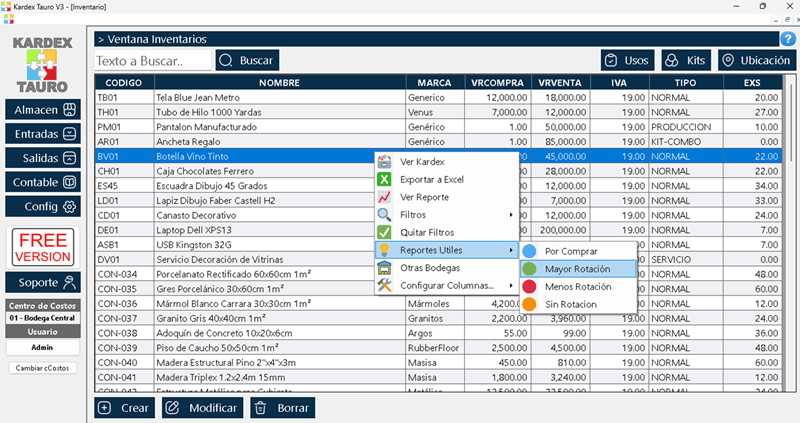
It is worth keeping the same presentation every year and having the figures come from the system, not from a parallel spreadsheet. In Kardex Tauro the statement is built from the balances already in the books, and that is the only way the snapshot and the ledger tell the same story.