Exit interview template for Word (free download)
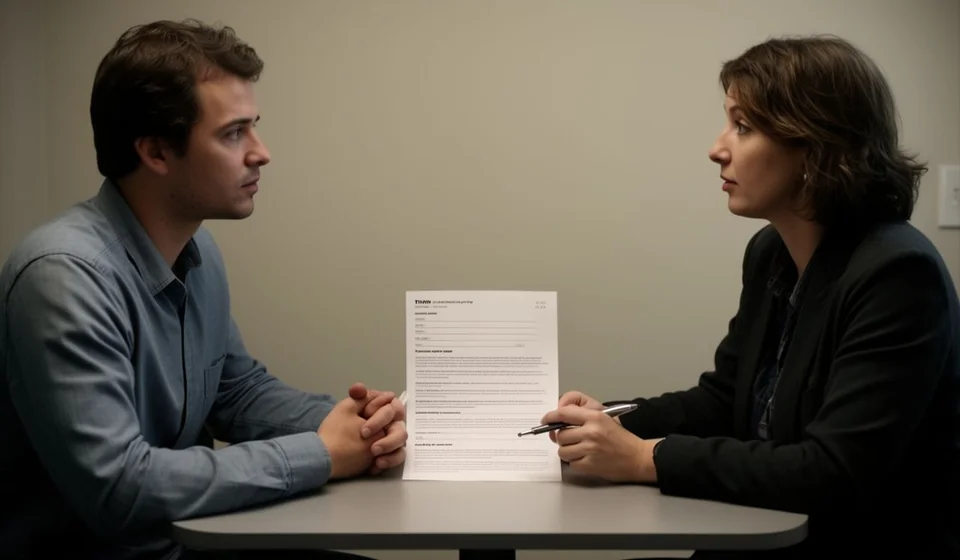
Exit interview template for Word (free download)
When someone decides to leave a company, the final conversation usually happens informally: a short exchange in the hallway, a farewell message, or a rushed signature on the exit paperwork. Nothing usable remains from that moment. This exit interview template for Word turns the last conversation into an orderly record, with defined questions, room for the answers, and a signature that proves the conversation actually took place.
The file is written for line managers, human resources analysts, and operations leads who need to understand why people leave without improvising the questions every time. The fields are kept apart: exit details, the factors behind the decision, an assessment of the time spent at the company, and the space for signatures. All you have to do is fill it in with real information and store it where it can be found later.
One point should be clear from the start: this form does not replace the final settlement, the clearance certificate, or the resignation letter. It is a listening and analysis tool, and its value lies in the information it gathers and in how that information is read later by area, not in the document itself.
⬇ Download exit interview (.docx)
What an exit interview is and why it is documented
An exit interview is a structured conversation held with the employee before their employment ends, or in the weeks after the exit when leaving was already unavoidable. It is not an attempt to keep the person at the last minute, although that sometimes happens: it is meant to uncover the real reason for leaving, which may sit in working conditions, the relationship with the manager, workload and schedules, career growth, team climate, or a strictly personal matter.
A written record matters for two reasons. The first is comparability: when everyone who leaves answers the same questionnaire, the answers can be grouped and compared across areas and across periods. The second is evidence: there is a record that the company listened and of what it agreed to review. When the reason is written in the employee's own words rather than the listener's interpretation, the data becomes useful for decisions instead of confirming an opinion someone already held.
The type of exit changes the tone of the conversation but not the topics. A voluntary resignation, a mutual agreement, the end of a project or a fixed-term contract, or a departure decided by the company all pass through the same factors: what drove the decision, what the person valued, what they would improve, and how they assess their time with the organisation. The template handles all those cases because the exit type field is filled in by hand rather than forced into a closed list.
What this form is for
- Identify the real reasons for leaving and separate them from the polite explanations people give when saying goodbye.
- Group the reasons by area, role, and shift to tell whether the problem sits with one person or with a process.
- Spot turnover signals in critical roles before the replacement becomes an urgent and messy scramble.
- Collect concrete suggestions about the job, the training received, and the tools people were given.
- Keep a record that the conversation took place, with the interviewer's signature and the matching date.
- Feed onboarding, climate, and development plans with first-hand information rather than assumptions.
- Document the handover of duties when the exit coincides with handing over a role or a stockroom.
What the template includes
The file carries the company letterhead and footer, a centred title, and three numbered sections. This is the actual content table of the form:
| Section of the template | What goes there |
|---|---|
| Letterhead and footer | Company name, human resources area, and contact details. Replace these fields with your own and check the footer before printing. |
| Title and date | Centred title and the date of the conversation. If the interview happens after the exit, write the real interview date, not the last working day. |
| 1. Exit details | Employee, ID, role, area, start date, exit date, type of exit, stated reason, and the name of the interviewer. |
| 2. Factors behind the exit | The central table of the form: six factors with the employee's answer and the interviewer's comment. |
| 3. Assessment and closing | Whether the person would work here again, whether they would recommend the company as a place to work, and closing remarks. |
| Confidentiality paragraph | Explains how the information collected will be handled and who will be able to read it. |
| Signatures | Signature of the interviewer and an optional line for the employee, who may sign or decline without the record losing value. |
| Document control table | Form code, version, date, and owner. This is what makes the document traceable years later. |
| Copy and closing note | A reminder that a copy goes to the employee and that reasons are grouped by area for the analysis. |
The central table deserves a closer look. The six factors built into the file are: reasons for leaving, what the person liked about the job, what they would improve, relationship with the manager and the team, working conditions, and what they would recommend to their successor. They are phrased openly so the answer cannot be settled with a yes or a no. Alongside that table, the form includes the confidentiality paragraph and the note about grouping reasons by area, two items that are often skipped and that are exactly what turns the conversation into useful information.
How to use it, step by step
- Download the file and save it with the employee's name and the year, not as an anonymous copy inside a shared folder.
- Replace the company details in the letterhead and the footer, and set the document code in the control table to the running number your area uses.
- Fill in the exit details using the resignation letter or the exit paperwork as your source. Do not write the start date or the type of exit from memory.
- Schedule the conversation in a private space, with no interruptions and enough time. Half an hour is a reasonable minimum to work through the six factors.
- Run the interview following the factor table. Ask and listen; write the answers in the employee's own words rather than your summary of them.
- Complete the assessment and closing section, and clearly mark the questions left unanswered instead of filling them in with your own judgement.
- Read the confidentiality paragraph before finishing, so the person knows who will read the form and what it will be used for.
- Sign as interviewer, offer the signature to the employee, hand over the copy the form provides for, and file the original in the employee's folder.
Common mistakes before signing or filing
- Running the interview on the last day, with the person still handing back equipment and keys and with no real time to talk.
- Turning the conversation into a cross-examination about faults or a last-minute attempt to retain the person.
- Writing only "personal reasons" when the employee gave two or three concrete and different explanations.
- Recording your own interpretations, such as "lacked commitment", instead of verifiable facts and statements.
- Leaving the assessment section blank or answering it on the employee's behalf, which strips the closing of its purpose.
- Filing the form without grouping the reasons by area: the document is stored and the lesson is lost.
- Forgetting the document code and version, so that nobody can later tell whether the form used was the current one.
To make sense of what has already been collected, a short guide like the one below helps, and it can be noted in the margin of the form:
| Type of answer | What it usually shows | What to review |
|---|---|---|
| The same reason repeats across several people in one role | The problem belongs to the job or the process, not to the person | Duties, schedules, and tools of that role |
| The same reason repeats inside one team | The source is the manager or the climate of that group | Leadership style and team workload |
| The exit happens a few months after joining | Onboarding or the expectations set for the role failed | Onboarding process and job description |
| Answers come back short and generic | Trust in the conversation or in data handling is missing | Who conducts the interview and how confidentiality is explained |
Confidentiality and data handling
An exit interview touches personal information and opinions about managers and colleagues. That is why the file includes a confidentiality paragraph worth reading out loud before starting: it states who will read the form and for what purpose. In practice, that means limiting access to human resources and to the manager who has to act on the result, and working the analysis on grouped reasons, without exposing the name behind a particular comment. The employee's signature is optional because declining to sign does not invalidate the conversation; the interviewer's signature is what provides the record.
When it is worth moving to a system
With a handful of exits a year, one well-organised folder is enough and there is no point in complicating it. The picture changes when the number of departures grows and the analysis becomes recurring: cross-checking interview reasons against uniform and equipment issues, returned assets, warehouse movements, and personnel events starts to take real effort, and that cross-check is exactly what explains turnover. At that point a paper record runs short and it is worth evaluating a system such as Kardex Tauro, which keeps those movements in order and consultable by date, area, and owner. It is not a requirement for a company of fifteen people; it becomes one when operations and turnover grow at the same time and decisions are meant to rest on data rather than on last month's impression.
Finally, keep in mind that this model is a general guide for internal use: review it with your adviser and adapt it to your company's personnel policy.