LinkedIn profile template for Word

A resume tells what you did; a LinkedIn profile tells what you know how to do and for whom. The difference looks small and it is not. Many very good professionals have a half-filled profile: the photo, the current job title and little else. When someone looks them up by their speciality, they find an empty space and move on to the next candidate.
This template is a Word document for writing, ordering and reviewing your professional profile before you copy it into LinkedIn. It is not a pretty format to print: it is a working guide. You open it, fill in the sections in the order they appear, check that every sentence has a fact behind it, and only then copy the result onto your profile.
It is meant for professionals in an active search, for anyone who wants to change sector, for technicians and team leaders who want to be found without hunting, and also for whoever helps others: a manager preparing their team, a consultant supporting recruitment, or someone in human resources who needs a clear guide to hand to candidates.
⬇ Download LinkedIn profile (.docx)LinkedIn profile template for Word
What it is and what it is for
Nobody opens LinkedIn to read anyone's whole life: they open it to answer, in a few seconds, whether it is worth reading on. A profile does three jobs at once. It is your calling card, it is the index of what you know how to do, and it is the first filter of a search. When those three things line up, the profile works for you even when you are not looking for anything.
The problem is almost never a lack of experience: it is a lack of order and of plainness. The template forces you to decide what goes first, what stays out, and which fact backs up each claim. These are the concrete uses it serves:
- Looking for work: putting on paper, in short sentences, which problem you solve and with which tools, so the reader does not have to guess.
- Being found in searches: using the words people in your field actually type into the search box, instead of the ones that sound more elegant.
- Changing sector: ordering your experience so that the same old tasks read as skills that also count in a different trade.
- Selling your own business: a small business owner who meets clients through LinkedIn needs a profile that says what the company does and what part he plays in it.
- Preparing for an interview: writing the profile forces you to pick your strongest facts, and those same facts are the ones you will tell later.
- Keeping your presence current: an updated profile stops people from calling you about a job you left years ago.
What the template includes
Unlike a resume, this document is not sent to anyone: it is used as a working draft. It brings the sections in the order in which they are best filled in, with written examples and check boxes to review before publishing.
| Section | What goes in it |
|---|---|
| Profile details | Photo, name, current role or target role, city and one contact detail. The city matters: many searches filter by area. |
| Headline | A single line using the formula of what you do, plus your speciality, plus the result you deliver. If it does not fit on one line, there is an extra adjective. |
| Example headlines | Six areas already solved, each with its model headline, so you can copy the structure and adapt it to your own case. |
| About | Four guided paragraphs: who you are today, what you know how to do, one concrete proof, and what you are looking for now. |
| Experience by role | One block per role, with dates, company, a line of context and the measurable achievements at the end of each block. |
| Skills | Ten skills already written, ordered from strongest to weakest, each with its level and with the way to prove it. |
| Education and certifications | Studies, courses and certificates with the institution, the year and whatever stayed useful for the work. |
| Recommendations | Whom to ask, in what order, and what to remind each person so that their note carries facts and not empty praise. |
| Checklist before publishing | Six points already written to go over the whole profile before you hit publish. |
| Signatures and version control | Signature block and the document code from the control table, so every version stays identified. |
Example headlines by field
The headline is the line that works hardest and is used worst. Almost everyone writes their job title and stops there. A good headline says what the person does, what they specialised in and what result they deliver. The template brings six fields already solved; here they are, so the pattern is visible:
| Field | Model headline |
|---|---|
| Sales | Account advisor with after-sales experience: I stay with people who already bought and sell to them again through service, not discount. |
| Warehouse | Warehouse lead and inventory control: I put the storeroom in order so the physical count matches the system. |
| Accounting | Accountant with monthly close and receivables experience: I deliver statements on time and help bring down overdue balances. |
| Operations | Operations coordinator: I organise shifts, routes and staff so the operation never stops. |
| Technology | Systems analyst: I automate with databases the repetitive tasks that are done by hand today. |
| Entrepreneurship | Founder of a small services business: I sell, serve and run a small operation from start to finish. |
The pattern repeats in all six: first the trade, then the speciality, and at the end the result the person delivers. Copy the structure and fill it with your own facts, and the headline works even if the sector is different.
How to use it, step by step
- Download the Word file and open it in your word processor. Always work on a copy and do not empty the original template, because you will need to come back to it.
- Start with the profile details. Check that the city, the role and the contact detail are correct and current: those are the three fields that go stale fastest.
- Write the headline with the full formula: what you do, what you specialised in and what result you deliver. Read it out loud; if it sounds like a speech, cut it down.
- Go to the example headlines table, find the field closest to your work and adapt the structure in your own words.
- Fill the four paragraphs of the About section: who you are today, what you know how to do, one concrete proof and what you are looking for now. Each paragraph comes with its opening line in the template.
- Move down to experience by role. Write one block per role, always in the same shape, and keep the measurable achievements for the end of each block.
- Adjust the skills: keep the ten you can prove with a fact and order them from strongest to weakest. Mark the level of each one and note how it is checked.
- Replace the company shown in the page footer with your own and change the document code in the control table to a number of your own, so you can recognise which version you are using.
What to check before publishing
Before publishing, the profile goes through a short but honest review. These are the six points that prevent the most trouble:
- That the headline is not just a job title. Manager says nothing; operations manager with shift and route experience says something.
- That every achievement has a fact behind it. If it says processes were improved, you must be able to say which process, in which company and what changed.
- That there are no date contradictions between the profile and the resume: whoever reviews compares the two, and the doubt weighs more than the mistake.
- That the skills can be proven. Ten skills repeated all over the profile add nothing; three well proven weigh far more.
- That the photo is discreet: face visible, even light and a clean background. A good headline is not saved by a holiday photo.
- That no bracket is left unreplaced, no instruction from the template is left undeleted and no sample filler text remains.
When it is worth moving to a system
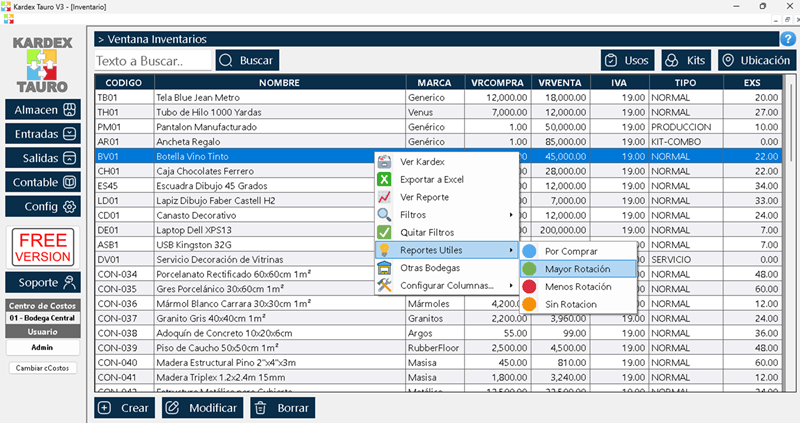
It is worth being honest: while it is just your own profile and a one-off job search, this template is more than enough and needs nothing else. The matter changes when the work stops being individual: a consultancy preparing profiles for several candidates, a human resources area tracking applications, a small business posting several openings a year. Then versions multiply, copies with old dates appear, and someone ends up working from a file that is no longer the right one. For that point there is Kardex Tauro, which is made precisely to keep that record in order: who each person is, which version their profile is on, and what is still missing before publishing. It is not that the template becomes obsolete over time, it is that the work went from being a document to being a process. Kardex Tauro does not replace the judgement of whoever writes; what it does is make sure nobody has to guess which version is current.
This template is part of the index of Word templates, which gathers them grouped by family.
⬇ Download LinkedIn profile (.docx)