Resume template by profession for Word

Resume template by profession for Word
Most resumes are not rejected for lack of experience. They are rejected because the document does not speak the language of the field it is applying to. A logistics recruiter looks for evidence of inventory control; a technology manager looks for delivered projects and technical decisions that can be explained. The same person can look strong for one opening and weak for another depending on the order and the vocabulary used to tell the story, even when the work behind it was exactly the same for years.
This resume template by profession for Word starts from a simple idea: the content bends to the field. The file does not change what you did, it changes how you tell it, what goes first and which words you use so that the reader recognises their own trade in your document. It is meant for professionals, technicians, supervisors and experienced candidates who apply to several openings at once and need a different version of the same resume without rewriting it from scratch every time.
The format includes guided sections, a table of the six most common fields with their keywords, a target-role profile that is adjusted for every opening, a results block built on numbers, a final checklist and a document code for version control. It opens in Word, saves as PDF and is ready to send.
⬇ Download resume by profession (.docx)What it is and what it is for
Before you start writing it helps to know which problem this format solves. It is not a design ornament or a loose list of sections: it is a way of ordering the information so that the recruiter of your field recognises their own work in your document.
- Applying to several openings in the same sector without rewriting the whole document each time.
- Translating your experience into the words the recruiter of that field uses every day.
- Ordering the information according to what is read first in each profession.
- Turning duties into measurable results, with numbers you can explain in the interview.
- Keeping an orderly record of versions by opening and by date sent.
- Building a base version that can later be shortened for long processes or for express ones.
What the template includes
The file is divided into sections that are filled in order. This is the real structure and what is written in each part.
| Section | What is written there |
|---|---|
| Details and target role | Name, city, contact channel and the exact job title of the opening, as it appears in the advert. |
| How to build it by field | Table with the six most frequent fields, their keywords and the order in which the information should appear. |
| Target-role profile | Three to five lines written for that opening: what you do, with which tools and with what result. |
| Experience | One block per job, with title, company, period and three or four results instead of a list of duties. |
| Education and courses | Degree, institution and year, plus the courses the opening asks for or values. |
| Technical skills of the field | Tools, methods and equipment used in the profession, with the real level of command. |
| Results with numbers | Three or four measurable outcomes, with their unit and period, so they can be defended in the interview. |
| Checklist before sending | Six review points with the reason behind each one, meant to be read in two minutes before attaching the file. |
| Signatures and control | Author signature and control table with the code [RP-___], the version and the date. |
How the resume is built by field
The most common mistake is using a single version for everything. These are the six fields for which the file already provides a guide of keywords and order.
| Field | Keywords the recruiter looks for | What goes first |
|---|---|---|
| Sales and customer service | Pipeline, target achievement, closing, after-sales, retention | Sales and portfolio results, with the period |
| Administration and accounting | Month-end close, reconciliation, receivables, audit, internal control | Processes you put in order and their effect on timing |
| Logistics and warehouse | Inventory, dispatch, turnover, receiving, traceability | Inventory indicators and dispatch accuracy |
| Operations and production | Shifts, downtime, quality, safety, maintenance | Process improvements and fewer reworks |
| Technology and systems | Implementation, support, integration, automation, users | Delivered projects and the problem they solved |
| Human resources and management | Recruitment, onboarding, climate, training, payroll | People processes you ran end to end |
The keywords in the third column are not copied blindly: they work as a filter. If you never ran an accounting close, do not write it. When a word from the list does appear in your history, write it the way the sector writes it, because that is the word sitting in the recruiter's head while they read twenty documents in one afternoon.
The target-role profile: the section that changes with every application
The profile is the only section you should rewrite for every application. It is the paragraph that sits right below your details and answers one specific question: why this person for this opening. It runs three to five lines, with no empty adjectives, and it holds three ingredients: what you do, with which tools you do it and what result you leave behind.
A formula that works in almost every field is trade plus speciality plus result. Someone from a warehouse can write that they run cycle counts with barcode readers and keep accuracy above the target for the shift. Someone from administration can write that they close monthly periods, reconcile accounts and hand over reports ready for review. The reader does not need pretty sentences, they need to know whether that part of the work can be handed to you.
A useful trick is to read the advert and mark the words that repeat. Those words belong in the profile, not at the end of the document. If the advert says you will work with international suppliers, the profile says so; if it mentions rotating shifts, the profile says so. Whatever is not in the advert but is valuable in your experience stays in the experience section, where it adds without distracting.
How to use it step by step
- Open the file in Word and save it with a name of your own: surname, field and opening, for example Perez_logistics.
- Replace the sample details in the first section and write the job title exactly as it appears in the advert.
- Pick your block in the table of the six fields and use those keywords in your profile and in your results, as long as they are true.
- Rewrite the target-role profile for that opening: what you do, with which tools and with what result.
- Order the experience from the most recent to the oldest and leave three or four results per job, each one with an outcome.
- Review the results block: every figure must be explainable in two sentences if you are asked about it in the interview.
- Replace the company in the page footer with your name and contact details, and update the document code in the control table with the running version number.
- Before sending, save as PDF, go through the six-point checklist and confirm that the file name is readable.
Results with numbers: turning duties into outcomes
This is where most resumes fall short. Writing that you were responsible for inventory describes a job title; writing that you reduced inventory differences and left a weekly counting routine describes an outcome. The figure does not have to be huge: it has to be verifiable, with a unit and a period.
- Compare before and after: how the process looked when you arrived and how it looked when you left.
- Measure volume: how many orders, accounts or people went through your process in a given period.
- Measure time: how long a task used to take and how long it takes with the method you left behind.
The practical rule is simple: if you cannot explain a figure in two sentences during the interview, replace it with a description or delete it. One number you cannot defend weighs more than one number you never wrote.
What to check before signing
- That the job title in the heading matches the one in the advert: two different names for the same work make the reader hesitate.
- That no details from another application are left behind, such as company names, cities or tools that no longer apply.
- That every result carries a unit and a period, because an outcome without a reference cannot be defended in the interview.
- That the technical skills reflect the real level and not a list of courses seen once.
- That the length suits the field: two pages at most, and a single page when the process is a fast one.
- That the file is sent as a PDF with a readable name, not with the generic name the template comes with.
When it is worth moving to a system
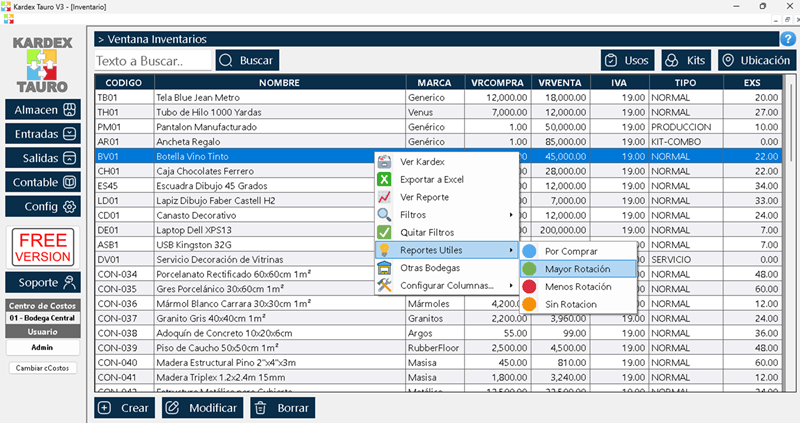
If you apply occasionally, this template and a folder with one file per opening are enough. The problem appears when the volume grows: several applications a week, versions that get mixed up, files with names nobody understands and the doubt about who was sent what and when. That is the moment to move to an orderly record, even a simple one, with fields for candidate, date sent, document version and reply received. A document management system such as Kardex Tauro helps keep that order and to know in seconds where each process stands. The template does not replace your judgement: it only gives it a structure so that the judgement can be seen.
This template is part of the index of Word templates, which gathers them grouped by family.
⬇ Download resume by profession (.docx)