Interview follow-up letter template for Word
Interview follow-up letter template for Word
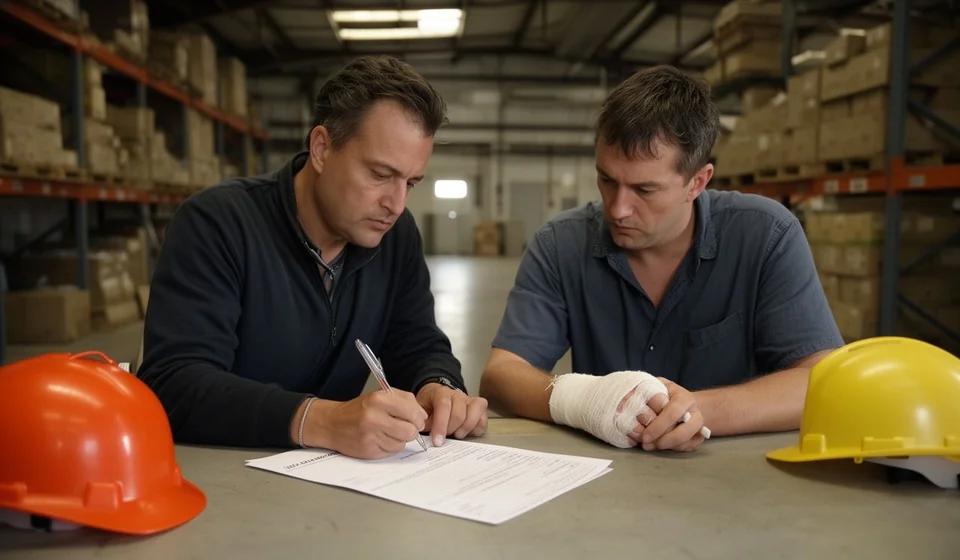
Walking out of a job interview nearly always feels the same: you remember clearly what you forgot to say and not what you said well. Questions stay unanswered, an example never got told, a doubt about the schedule or the real scope of the role hangs in the air. The interview follow-up letter template for Word exists for exactly that moment. It is a formal, brief and courteous document that goes out the next day or within a few days of the conversation to thank the interviewer, to record that the meeting mattered and to remind them why you fit that vacancy.
Read it as a tool of professional courtesy, not as a strategy of pressure. It thanks the person for their time, confirms your interest, adds one concrete detail that enriches what was discussed and leaves the door open for the next step. Written with judgement, it separates one candidate from dozens of similar profiles. Written from memory, in a hurry and copied word for word to every company, it turns into a repetitive message that wears down the impression you built in the interview.
The format serves professionals looking for work, people changing fields, those returning to the market after a pause and also small businesses that interview candidates and want to answer each person with the same care. It is laid out as a letter with a letterhead block: it includes the four guided paragraphs, the interview details block, a short follow-up table with three defined moments, the follow-up rules and a control table for keeping track of every message sent.
⬇ Download interview follow-up letter (.docx)What it is and what it is used for
A follow-up letter is a written message sent after the interview that does one very specific job: it keeps the conversation alive without crowding the recruiter. It does not replace the resume or the interview; it closes them well. These are the most common uses of the format:
- Thanking the interviewer, in an orderly way, for the time and attention given to the conversation, in a tone that sounds human rather than memorised.
- Confirming your interest in the role in writing, something that usually gets said only halfway in person between nerves and goodbyes.
- Recalling the exact job title, the name of the person who interviewed you and the date, so nobody has to dig through their notes to remember who you are.
- Reinforcing a point that came out weak during the interview with a short, concrete and verifiable example.
- Recording your real availability to start, to travel or to cover a particular shift, without promising what you cannot deliver.
- Ordering the timing of the follow-up, so you do not write too early and do not vanish for weeks on end.
- Keeping your own record of each process: who you wrote to, when, what they promised and what came back.
The document also helps when the answer never arrives. A follow-up done properly, with clear dates, lets you close the process yourself instead of waiting for a message that is not coming.
What the template includes
The file is organised as a letter with a letterhead block, with guided spaces to write in and control blocks at the end. The table below summarises the real sections of the document and what is written in each one.
| Section | What is written there |
|---|---|
| Letterhead and date | Your full name, a phone number or contact email and the date of sending, written with the month spelled out to avoid any confusion between day and month. |
| Addressee and greeting | The full name of the person who interviewed you, their role inside the company and a warm greeting that sounds neither stiff nor overly familiar. |
| First paragraph: thank and recall the role | Thanks for the time given and the exact job title you applied for, together with the date the interview took place. |
| Second paragraph: reinforce a point with an example | A concrete situation discussed in the interview, completed with a measurable example: what you did, how you did it and what result it produced. |
| Third paragraph: clear up what came out weak | A correction or a clarification of something that was left unclear: a date, a schedule, the scope of the role or a tool you mentioned only in passing. |
| Fourth paragraph: confirm interest and availability | Confirmation of your interest in the role, your real availability to join and your willingness to send further information if needed. |
| Interview details | A block with the role, who interviewed you, the date, the channel used for the interview and what they promised on their side, for example an answer within a week. |
| Short follow-up | A table with three moments already written, each with its recommended channel and a model sentence ready to adapt, depending on whether one day, one week or two weeks have passed. |
| Follow-up rules | Four short rules that set the conduct: one single message per moment, always through the same channel, no pushing beyond what was planned and no complaining about the silence. |
| Control table | The record of the document itself: code, version, the date of each send, who reviewed the text and the stage the process reached. |
| Signature block | Full name, current role or professional profile and contact details repeated at the end, so the message can be answered without scrolling back to the top. |
How to use it step by step
The template is designed to be finished in about fifteen or twenty minutes. These are the steps, in the order that works best.
- Download the file and save a copy with a name that identifies the process, for example the company name and the job title, so it does not get mixed up with other applications.
- Replace the letterhead details and write the date of the day you are sending the letter, not the date of the interview.
- Replace the company name in the footer with the company you are applying to. This is the detail people forget most often when reusing the file, and the one that most clearly shows the letter was copied from another process.
- Fill in the interview details block: role, name and title of the interviewer, date, channel and what they promised on their side.
- Write the four guided paragraphs in order. The first thanks and recalls the role, the second reinforces a point with an example, the third clears up what came out weak and the fourth confirms interest and availability.
- Check the short follow-up table and pick the moment that applies. If the interview was yesterday, use the first row; if a week has already gone by, use the middle row.
- Replace the document code in the control table, written as [SE-___], with the running number you use in your own records, and note the date of the send in the same row.
- Read the text out loud, fix the spelling, export to PDF when the employer asks for it and send it. Afterwards, file the letter in the folder for that process next to the resume you used.
If the company explicitly asked not to receive further messages, respect that instruction and keep the follow-up to a single letter. Courtesy also means knowing when to stop.
The three moments of the short follow-up
The document brings a table with three moments and a model sentence for each one. The point is not to improvise and not to write more than planned.
| Moment | Recommended channel | Model sentence |
|---|---|---|
| Within the first hours after the interview | Email addressed to the person who interviewed you, copied to the recruitment contact if there was one. | Thank you for your time today and for the care with which you explained the role. I look forward to the next steps. |
| Between five and seven days later | The same channel as the first message, with a subject line that includes the job title. | I wanted to confirm you received my earlier message and to ask whether there is anything else I can send to move the process forward. |
| About fifteen days later | A short final message, correct and free of reproach, that closes the cycle on your own initiative. | Thank you again for the opportunity. I understand the process may have taken another direction, and I remain available for future openings. |
What to check before sending
Before you send the letter, review these points. Almost every problem is solved in the final read-through, but only if you know what you are looking for.
- The person name and their role: a misspelled name cancels out the effect of everything else. If you are unsure, use the role respectfully rather than risk a wrong name.
- The company name in the footer: check that it matches the current process and not the previous one.
- Repetition of the resume: the letter is not a summary of the resume. If the same list of duties shows up, cut it back and keep only what adds something new.
- Sentences that start as a complaint: correcting the interviewer, arguing with an answer or pointing out what the company did wrong disqualifies the letter on the first reading.
- Promises about availability: check that the availability you write matches what you can actually deliver, especially on schedules, travel and start date.
- Overall tone and length: one page, short paragraphs and plain language. If the text runs to two pages, half of it is still surplus.
When it is worth moving to a system
With two or three open processes, one Word file and a tidy folder are enough. Things change when someone starts applying to many roles at once, answering several openings a week or running interviews in parallel for months. At that point the letter stops being the problem and the problem becomes the record: who replied, what they promised, when the next message is due and where each process stands. That is where a loose file stops being enough and it is worth considering a system that keeps the history, remembers the dates and shows the status of every application. Kardex Tauro is built for that step up: starting with simple documents, like this template, and moving to an organised record once the volume outgrows memory and loose sheets of paper. The decision is not urgent; it is a matter of counting how many processes you have open and how many are slipping away.
This template is part of the index of Word templates, which gathers them grouped by family.
⬇ Download interview follow-up letter (.docx)