Study notes template for Word

Study notes template for Word
Taking notes in class looks like the easy part of studying. The trouble shows up later: the day of the exam, when those pages written at full speed no longer say anything clear, when the details the teacher mentioned out loud are missing, or when nobody remembers what that arrow in the margin was supposed to mean. The study notes template for Word exists exactly for that: so what gets written during class turns into material you can revise without fighting your own handwriting or the mess.
It is a one or two-page worksheet meant to be filled in while you listen to an explanation, read a chapter or watch a video, and to close every session with a short summary written in your own words. It is not a pretty notebook or folder decoration: it is a fixed set of blocks that forces you to separate what you copied, what you understood and what is still pending.
It is useful for secondary and technical school students, for people in their first years at university, for those preparing a competitive exam or an entrance test, and also for teachers who want to show their groups an orderly way to take notes. It works the same on paper or on screen, it accepts any subject, and it does not depend on one particular method: science, history, accounting or a hands-on workshop all use the same blocks with different content.
Over time the sheet also becomes a record of what has already been studied: if a topic came back in an assessment or was left half done, it shows up straight away on the same pages, with no need to rebuild the story from memory or ask classmates what was said that day. That makes it useful not only for the exam coming next week, but for the whole term.
⬇ Download study notes (.docx)What it is and what it is for
The sheet is divided into blocks, and each block answers a different question. That separation is what prevents the most common fault in notes: mixing the definition, the example, the formula and the doubt into one paragraph, so that when you come back to them you cannot tell which is which. It is for the following, in practical terms.
- Record in class without losing the thread. The blocks are short and have a fixed heading, so you can write while you listen, with no need to decide on the spot where each idea goes in the notebook.
- Separate what you copied from what you understood. The five-line summary pushes you to reformulate in your own words, and that step is the moment the topic really sticks, not when you re-read it.
- Keep the exact data. Dates, units, names, formulas and definitions have their own space, away from running text, so you can find them at a glance on exam day.
- Write doubts down in time. Questions that stayed open go on the sheet straight away; a doubt written down gets solved in the next class, a doubt not written down is simply forgotten.
- Get a second pass out of class time. Because the summary and the questions are written when the session closes, the sheet works as an immediate revision of what you heard half an hour earlier, which is when the memory is still fresh and the pieces fall into place on their own.
- Link topics to each other. The connections block makes you answer what each concept relates to and why, and that is where the content stops being a loose list.
- Plan the revision. Every sheet ends with revision dates marked and a done yes or no box, so the material comes back into view instead of sleeping in a folder.
What the template includes
The file arrives as a Word document, ready to print or to fill in on screen, with a control header and nine sections. Here is what it carries and what goes into each one.
| Section | What you write |
|---|---|
| Session details | Subject, topic, where the content comes from (class, book or video), reference or chapter, and date. |
| How to use the sheet | A short reminder: key ideas first, not full sentences; the summary is written at the end with the sheet closed. |
| Notes in blocks | Three columns: block or subtopic, key ideas in single words, and detail or example. |
| Five-line summary | The central idea of the topic in five lines or fewer, in your own words and without copying from the material. |
| Data, formulas and definitions | Concept and exact content: figures, units, formulas, dates and names that have to be remembered word for word. |
| Open questions | What did not become clear, to be asked in the next class before it slips away. |
| How concepts connect | Three columns: concept, what it relates to, and why that relation matters. |
| Scheduled revision | Revision date, what is going to be revised, and a done yes or no box. |
| Control and signatures | Student name and signature, plus the document code and version in the header. |
The control header is short but does real work: it keeps the document code with its numbering, the version, the date it was filled in and the person responsible. With those four lines, any loose sheet can be identified months later without opening it.
The table columns are not decoration either. Writing the key idea in single words first and the example or detail beside it afterwards keeps what was heard separate from what was looked up on your own, and that difference is what tells you, when revising, which part of the topic was already settled in class and which part was completed later from a book or a video.
How to use it step by step
The order matters more than it seems, because the format is designed to be written from top to bottom in two stages: first during the class, then when the session closes.
- Download the file and keep a blank copy as your master, so you never lose the structure or the table columns.
- Before the class starts, fill in the session details: subject, topic, where the content comes from, reference or chapter, and date.
- During the class, write only in the notes block, with key ideas in single words and an example or detail alongside when something needs clarifying.
- When the session ends, write the summary in five lines or fewer without looking at the notes above; if you cannot summarise the topic, you did not understand it yet and it is worth going back to the explanation.
- Complete the data, formulas and definitions block with the source in front of you, checking units, proper names and dates that leave no room for error.
- Write down the questions that stayed open and decide when and with whom you will solve them, so they do not hang in the air.
- Complete the connections block with the topics that came later; often the link to something new is what finally explains the old material.
- Mark the scheduled revision dates; a short revision two days later is worth more than re-reading everything the night before the exam.
- Change the institution name in the footer and update the document code in the control table before you file or hand in the sheet.
Common mistakes
Almost every problem with this sheet comes from using it as if it were an ordinary notebook. These are the trips that repeat.
- Copying whole sentences from the material: the sheet fills with text and in the end there is not one idea of your own worth studying.
- Leaving the summary for the day before the exam, when there is no time left to reprocess anything and only rushed re-reading remains.
- Using the data and formulas block as a catch-all, so it stops being a quick reference list.
- Not writing doubts down out of embarrassment or haste, and carrying the same gap for weeks without noticing.
- Filling the sheet once per topic and never coming back to the revision dates you marked, which turns the format into a dead file.
- Filing the sheet with no date and no code, so later nobody knows which version is good or which unit it belongs to.
- Filling the blocks out of order and ending up with notes you cannot follow or share with a classmate.
When it is time to move to a system
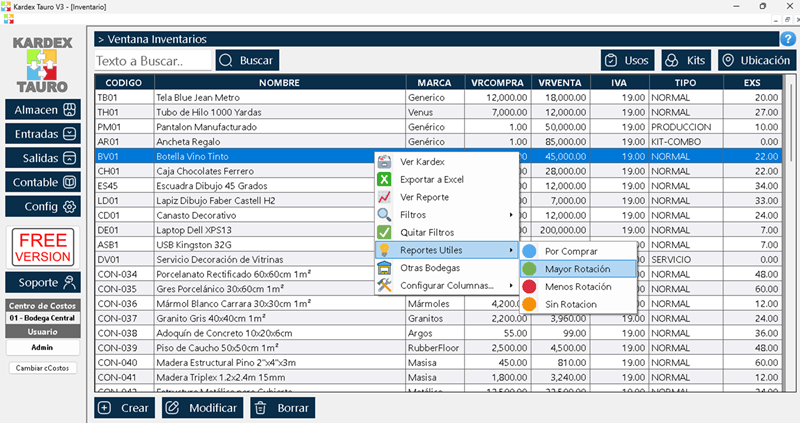
The notes and summary sheet works very well when studying is a one-person job, one subject at a time, and a folder that fits on the desk. When the volume grows — several subjects, notes shared with classmates, deadlines, marks that have to be reviewed again and again — the folder of loose documents starts to cost more than it helps: versions get duplicated, dates get lost and nobody knows which copy counts. That is where Kardex Tauro makes sense: the same habit of ordering by blocks, but with the records kept together and the history in view instead of spread across paper. If your study load is light, this template is more than enough; if the volume has already spilled out of the folder, Kardex Tauro is the natural next step.
What matters is not the tool but the habit this sheet trains: separating the key idea from the detail, summarising in your own words and returning to the material on scheduled dates. As long as that habit fits in a folder and in one person, the template is enough and there is no reason at all to make it more complicated.
This template is part of the index of Word templates, which gathers them grouped by family.
⬇ Download study notes (.docx)