Care plan template for Word

Care plan template for Word
This care plan template for Word helps you set down in writing, in an orderly and verifiable way, what a person in your care needs, what will be done to meet those needs, when it will be done and who carries it out. It brings together in a single document the person's details and the care period, the person responsible and the team, the needs or problems identified, the goals, the care and interventions with their frequency, the monitoring of warning signs, the progress review and the notes, so that care does not depend on the memory of whoever is on shift.
It solves a real problem for anyone caring through long shifts and frequent handovers: the instruction passed on by word of mouth that is lost at shift change, the progress nobody records and that cannot be explained later, or the doubt about whether an action was carried out when the case is reviewed the next day. Because the plan is written down and signed, it can be followed, reviewed and adjusted without depending on the person who happened to be there, and the incoming team knows exactly what was done and what is still pending.
In practice it works as a roadmap that is reread whenever the person's condition changes.
It is intended for nursing staff, formal carers, home care teams and service coordinators who need a shared format. It is an internal-use guide: it does not replace the professional's judgement or the official clinical record, and it must be adapted to the health regulations of each country and to the protocols of the institution where it is used. The file is a Word document, it opens on any computer and it needs no extra software, even on older machines or without an internet connection.
⬇ Download care plan (.docx)What it is and what it is for
A care plan is the document in which the team decides in advance how it will care for a person and records what it did. It is not paperwork to be filed away: when it is done well, it is the guide you consult on every shift and the record that lets you explain later why one decision was taken and not another. Its value lies in the order and the consistency, not in the amount of text. Writing it down forces you to think before acting and leaves a shared standard for the whole team.
- Order the person's needs: what they find hard to do unaided, what risk they present and where they need support.
- Set observable goals, so it is possible to know whether they were met rather than leaving everything to a personal impression or to the memory of whoever gave the care.
- Share out the tasks within the team: who performs each item of care and how often it falls to them.
- Keep a traceable record for shift handover, supervision and internal service review.
- Anticipate warning signs and write down the response to follow if they appear.
- Review progress over a defined period and adjust the plan when something is not working as expected.
Who this template is for
A care plan is used in very different settings, and the template is designed to work in all of them without changing what is at its core. What varies is the level of detail, not the logic of the document. Some settings need a very detailed plan and others a short one, but in every case the same order keeps the record readable for whoever reads it next.
- Home care, where one person provides care through the day and needs a written record for the next handover.
- Inpatient services, with several shifts sharing the same case who must communicate without ambiguity.
- Residential and long-stay centres, where the plan accompanies the person over long periods and changes little by little.
- Community teams that coordinate care with the family and with other professionals, often across several different services.
- Students and staff in training who need to learn to document care in a set order.
What the template includes
The document comes with the sections already ordered and with enough room to write in each one. This is the contents table you will find when you open it:
| Section | What is written |
|---|---|
| 1. Person's details and period | Basic identification, start date and planned review date for the plan. |
| 2. Person responsible and team | Who coordinates the plan and which people take part in the care. |
| 3. Needs or problems identified | Each need detected, described concretely and measurably. |
| 4. Goals per problem | The outcome expected for each need, with its timeframe. |
| 5. Care and interventions | What will be done, who does it and how often. |
| 6. Monitoring warning signs | What to watch for and what to do if a warning signal appears. |
| 7. Progress review | What was achieved in the period and what is kept, changed or removed. |
| 8. Notes | Team notes, incidents that occurred and agreements reached with the family. |
| 9. Signatures | Name and signature of those who prepare and review the plan. |
The headings of each row can be changed if your service uses different wording, provided the logical order is kept: first what is observed, then what is decided and finally what is reviewed. The important thing is that no section is left blank, because a plan with gaps cannot be used to reconstruct what happened.
How to use it step by step
- Open the file and complete the person's details and the period: start date of the plan and planned date of the next review, so the document has a clear time frame from the outset.
- Write down who is responsible for the plan and which people make up the team, with each person's role, so that on any shift it is clear whom to ask and who answers for each task.
- Enter the needs or problems identified one by one, with a concrete description. Avoid general phrases that do not let anyone know what is to be observed or how the change will be checked.
- Define one goal for each problem, with the expected outcome and a reasonable timeframe. A goal that cannot be checked is no use as a reference, because it leaves the review in the realm of opinion.
- Set out the care and interventions: what is done, who does it and how often. This is where the plan becomes useful day to day and where omissions are avoided.
- Write down the warning signs to be monitored and the intended response if they appear, so the team's reaction does not depend on improvising at the time.
- At the end of the period, review progress: what was met, what is still pending and what should be adjusted. Add the team's notes and the agreements reached with the family.
- Before saving, change the institution name in the footer and update the document code in the control table, so the file matches your service. Close the plan with the signatures of those who prepare and review it.
Common mistakes
- Writing goals that cannot be checked, with vague wording, because that leaves no way of knowing whether the plan worked.
- Leaving care without a frequency or a responsible person, so in practice nobody knows when or whose turn it is.
- Copying the same plan for everyone without adjusting the needs and goals to each individual case.
- Not recording the monitoring of warning signs, which loses the preventive part of the care.
- Forgetting the period review and leaving the plan unchecked for weeks even when the person's situation has changed.
- Saving the template with another service's institution name and code, which makes traceability harder and confuses the team when looking for the document.
When it is worth moving to a system
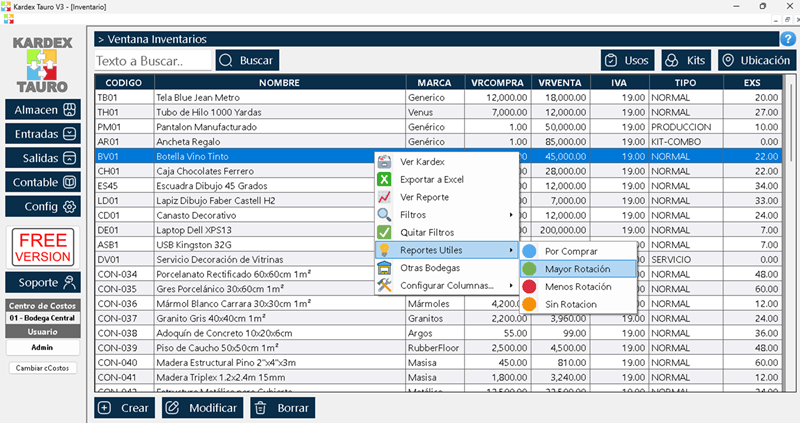
The Word template works well when the number of people cared for is manageable, the team is small and each plan is reviewed by hand. When the volume grows, when there are several shifts with constant handovers, or when a person's full history has to be consulted in seconds, the file starts to fall short: you have to search through folders, compare versions and recalculate frequencies that a system would handle on its own. At that point it is worth considering Kardex Tauro, which keeps the plans in one place, with history and change control. In the meantime, this template remains an orderly base that is enough to document care. It can be printed, signed by hand and filed in the person's folder, or kept as a digital copy to consult later; both ways are valid as long as the team knows them. Remember that it is an internal-use guide: it does not replace the professional's judgement or the official clinical record, and it must be adapted to the health regulations of each country.
This template is part of the index of Word templates, which gathers them grouped by family.
⬇ Download care plan (.docx)