Sale and purchase agreement template for Word
Sale and purchase agreement template for Word
Selling goods from one business to another does not always end with an invoice and a handshake. When the order is large, when payment is postponed, when delivery happens days later, or when several lots, brands and quantities are involved, it is worth writing down what was sold, for how much and under which conditions. A sale and purchase agreement is that piece of paper: the document where the seller and the buyer are recorded and where, point by point, what each of them promises to do is set out.
This sale and purchase agreement template for Word is designed for everyday trade: the hardware store selling a batch of tools to a contractor, the wholesaler dispatching goods to a neighbourhood shop, the distributor delivering on thirty-day terms, the business buying used furniture, the shop selling office equipment it no longer uses. These are ordinary transactions, almost always between people who know each other.
The file is a general model, ready to complete and sign, that works for a cash sale or deferred payment, and for a new item or a used one. It comes in Word, so it can be printed as it is or adapted to the business: add the logo, change the footer details, remove or add rows in the tables.
⬇ Download sale and purchase agreement (.docx)What it is and what it is for
A sale and purchase agreement is the written arrangement in which one party hands over an item and the other pays a price for it. It is there to make clear, while everything is going well, what will happen when something turns out differently from what was planned. These are the most common uses in a small business:
- Selling wholesale goods to another business, with quantities, brands and references detailed.
- Buying goods from a supplier on agreed payment terms, so it is clear what is owed and from when.
- Selling used equipment, furniture, tools or machinery the business no longer needs.
- Buying a whole stock lot from another trader who is closing or changing product lines.
- Recording the condition in which the item leaves, to avoid later claims about dents, missing pieces or damage.
- Documenting a sale between partners, relatives or acquaintances where, because of the trust, nobody wrote anything down and the arguments came later.
What the template includes
The file arrives with its sections already laid out. The first part identifies the parties; then come the eleven points of the agreement and, at the end, the signature block and the document control table.
| Section | What is written there |
|---|---|
| Parties | Name or company name, identification, address, phone and email of the seller and the buyer. |
| One, subject matter | Table of the item: number, description, brand or model, quantity, condition and observations. |
| Two, price and payment | Total price in figures and in words, payment table with date, amount and method, and what happens if a payment is late. |
| Three, delivery | Place and date, who hands over, who receives and who arranges the transport. |
| Four, condition and warranty | Condition in which the item is delivered and what the warranty covers, if one was agreed. |
| Five, declarations | That the item belongs to the seller, free of debts or charges and of any dispute. |
| Six, obligations | Table of commitments: what the seller does, what the buyer does and by when. |
| Seven, breach | Notices, a period to put things right and the consequences if a party does not perform. |
| Eight, termination | Grounds on which the agreement ends before it is completed. |
| Nine, personal data | What the parties' data is used for and how it is stored. |
| Ten, disputes | How a disagreement is settled: first a direct conversation, then what was agreed. |
| Eleven, annexes | Documents attached: quotation, photographs, delivery note, payment receipts. |
| Signatures and control | Signature of the seller, the buyer and the witness, plus the control table with the document code. |
How to use it, step by step
- Download the file and save it under the name of the transaction, for example august lot sale.
- In the footer, replace the sample company name with your own, with a real address and phone number. That change is made once and serves every agreement you use afterwards.
- Fill in the details of the parties with the documents in front of you, not from memory.
- Complete the table of the item with as much detail as possible: reference, size, colour and units for goods; brand, model and serial number for equipment.
- Write the price in figures and in words, and use one row of the payment table for each instalment with its date.
- Settle delivery, transport and warranty, and note who pays the freight and from which moment the risk sits with the buyer.
- Check the control table: change the document code for your own consecutive number and note the version date.
- Print two copies, sign both and give one to each party; keep yours with the annexes.
The eleven points in plain words
Parties. The heading identifies the seller and the buyer with their name or company name, identification number, address, phone and email. If the buyer signs on behalf of a company, the capacity in which they sign is recorded too. An incomplete name or an old address complicates any later claim.
One, the subject matter. This is where what is being sold is described exactly. The template carries a table with columns for line number, description, brand or model, quantity, condition and observations. For goods, note the reference, size, colour and units; for equipment, the brand, model and serial number.
Two, price and payment terms. The price is written in figures and also in words, so there is no doubt if someone alters a digit. Below it comes the payment table: how much is paid, on which date and by which method. If there is a deposit, the balance is noted; if payment is spread over time, the date of each instalment, and what happens if a payment is late.
Three, delivery. This states the place and date on which the item passes from the seller to the buyer, who hands it over, who receives and signs for it, and who arranges and pays for transport. If the buyer pays for transport, the moment the risk passes is noted.
Four, condition and warranty. The condition in which the item leaves is described: new, used, with marks, without its box, missing accessories, tested or untested. If the seller offers a warranty, it states how long it covers, what it includes and what it leaves out. Used goods sold without a warranty are stated too, so the buyer's knowledge is on record.
Five, the seller's declarations. This is the promise that the item belongs to the seller, that they may sell it, that it carries no debts or charges and that it is not involved in any dispute. These declarations protect the buyer if a third party later claims the item or an old debt.
Six, obligations of the parties. Here the work is divided in a table: what the seller must do, what the buyer must do and by when. For example, the seller delivers the item and its documents, and the buyer pays and accepts it as agreed.
Seven, breach. This defines what happens if a party does not do what was agreed. The usual approach is a written notice, a short period to put things right and, if nothing changes, the agreed consequences, which may range from an adjustment to the price to termination of the agreement.
Eight, termination. This lists the grounds on which the agreement may be ended before it is completed: agreement between both parties, an uncorrected breach, impossibility of delivering the item, or any other situation the parties want to record. It is worth stating what happens to amounts already paid and goods already delivered.
Nine, personal data. This explains what the parties' data is used for and how it is stored. The data is used to identify the parties, collect payment, deliver and keep the accounting record. It is not shared with third parties unconnected with the sale and is kept while the agreement is in force.
Ten, dispute resolution. This is the ladder for settling a disagreement: first talk directly and look for a solution; if that fails, use the mechanism the parties have chosen together, written clearly before signing.
Eleven, annexes. This is the list of documents that accompany the agreement: quotation, photographs of the item, delivery note, payment receipts, inventory of the lot. Each annex is numbered and signed just like the agreement, because it forms part of it.
What to check before signing
- That the names, identification numbers and addresses of both parties match their documents.
- That the price is written in figures and in words and matches the payment table.
- That the description of the item is detailed enough for someone else to identify it without asking.
- That the date and place of delivery are specific, with who hands over, who receives and who signs.
- That the tables carry no empty rows: if a row is left over, delete it; if one is missing, add it.
An important note about this model
This template is a general model, written in plain language, intended to bring order to a business's sale transactions. It is not legal advice and it does not replace a professional's review. Every country and every type of goods has its own requirements, and some transactions need additional clauses. Before signing an agreement, especially where the value is high or where the item has an unusual situation, review the text with your adviser and adjust whatever is needed. Keep the signed copy complete, with its annexes and signatures.
When it is worth moving to a system
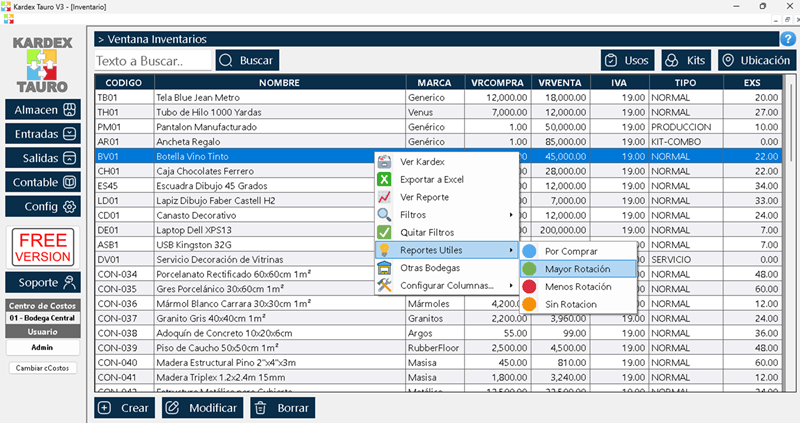
A template solves today's sale. The problem appears when the business accumulates dozens of agreements and, months later, needs to know what was sold on credit, how much is still to be collected, what was delivered and which warranties are still running. At that point a loose file is no longer enough and the emails, screenshots and oddly named folders begin. That is where inventory and invoicing systems come in, keeping the sale, the delivery and the balance in one place. At Kardex Tauro the idea is exactly that: inventory, sales and balances living in the same record, so that the business does not depend on a piece of paper nobody remembers where they filed. If you still handle only a few transactions a month, the template is enough; as the volume grows, the system pays for itself in the time it saves.
This template is part of the index of Word templates, which gathers them grouped by family.
⬇ Download sale and purchase agreement (.docx)