Modern and creative resume template for Word

Modern and creative resume template for Word
A modern and creative resume is not the one with the most decoration: it is the one a recruiter understands in the first few seconds. The Word template that goes with this article was made exactly for that: to organise the information in two columns, with clear hierarchy, well-distributed white space and a reading experience that does not tire the eye.
It works for professionals who are changing jobs, for people looking for their first formal opportunity and for small businesses that need a single format when their staff update their details. It performs equally well for a sales, technical, administrative or operations profile, because the structure is fixed and only the content changes.
The file opens in Word, is filled in without installing anything and is saved as PDF before sending. The design is already solved: you just write, review twice and export. If you prefer to start on paper, print a copy and write the details by hand before typing them in; it is a simple way to avoid mixing up dates and company names.
⬇ Download modern resume (.docx)What it is and what it is for
It is a single-page resume format with two columns, designed to be read on screen and on paper alike. Whoever receives it usually spends less than a minute on the first pass: that is why the name, the profile and the latest role sit at the top, in comfortable type. Before you start writing, be clear about what you will use it for, because that decides what you highlight and what you summarise.
- Applying to a vacancy posted on a job board, where the first filter is automatic and the words of the advert are searched inside your text.
- Handing it over in person after an interview, when you are asked to leave it at reception or send it to the address they gave you.
- Sending it to a recruitment consultancy that will keep it in its candidate database for future processes, sometimes for months.
- Attaching it to a company platform that accepts only one file and does not allow separate fields to be filled in.
- Presenting it as an annex to a service proposal, when the client wants to know who they will be working with before deciding.
- Printing it for a job fair or a recruitment day, where almost everything arrives on paper.
- Using it as a base for a second version in another language, changing the wording but keeping the same design.
- Keeping it up to date even when you are not job hunting, so it is ready when an unexpected opportunity appears.
The same sheet serves for a formal vacancy and for a client who asks for a professional summary before signing a service contract. It is, at bottom, the written presentation of your work and the first proof of how you communicate.
The template also works for a change of direction. If you are coming from one field and want to move into another, the skills section and the projects section are the place to show that you have already worked on the new one, even if it was on a small project. Write down what you did, with whom and to what end, and let the reader draw the conclusion.
What the template includes
The file comes with the sections already built and labelled. You replace the content of each block without moving anything and without fighting the layout. This is the real structure:
| Section | What you write there |
|---|---|
| Personal details | Full name, city, phone, email and the link to your portfolio or professional profile. The photo is optional: if you include one, make it recent, facing forward and against a neutral background; if you leave it out, the design works just as well. |
| Professional profile | Three sentences: what you do, what you specialise in and what result you produce. This is where you do not write "proactive", "dynamic" or "works well under pressure", because they are words that say nothing and appear on almost every resume. |
| Experience with achievements | The roles of recent years, from the most recent to the oldest. For each one: what you did and one concrete achievement, with the result in plain sight. |
| Education | Degree, technical studies and courses that are genuinely useful for the position you are after. There is no need to list everything you have ever studied. |
| Skills and tools | Software, equipment and methods you handle, each with its level: basic, intermediate or advanced. |
| Languages | Each language with its real level of use, not the one you would like to have. |
| Projects or portfolio | Two or three pieces of work you can talk about confidently, with one line about the result and, if you have it, the link where they can be seen. |
| References | Two or three people who know you professionally, with their role and their relationship to you. Always tell them before you write their names down. |
| Design settings | Six settings already defined: one single page, eleven-point type, two columns, no bar charts, save as PDF and a clear file name. |
| Signatures and control table | The signature block at the end and the control table, which holds the document code [RC-___] together with the date of the last update. |
The six design settings are not a whim. A single page forces you to choose what matters; eleven-point type is read without effort; two columns make use of the width; bar charts take up space and add no information; the PDF keeps the layout on any computer, and a well-chosen file name stops your document from being lost among hundreds of identical ones.
If your profession is creative, the layout can take one touch of colour in the headings, but never more than one. If it is technical, financial or legal, keep it almost monochrome: the content benefits from visual silence.
How to use it, step by step
The order matters less than the result, but there is a sequence that saves you rework:
- Download the file and save it under a name of your own, for example your surname and the month: that way you never confuse the original template with your version.
- Replace the company in the footer with your full name or your personal brand, and delete the sample data without hesitation.
- Fill in the personal details and decide whether you want a photo. If you do not include one, leave the space empty and do not fill it with decoration.
- Write the profile in three sentences and read it aloud: if it sounds like a speech, cut it down until it is clear.
- Load your experience with one achievement per role, and where you can, a figure that shows the size of the result.
- Complete education, skills, languages, projects and references. Check that every link actually opens.
- Look at the control table, change the code [RC-___] for the one your company or your records file uses, and note the date of the update.
- Save as PDF, open it and read it all the way through on a phone. If anything forces you to zoom in, that text is still too small.
Common mistakes and what to check before signing
- Sending the template without changing the email, phone or city from the sample. It is the most common mistake and the hardest one to hide.
- Leaving the footer with the company that ships with the file, or with somebody else's name.
- Writing long paragraphs in the professional profile. Three sentences are enough; if you need more, the problem is not space but clarity.
- Using empty words such as "proactive", "dynamic" or "works well under pressure" instead of a fact that can be checked.
- Putting dates that do not add up between roles or studies, or leaving roles without a start and end month.
- Saving in a format other than PDF, or sending the editable file when nobody asked for it.
- Listing references without telling them, or writing them with outdated details.
One more detail that is often forgotten: proper names. Write the company's registered name correctly, the full name of the institution and the exact job title, without over-abbreviating. A badly written job title undermines the credibility of everything else.
Before you sign or send it, read the sheet from top to bottom one more time. The signatures at the end are used when the company asks for a statement of truthfulness, or when you want to record the date on which you updated the document.
When it is worth moving to a system
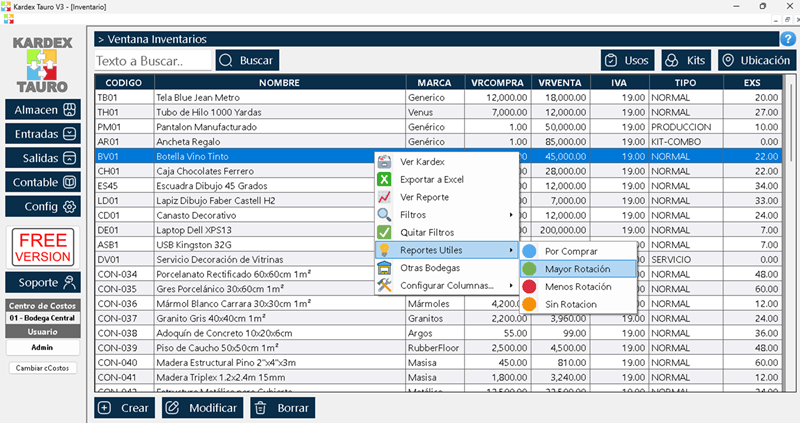
The template works and it will keep working. But there comes a point where the loose file starts to cost you: when a small business receives hundreds of resumes and needs to organise them, when several people have to review and approve the same document, or when you must prove on what date each piece of data was updated. There, keeping the record in a single tool, such as the one offered by Kardex Tauro, saves time and stops versions from going missing. Until that happens, a well-filled Word file is still enough and there is no reason to change it.
This template is part of the index of Word templates, which gathers them grouped by family.
⬇ Download modern resume (.docx)