Lesson plan template for Word

Lesson plan template for Word
This lesson plan template for Word helps you prepare a full class before stepping into the room, in an order you can follow without improvising. It brings together the class data, the learning objectives, the materials, the moments of the lesson and the criteria you will use to assess, so the session has a clear beginning and a verifiable close.
It solves a very practical problem for anyone who teaches every day: the loose sheet with rushed notes, the objective that stays in your head and never reaches the notebook, or the doubt about what was actually assessed at the end of the month. Because the plan is written down and signed, the teacher can come back to it, adjust it for the next group and show it whenever the coordination office asks for it.
It is also useful for student teachers who must submit their practicum work in an ordered format, and for academic coordinators who review several plans at once and appreciate always finding the same sections. The file is a Word document, it opens on any computer and it needs no extra software, even on older machines or without an internet connection.
⬇ Download lesson plan (.docx)What it is and what it is for
A lesson plan is the document in which the teacher decides in advance what will happen in the classroom. It is not paperwork to be filed away: when it is done well, it is the guide you follow during the session and the record that lets you explain later why you taught something one way and not another.
- Plan a class from start to finish: what you announce at the beginning, what you develop in the middle of the session and how you close it before the bell rings.
- Write learning objectives in observable terms, so you know what the group should be able to do at the end, and not only which topic was covered.
- Anticipate the prior knowledge the lesson needs and the materials that must be ready before you walk into the room.
- Spread the time across opening, development and closing, so you never run out of room for the group summary or the final synthesis.
- Leave the homework and the assessment criteria in writing, so anyone can check what was asked and how it was graded.
- Keep a record with notes after the class, useful for repeating what worked and correcting what did not.
- Hold the thread when the regular teacher is away: whoever covers the class understands the sequence and the level of progress without a long handover.
What the template includes
The file contains every section of a complete lesson plan, in the order in which it is written. The table summarises what goes into each one.
| Section | What is written |
|---|---|
| 1. General data | Subject area, grade or course, topic of the lesson, date, length of the session and the name of the person who prepares it. |
| 2. Learning objectives | What the group should know or be able to do by the end of the class, in statements that can be verified with a specific activity. |
| 3. Prior knowledge and materials | What you take for granted, what you review at the start and which resources must be taken into the room, with a backup for anything missing. |
| 4. Moments of the lesson (opening, development, closing) | The sequence of activities with the time planned for each moment and the role of the teacher compared with that of the group. |
| 5. Closing and homework | How the work of the session is collected and what is set for the next class, including where the group can find it. |
| 6. Assessment criteria | What you observe, the achievement levels used and the weight of each aspect in the final judgement of learning. |
| 7. Adaptations | Adjustments planned for students who need a different pace, different material or extra support during the activity. |
| 8. Notes after the class | What worked, what was left pending and what should change next time the same topic is taught. |
| 9. Control and signatures | Document code, version, review date and the signatures of the person who prepares the plan and the person who approves it. |
The template works the same way in early years, primary, secondary and technical training. In the earliest levels it is worth writing the moments in shorter blocks and leaving more room for play and for handling materials; in secondary and technical training, the development usually needs more time for teamwork and guided practice. If a plan repeats every week, keep a blank copy apart and use the control table so that versions do not get mixed up.
How to use it step by step
The template is filled in once per lesson and saved with the topic in the file name, so you can find it months later without opening folder after folder.
- Download the file and open it in Word. Before typing anything, save it under your own name including the topic and the date of the plan.
- Fill in the general data: subject area, grade, topic, date, length of the session and your name. If the plan is shared between teachers, add the group as well.
- Write the learning objectives as statements you can observe: start with an action verb and end with the result expected from the group.
- Mark the prior knowledge and the material list, and note what you will do if something is not available that day.
- Build the moments of the lesson with realistic times: an opening question or situation, the core activities, and a closing synthesis from the group.
- Set the homework and the assessment criteria with their levels. If you also use a separate rubric, write here the summary of what will be observed.
- Adjust the footer: replace the institution name with your own and check the email, area or department shown there. If the document is reused, delete the previous teacher's details.
- In the control table, update the document code, the version and the date, then sign. Every time you change the plan, raise the version and note what changed.
- After the class, write two or three lines in the notes: what worked and what should be corrected next time.
Common mistakes
Almost every problem with a lesson plan repeats from one term to the next, and it shows up quickly when several plans are reviewed in a row.
- Leaving objectives in general terms, such as understand the topic, which cannot be observed or assessed with a specific activity.
- Copying last year's plan without checking the new group, the available materials or the real length of the lesson.
- Filling the development with too many activities and running out of room for the closing, the synthesis and the group's questions.
- Forgetting the footer and handing in a plan that still carries the previous institution's name or another teacher's details.
- Not updating the code or the version in the control table, so old copies of the document keep coming back into use.
- Assessing with criteria that were never announced to the group, or setting homework unrelated to what was covered in the session.
- Leaving the notes section blank, which is precisely the part that helps most with the next lesson.
- Noting the total length of the class without splitting it across the moments, so that by the time you reach the closing there is no time left for anything.
- Writing the plan only to hand it in, without reading it again before entering the room or sharing it with the group at the start of the session.
When it is worth moving to a system
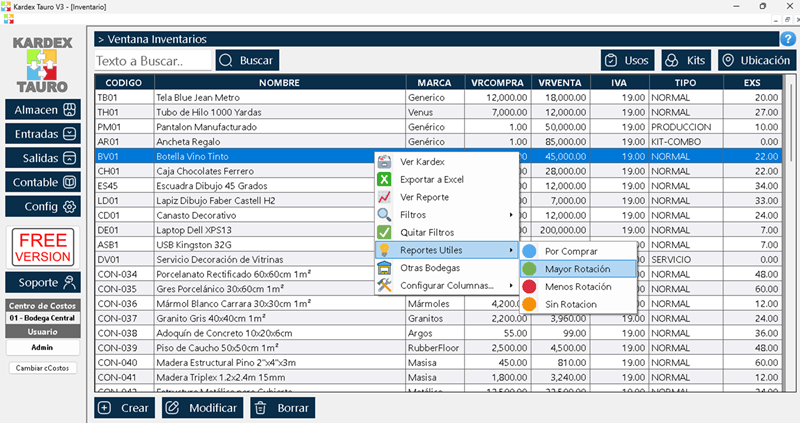
A Word file works very well for one lesson, one group or one month of work. It stops being enough when there are several teachers, several campuses or several subjects to review, when approval happens by email and nobody knows for certain which version is current, or when the coordination needs to see what was planned and what was assessed without opening folder after folder. At that point it is worth moving to a system that keeps plans, versions and signatures in one place. Kardex Tauro covers that side: it keeps the history of each document, shows what is still waiting for review and lets you consult from any computer what used to depend on a shared folder. The template remains useful as a daily working format in the classroom; the system appears when the volume of documents can no longer be handled by hand.
Before taking that step it is worth tidying up what already exists: unify the document codes, decide who approves each plan and agree how often it is reviewed. That tidying holds up better inside a system than in scattered folders, because the tool itself forces the state of every document to be clear. If the team is only starting out, the template is enough for a long while: there is no rush to change methods while the number of plans can still be reviewed by hand.
This template is part of the index of Word templates, which gathers them grouped by family.
⬇ Download lesson plan (.docx)