Medical report template for Word

Medical report template for Word
A medical report is the document in which a professional sets out a patient's condition in writing and hands it to whoever asked for it: another professional, an administrative department, an insurer or the patient. When that summary is written from memory at the end of a busy day, every report comes out in a different order, details go missing and the work has to be done twice.
This template gathers the sections a report usually needs and arranges them in an editable file that each service can adapt to its own way of working. It works just as well in a single consultation, in a hospital team or in an occupational health service that answers requests from third parties.
Daily use is simple: a request comes in, the file is opened, the sections are completed and the signed document is delivered. With that habit the report stays uniform, readable and easy to audit, without depending on the memory of whoever writes it or on the order each person prefers.
It is worth saying from the start: the template is an internal-use guide and administrative support. It does not replace the professional's judgement, it does not replace the official clinical record, and it must be adapted to the health regulations of each country.
It also helps to standardise the work when several people issue reports in the same service: if everyone follows the same outline, the document stops looking different depending on who wrote it, and the patient always receives the same kind of summary, with the same sections in the same place.
⬇ Download medical report (.docx)What it is and what it is for
- Answering in writing a request for a report that reaches the consulting room, the department or the institution.
- Documenting a recent consultation in a uniform format, so that the patient's record stays complete and in order.
- Summarising findings and examinations in a way that is understandable to someone who was not present at the consultation.
- Communicating a diagnostic impression and the instructions given, in clear and prudent terms.
- Recording an advised rest period or leave, with its duration and its clinical justification.
- Describing how the condition has evolved and what is expected, for later follow-up and for whoever takes over the case.
None of this changes the clinical work: the template only guarantees that the formal part of the report is always in the same place, so that a colleague, an administrative department or an insurer finds what they need without having to ask.
What the template includes
The file contains ten numbered sections that are completed one after another, with the same logic in all three languages. An internal table of contents lets you jump from one section to the next, and a control table records the document code, the version and the review dates.
Each section answers one specific question of the report:
| Section | What is written |
|---|---|
| Details and request | Patient identification, date of issue, attending professional and the details of whoever requested the report. |
| Purpose | Why the report is issued and which specific request it answers. |
| Relevant history | Only the parts of the patient's history that relate directly to the current condition. |
| Findings and examinations | What was observed during the consultation and the studies carried out, summarised and dated. |
| Diagnosis or diagnostic impression | The clinical conclusion reached by the professional, written prudently and without closing what is still under study. |
| Treatment and recommendations | The instructions given to the patient and the general care suggested. |
| Advised rest or leave | Whether rest was advised, for how long and on what clinical grounds. |
| Course and outlook | How the condition has progressed and what is expected at follow-up. |
| Remarks | Clarifications, limits of the report and any detail that should be left in writing. |
| Signatures | Name, position, professional registration number and signature of the person issuing the report. |
The control table deserves a check before delivery: if the code and the version do not match the current file, the report loses traceability even when the content is well written.
It is worth completing the sections in the order in which they appear: the first ones gather the information needed to interpret the ones that follow, and jumping from one to another usually leaves gaps in the account of the case.
How to use it step by step
- Open the file, check in the control table that it is the current version, and save a copy with a name that identifies the case, without putting patient details in the file name.
- Complete the details and the request: patient identification, date of issue, attending professional and the person requesting the report. If a detail is missing, note it under remarks instead of assuming it.
- Write the purpose in one or two sentences. It must be clear why the report is issued and which request it answers.
- Summarise the history that relates to the condition. A report is not a copy of the record: keep what is relevant and leave the rest in the clinical record.
- Note the findings of the consultation and the examinations carried out, with their dates and with the result expressed in terms the reader outside the service can understand.
- Write the diagnosis or diagnostic impression in prudent language, stating where appropriate that the condition is still under study.
- Set out the treatment and the recommendations, the advised rest or leave with its duration, and the course of the condition with the expected outlook.
- Close with the remarks and the signatures; then change the institution name in the page footer to that of your service and update the document code in the control table before saving the final version.
Writing clearly and prudently
The clinical content is always decided by the professional in charge; the template only helps that content to be ordered and easy to read.
- Write short sentences in chronological order: first what was found, then what is concluded and finally what is advised.
- Keep what was observed clearly apart from what was interpreted; the report should not mix both in the same paragraph.
- Use language the requester can understand without knowing the internal jargon of the service.
- Avoid absolute statements when the condition is still under study or results are outstanding.
- Check the identification details twice before signing and handing over the document.
- Keep the numbering intact: reordering the sections makes it harder to compare the report with earlier ones for the same patient.
Before you deliver: a quick checklist
A short review before signing prevents most returns and later corrections. The list below does not replace the clinical review: it only puts the formal side of the document in order.
- The report belongs to the right patient and the date of issue is the day it is handed over.
- The purpose matches what the requester asked for and the recipient named in the document.
- Every section is complete or states why it does not apply in that case.
- The dates of the consultation and of the examinations cited are written and match what was recorded.
- The footer carries the name of your institution and the code of the current version.
- The signature and the professional registration number are in place before the final file is saved.
Common mistakes
- Turning the report into a copy of the clinical record, with pages nobody is going to read.
- Delivering the document with empty sections and no explanation of why they do not apply in that case.
- Writing conclusions that the findings described above do not support.
- Leaving the footer with the name of another institution or the code of an earlier version.
- Reusing a previous report as a base and carrying over details that belong to another case.
- Signing without checking that the recipient, the date of issue and the purpose are correct.
- Handing the patient a draft with no signature and no contact details for the service.
When it is worth moving to a system
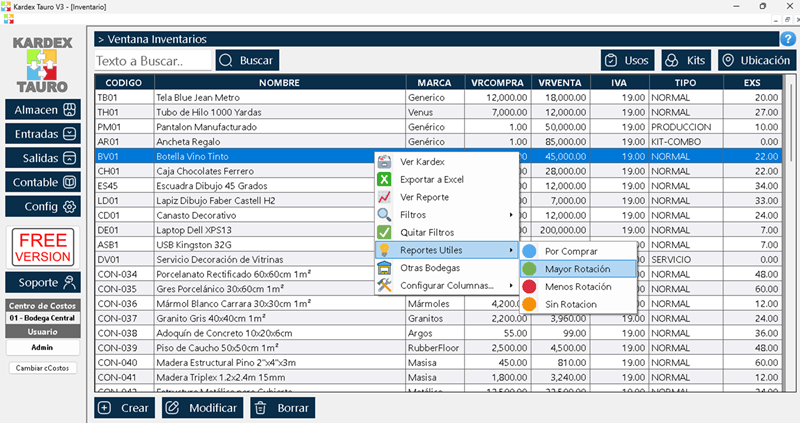
The template handles the isolated report and a low volume of issues very well. When the service issues reports every day, with several professionals and requests arriving through different channels, the loose file starts to weigh: versions get lost, it is hard to know what was delivered and to whom, and control over what was issued ends up spread across folders and mailboxes. At that point it makes sense to consider a tool that records the request, the document delivered and its full trail, without changing the way the professional writes. Kardex Tauro covers that administrative side and keeps the template as the basis of the content. The decision is not urgent: while the file works and can be audited, staying with the template is perfectly reasonable. If the volume is low and one person controls the files, adding a tool only creates extra work; it is better to wait until the disorder is real before changing the way the service works.
Internal-use notice
This template is an internal-use guide and administrative support. It does not replace the professional's judgement or the official clinical record, and it must be adapted to the health regulations of each country. None of its sections replaces clinical assessment, therapeutic decisions or the record each institution requires; the clinical content is the responsibility of the person who signs.
This template is part of the index of Word templates, which gathers them grouped by family.
⬇ Download medical report (.docx)