Recruitment and selection: how to hire well and avoid repeating the search

Recruitment and selection: how to hire well and avoid repeating the search
A badly filled vacancy does not show up in the first month. It shows up when inventory stops reconciling, when a customer complains about the same thing for the third time, and when the person who actually knew how to do the job resigns because they had to carry someone else's mistake. By then the company has already paid salary, onboarding and supervision, and on top of that has to start the search again.
Here is the full filter, built before the vacancy is posted: a profile based on results, an ad that attracts the right candidate, a two-minute CV read, an interview built on facts, a practical test, reference checks and a matrix that puts in writing why someone was chosen. At the end, an example with three candidates and the cost of getting it wrong.
The real cost of a bad hire
The visible cost of a bad hire is the salary. The real cost adds four things that are almost never measured together: recruiting, onboarding, what the person failed to produce while learning, and what it costs to remove and replace them. In operational roles there is a fifth component that appears in no report: the mistake someone else had to fix.
One legal detail changes the math. If the relationship ends without just cause, severance in Colombia is calculated by length of service: thirty days of salary for the first year and twenty for each additional year, subject to the legal caps. Benefits accrue either way if the person stays, so they are an advance payment, not an extra cost. Severance itself is money that never comes back. Confirm the calculation with your accountant.
| Item | Calculation | Amount |
|---|---|---|
| Recruiting and posting | Two people screening, interviewing and advertising | COP 1,800,000 |
| Lost productivity | 30% of COP 4,500,000 = COP 1,350,000, for three months | COP 4,050,000 |
| Severance without just cause | 30 days of salary, exit at month 5 | COP 4,500,000 |
| New search | Repeat posting, screening and interviews | COP 1,800,000 |
| Quantified total | Sum of the four lines above | COP 12,150,000 |
The total comes to COP 12,150,000, which is 2.7 monthly salaries, and it still leaves out the 40 hours of onboarding and the supervision spent fixing errors. They were left out so as not to inflate the figure with estimates. That is the number to remember when the temptation appears to hire fast because the vacancy has been open a month: a month of vacancy costs less than five months of the wrong person.
Before posting: profile by results, not by titles
The original mistake is copying the profile of the last person who held the job, or worse, one from a similar ad found online. That text describes a person, not a job. Before posting, answer three questions in writing: what result this person must produce in six months, what happens if they do not, and how you will know they did. If the answers do not fit on one page, the job is not defined.
That produces two separate lists. Mandatory requirements are what disqualifies without discussion: rotating shifts, a valid driver's license, living in the area. Desirable ones add value but can be learned. Mixing the two is the most common reason a good candidate is rejected for a degree the role never needed, and the reason someone who looks excellent on paper arrives unable to do the work.
| Competency | What it means in the role | Expected evidence | How it is verified |
|---|---|---|---|
| Inventory control | Reconciling stock and explaining variances | Cycle counts with variance under 1% | Practical test with real data |
| Tools | Running the system and spreadsheet unaided | Reports they built, not borrowed | Timed exercise |
| Resolving variances | Finding the cause, not just the gap | A documented case of a variance solved | Detailed situational question |
| Communication | Reporting on time and in writing | Clear emails, timely escalation | Short written exercise in the interview |
| Availability | Covering month-end closes and counts | A real availability record | Confirmation through references |
Every competency needs observable evidence and a way to verify it. If a row cannot be verified with something the candidate does or has done, that competency is useless for deciding: it only fills the page. And the weight of each one is set here, before seeing candidates, not after meeting them.
Where to look and what to say so the right candidate shows up
For operational roles, the best source is usually the internal referral: someone on the team recommends a person who already knows the pace of the work and vouches for them. It works because the referrer is risking their reputation, and that social cost filters better than any ad. Next come job boards filtered by city and trade groups.
Job ads are almost always written badly. The first two lines should state what the person will achieve and in what context, not how many years of experience are required. Then come the tasks of a normal week, the real schedule, the location, the salary range and the mandatory requirements. Publishing the range seems to close doors and does the opposite: it prevents twenty applications from outside the range. And delete the empty adjectives: proactive, dynamic, committed.
An honest ad also states what is uncomfortable about the job: weekend shifts, a warehouse with no ventilation, month-end with overtime. Filtering there is cheaper than finding out in week three.
CV screening: what to discard in two minutes
Reading CVs takes three passes, none longer than forty seconds. First: mandatory requirements; if one is missing, discard without reading the rest. Second: consistency of dates and titles, that periods do not overlap and that the stated role matches what the company actually did. Third: results. A CV that only lists duties describes a manual; one that says "I brought inventory variance down from 3% to 0.8% in six months" is talking about real work.
Some signals justify a question, not an automatic rejection: dates that are off by months, inflated titles for small duties, changes every eight months with no explanation, long gaps. None proves anything on its own; all of them get verified before the interview, not during it.
In the end you want five to eight candidates, not thirty: a process with thirty CVs gets decided by fatigue, and fatigue picks the last one.
Competency interviews: questions about facts, not intentions
"How do you handle stress?" has no useful answer: everyone says they handle it well. "Tell me about the last time two month-end closes landed on the same day and what you did first" does have one, because it forces a fact with dates, people and decisions. That is the difference between an interview that informs and a pleasant conversation.
The method is situation, task, action and result. Ask for the specific situation, identify what was the person's responsibility, ask what they did — not the team — and close with the measurable result. If the answer stays generic, ask once more for a specific case. If it still does not appear, the competency is not demonstrated, however likable the person is and however many years they have in the sector.
Carry a script with six or eight questions asked of everyone and take notes during the conversation. These work: the last inventory variance they found and how they traced it; a mistake of their own and what changed afterwards; how they organized their last month-end week. And a closing question that is often the most revealing: what they would need to perform well in the first three months.
Practical test: when it is worth it and how to design it
In operational roles it is the most powerful filter there is, because it measures what an interview cannot: the hands, judgment with real data, and the reaction to incomplete instructions. It is worth it in inventory, picking, data entry, invoicing and reconciliations. It is not worth it where the work is long-cycle judgment that cannot be simulated in an hour: there the test becomes theater and punishes anyone who does not improvise well.
The design has four rules. The same test for everyone, with equal time and written instructions. A real task from the role with anonymized data, not a logic puzzle. A rubric with three or four criteria defined before applying it. And between forty-five and ninety minutes: more time exhausts and measures stamina, not competence.
There is a limit worth respecting. If the test produces something the company will use — a reconciled inventory, a batch of invoices keyed in — it must be paid or run inside a clear selection scheme: unpaid productive work can be read as an employment relationship. For a two-hour exercise with test data, state the scope in writing and do not use the output commercially.
References and verification: what you may and may not ask
Reference checks are the most skipped stage and the cheapest one. Two calls: to the previous direct manager and to a peer or internal client. Three questions are enough: whether they would hire the person again and why, where the person needed supervision, and what happened with the reason for leaving. The pause before answering the first says more than the rest.
What you may not ask matters just as much: pregnancy, maternity plans, marital status, religion, sexual orientation, political affiliation, union membership, health history, disability or family situation. In Colombia, handling applicant data falls under the personal data protection regime, so you need informed authorization, a stated purpose and care with what you keep. A CV with health data in a physical folder is already a risk, even if nobody reads it.
You also verify what was declared: diploma, employment certificate from the last job and, in roles handling money or inventory, cross-references with suppliers. Verify the fact, not the impression.
Decision: scoring matrix and biases
The decision is made with the matrix built before meeting candidates. Each competency has a weight, the weights add up to 100%, and each candidate scores 1 to 5 against written anchors: what a 3 means, what a 5 means. If the interviewer cannot say what separates a 3 from a 4, the matrix becomes an elegant way to justify a hunch.
| Competency | Weight | A | B | C |
|---|---|---|---|---|
| Inventory experience | 30% | 4 | 5 | 3 |
| Tool handling | 20% | 5 | 3 | 4 |
| Resolving variances | 25% | 3 | 5 | 2 |
| Communication | 15% | 4 | 3 | 5 |
| Availability | 10% | 5 | 4 | 5 |
| Weighted score | 100% | 4.05 | 4.20 | 3.45 |
The math goes on the same sheet so anyone can repeat it. A: 4 × 0.30 = 1.20; 5 × 0.20 = 1.00; 3 × 0.25 = 0.75; 4 × 0.15 = 0.60; 5 × 0.10 = 0.50. Total 4.05. B: 5 × 0.30 = 1.50; 3 × 0.20 = 0.60; 5 × 0.25 = 1.25; 3 × 0.15 = 0.45; 4 × 0.10 = 0.40. Total 4.20. C: 3 × 0.30 = 0.90; 4 × 0.20 = 0.80; 2 × 0.25 = 0.50; 5 × 0.15 = 0.75; 5 × 0.10 = 0.50. Total 3.45.
B wins. But the matrix also shows where the pending work is: B scored 3 in communication and 3 in tools. That result is not ignored or averaged away: it becomes a support plan for the first thirty days, with reinforcement on the system and a weekly review of the reports they deliver. That is the mature use of the matrix: it does not only choose, it reveals the risk being accepted.
Four biases do the damage: similarity, which rewards whoever resembles the interviewer; halo, where one strong quality covers everything else; anchoring, which fixes the first candidate as the reference; and urgency, which pushes a decision because the vacancy has been open too long. Two measures control them: each interviewer scores alone before discussing, and notes are written with facts, not adjectives.
Offer, probation period and the first 30 days
The offer is made in writing with every detail: role, duties, salary and payment method, working hours, location, start date, contract type, probation period and confidentiality if applicable. The phone call is for talking, not for formalizing. A candidate who receives a clear offer starts with confidence; one who discovers the terms on day one is already looking at other options.
The probation period is a legal figure with limits: in an indefinite contract it runs up to two months, and in a fixed-term contract it shrinks with the contract's length. It is not a waiting time or an extension of selection: it is a stage with objectives, follow-up and documented feedback. If nobody defined what must be achieved in that period, there will be no evidence to support a decision to let someone go.
The first thirty days decide retention more than any interview. Day one: desk ready, accounts created, a buddy assigned and an explanation of why the role exists. Week one: small tasks with a verifiable result, not two-hundred-page manuals. Days 15 to 30: one complete task with support and a meeting with two things going well and two that must change. On day 30, a formal conversation about expectations. If that does not happen, the person learns alone and the company loses the chance to correct in time.
Common mistakes
These six mistakes repeat in almost every small company, and none of them needs a budget to fix: they need order. Each has a symptom visible in operations, a consequence paid later and a concrete correction.
| Mistake | Symptom | Consequence | Correction |
|---|---|---|---|
| Posting before defining the result | The ad changes three times in a week | Wrong profiles apply and are rejected on instinct | Write three expected results for six months |
| Interviewing without a script | Each candidate answers different questions | Decisions by rapport, no comparison possible | One script and notes during the talk |
| Requiring degrees the role does not need | Candidates with real experience are rejected | The vacancy stays open and the team overloads | Separate mandatory from desirable |
| Skipping reference checks | The reason for leaving appears in month two | Early turnover and a new search | Two calls before the offer |
| Skipping the practical test | The new hire cannot run the system unaided | The learning curve triples | A real 45 to 90 minute exercise |
| Probation with no objectives | Nobody knows what should have been achieved | Someone is confirmed with no evidence | A written 30, 60 and 90 day plan |
There is a seventh, cultural mistake: hiring for the position and not for the team. A candidate with the best score can break the coordination of a small area if their way of working clashes with everyone else's. In teams of fewer than ten people that criterion weighs as much as technical competence, and it is verified in a cross interview with a peer, not with the boss.
An honest closing note before deciding
This process does not replace a labor lawyer or an accountant: the contract type, the probation period and the final settlement depend on each case and on current rules. Nor is it realistic in a five-person company, where nobody can run four filters. There, prioritize two: the practical test and the references. With those two, the odds of getting it wrong drop noticeably and the cost is a few hours.
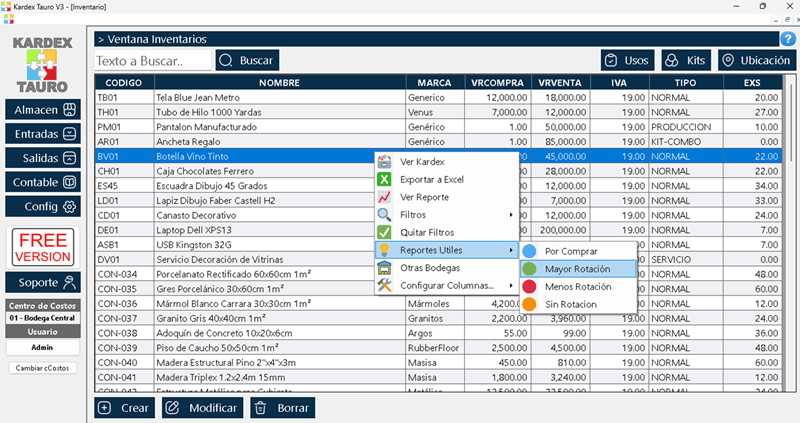
If the role is highly technical, the profile is not written by human resources: it is written by whoever will direct the work, and HR organizes it and makes it verifiable. If urgency is extreme, a temporary hire with a clear contract beats a permanent one decided in an afternoon. Hiring is a process built on evidence, and the first thirty days decide whether the person stays. When the role is inventory or invoicing, that learning curve also depends on the system showing the same data to the warehouse manager and to the new hire; at that point, Kardex Tauro helps make onboarding about the process and not about where the information ended up.