Scholarship motivation letter template for Word

Scholarship motivation letter template for Word
Asking for a scholarship is not asking for a favour: it is submitting an application. And applications are read in a few minutes, usually in the middle of dozens of files that look much the same. Of all the documents you send, the motivation letter is the only one where you speak in the first person and explain three things no transcript can tell: who you are, why you want that particular programme, and what you will do with what you learn once it ends.
It is used by students in their final years looking for support to finish their degree, technicians who want to make the step up to university, professionals preparing a specialisation or a master's, teachers asking for research support, and also people applying for a short course, an exchange or an internal call from the company they work for. In almost all of those cases the motivation letter is requested alongside the academic record, the references and the identity document, so it is worth having it ready before the deadline opens.
This scholarship motivation letter template for Word is a long, guided format: it comes with the letterhead, the addressee block, the subject line and five paragraphs, each with a note on what belongs there. It is not a letter already written for you to copy and sign; it is a mould. You replace the text between brackets, adjust the tone to the call you are answering and delete anything that does not apply. The file opens in Word, can be printed as it is or adapted to the institution's colours and fonts, and can be saved as an editable document or as a fixed file to send.
⬇ Download scholarship motivation letter (.docx)What it is and what it is for
A motivation letter is a formal letter, addressed to the committee that assesses applications, in which the person explains their interest in a programme and the reasons they should be chosen. It does not replace the rest of the application: it accompanies it and gives it order. It serves, concretely, to:
- Apply for a full or partial study scholarship from a university, a foundation or a cooperation body.
- Support an application for a specialisation, a master's or a doctorate, when the committee asks you to explain your interest in a research line rather than just your grades.
- Ask for support for a short course, a diploma, an exchange or an internship abroad, where the letter is weighed as heavily as the CV.
- Apply to a research fund or a maintenance grant that covers living costs while you study.
- Answer an internal call: from your own university, from the school where you teach or from the company where you work.
- Explain a change of direction, a return to study after several years, or a break in your studies that needs context.
In every one of these cases the letter does the same job: it gives the committee a short, verifiable account of why this person and this programme fit together. The attachments prove that what you say is true; the letter explains why it matters and what you intend to do with the opportunity if it is granted.
What the template includes
The file comes with the sections already laid out and the tables ready to fill in. These are the real parts of the document:
| Section of the template | What goes there |
|---|---|
| Letterhead | Full name of the applicant, ID document, city and contact details, with phone and email. |
| Reference and date | Internal letter code and the date of sending, in the format the file already uses. |
| Addressee and subject | Who the letter goes to, the scholarship committee or the admissions office, and the subject line with the exact name of the call. |
| Application details | A record table with the scholarship or call, the programme or course applied for, the institution, the closing date and the format with its duration. |
| The five paragraphs of the letter | Who you are and what you are applying for; why that programme and that institution; why you, with verifiable facts; what you will do afterwards in measurable terms; and the close with your commitment and availability. |
| Signature block | Sign-off, applicant's name, current programme or position and the contact details of the person signing. |
| Documents attached | Six documents already listed, each with a box to tick whether it is ready or still missing. |
| What to check before sending it | Six control points with the reason each one matters, so you can read the letter again with a clear head before uploading it. |
| Document control | Format code, version, date and who completes it, so the institution can track the application. |
The five paragraphs, one by one
The template does not ask for an essay: it asks for five short answers. It helps to know what each paragraph is looking for before you write it, because that is where an application is won or lost.
- Paragraph one, who you are. Two or three lines of facts, not judgements: where you study or work today, how far along your training is and which call you are answering. No adjectives about yourself.
- Paragraph two, why that programme. This is where you name something concrete about the institution: a research line, a laboratory, an approach you cannot find where you are, a lecturer whose work you follow. If the paragraph would work for any university in the world, it does not work for this one.
- Paragraph three, why you. Two or three verifiable facts with the result in view: the project you led, your mark in the hardest term, the course you taught, the obstacle you worked through while studying. Facts can be checked; promises cannot.
- Paragraph four, what you will do afterwards. Concrete and measurable: return to a post, start a project, train others, publish, work in a particular region or sector. It is worth giving a timeframe, even an approximate one.
- Paragraph five, the close. Your commitment, whether you are available full time or part time, and your willingness to supply any missing documents. Keep it short, with no pleading and no stock phrases.
If you find it hard to start, write paragraph three first, since that is the one with the freshest facts, and build the rest from there. The letter is read in one go, but it is written in parts.
How to use it step by step
- Download the file and save it under a name that identifies the call and your surname, so you do not confuse it with other applications you have in progress.
- Replace the letterhead with your real details: full name as it appears on your ID document, city, a phone number and an email you check every day.
- Complete the application details table. The name of the call must appear exactly as the institution writes it, with no invented abbreviations or acronyms.
- Write the five paragraphs in the order they appear, one per block. Leave none empty and do not merge two into one: the committee expects to find those five answers.
- Delete the brackets and the sample text as you go. A letter sent with the instructions still visible is discarded without discussion.
- Tick the table of attached documents and gather the papers in the same order you listed them, with legible and complete copies.
- Replace the footer text, which carries the applicant's name and the subject, with the one for your own application, and change the document code of the format in the control table.
- Read the letter aloud, run the spell checker and export it in the format the call requires before uploading it to the system.
Common mistakes and what to check before signing
- Not naming the call exactly. It is the most common reason for rejection, because the committee needs to know what you are applying for.
- Filling the letter with adjectives about yourself. Responsible, proactive and works well under pressure say nothing; two verifiable facts say far more than twenty compliments about yourself.
- Talking about the programme in general without saying why that institution in particular. One line with a proper name is worth more than a whole paragraph of enthusiasm.
- Ending the letter without saying what you will do afterwards. Committees look for a return: what you will do with the training, where and how soon you intend to apply it.
- Running past a page and a half, or sending the text without checking accents and punctuation. Spelling mistakes cast doubt on the rest of the application.
- Reusing the same letter for two different calls and changing only the name, and attaching incomplete documents or documents in a different order from the one the institution asks for.
When it is worth moving to a system
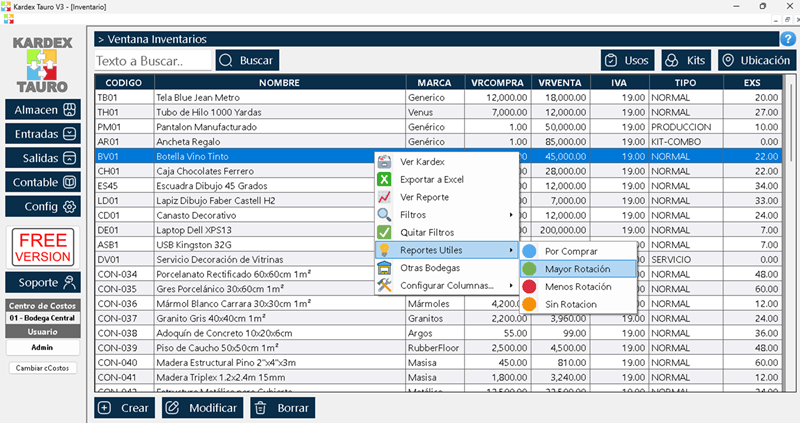
If you apply to one or two calls a year, this template is more than enough: you fill it in once, keep it and adapt it when a new opportunity appears. Things change when applying stops being a personal errand. If the university, the school, the foundation or the company you work for handles dozens of applications per call, or if you need to know who sent their letter, on what date, with which attachments and who reviewed it, a loose file starts to get in the way and closing dates get lost between emails. That is where Kardex Tauro makes sense: it keeps letters, attachments and deadlines in one register, with the status of every application in view. If yours is the case of one person applying once and keeping the letter in a folder, stay with the template and keep it simple; moving to Kardex Tauro is worth it when the volume no longer fits in a single file and somebody has to answer for the deadlines.
This template is part of the index of Word templates, which gathers them grouped by family.
⬇ Download scholarship motivation letter (.docx)