Event invitation template for Word

Event invitation template for Word
Organising an event does not start with the room you booked or the menu you chose: it starts with the message that reaches your guests. A client meeting, a business anniversary, a product launch, a training session for the team, an end-of-year dinner, a family celebration. In all of those cases the first impression comes from the invitation, and that impression is formed in a few seconds, before the person even finishes reading.
When the invitation is a mess — the time in one corner, the venue in another, the phone number for replies buried in a paragraph, a missing detail or an outdated date — guests assume the event will be just as improvised. When it is clear, tidy and easy to read, guests arrive calm: they know what time to be there, where to park, what to wear and whether they need to reply.
This event invitation template for Word is made for people who organise without a big team: the owner of a business celebrating its first years, the small company bringing its clients together, the assistant putting the end-of-year dinner together, the neighbourhood committee running a community day, the family gathering relatives. It is not a complicated design and it is not a file you have to learn: it is a Word page with the blocks a guest needs, ready to be filled in, printed, or copied into a message.
⬇ Download event invitation (.docx)What it is and what it is for
An event invitation is the document that gathers, in one place, everything a guest needs in order to decide whether to come and to arrive without trouble. It is not decoration and it is not paperwork: it is the cheapest logistics tool an organiser has. Done well, it saves dozens of phone calls repeating the same detail and cuts down the number of people who get lost, turn up at the wrong time or appear without having replied. It is used, above all, for these things:
- Putting date, time and venue in one visible block, so nobody has to hunt for the detail across two or three different messages.
- Explaining clearly why the event is happening and who is inviting, something that is usually obvious in the organiser's head but not in the text the guest receives.
- Setting out a short programme: what time guests are received, when the main part starts, when food is served and when the day ends.
- Stating the dress code without ambiguity, so nobody turns up far too formal or far too casual and spends the evening uncomfortable.
- Asking for the reply with the details that are actually needed and with a deadline, which matters when the number of seats has to be closed.
- Flagging the practical details that generate the most questions: whether there is parking, whether the venue has step-free access, whether a companion may come, whether transport is the guest's own responsibility.
The same format works for the next event too: a handful of fields are changed and another invitation is ready, without starting from scratch or reinventing the wording.
What the template includes
The file comes with eight sections already in place. Each one has its heading and its space to write; the job is to replace the sample text with the real details of the event and delete whatever does not apply. This is the structure you will find:
| Section | What goes there |
|---|---|
| Event details | The name of the event as you want it read, the reason for the celebration or meeting, who is inviting and a direct contact for questions. |
| Date, time and venue | Day of the week and full date, start and finish times, the address with landmarks for getting there, whether there is parking and whether the venue has step-free access. |
| Short programme | The five blocks of the event already written (reception, welcome, main activity, refreshments or dinner, and closing), each with an approximate time. |
| Dress code and practical notes | What guests are expected to wear, described concretely, plus the reminders about weather, footwear, children, companions and parking. |
| Replying to the invitation | Who to reply to, by which channel, by what date and which details are requested from the guest. |
| Notes for guests | The details that do not fit in the programme: whether gifts are expected, whether the event is streamed, whether there is attended parking, whether entry is through a particular door. |
| Ready-made text to send by message or email | A short message already drafted, to copy and paste into a phone or an email, with the essentials in a few lines. |
| Signatures and control table | The signature of the person inviting and of the person approving, plus the control table with the document code [IV-___], the version and the date of issue. |
The programme, block by block
The short programme is what guests appreciate most, because it tells them what to expect and how much time to set aside. The template comes with the five blocks written; all you have to adjust are the times and the name of each activity. This is how they read:
| Block | What happens |
|---|---|
| Reception | Guests arrive, badges are handed out if needed, people find their seats or tables and the first greetings take place. |
| Welcome | A few words from the host: thanks for coming, why the event is being held and a note on how the day will run. |
| Main activity | The central block depending on the type of event: a presentation, a training session, a ceremony, a question round or an awards moment. |
| Refreshments or dinner | The break for food, with a start and finish time and a note on whether service is at the table, as a buffet or at stations. |
| Closing | Final words, thanks, news of the next gathering if there is one, and guests leaving in their own time. |
How to use it, step by step
The template is designed to be completed in half an hour, even by someone who is not at ease with Word. These are the steps worth following in order:
- Download the file and open it in Word. Save it straight away under its own name, for example the type of event and the year, so the original model is not overwritten and can be reused.
- Fill in the event details: the name as you want it read, the reason, the person or company inviting and a direct contact for questions.
- Write the full date with the day of the week, the start time, the finish time and the address with landmarks. This is the place to note whether there is parking and whether the venue has step-free access.
- Adjust the programme: replace the five sample blocks with the real activities and use round times, because an exact time that slips creates more confusion than an approximate one.
- Set the dress code with a concrete description and use the practical notes section for weather, footwear, children and companions.
- Write the reply block: who to answer, by which channel, by what date and which details are requested. If the number of seats has to be closed, give a clear deadline.
- Before finishing, replace the company in the footer with the real name of the person inviting and change the document code in the control table, along with the version and the date.
- Check the spelling calmly, export to PDF if you are sending it by email so the layout does not shift on other machines, and keep the Word file as a backup for the next event.
Common mistakes before sending it
Almost every problem with an invitation shows up in the final check, once the message has already gone to thirty people. It is worth reading it twice out loud and going through these points:
- Check that the date and the day of the week match. A Tuesday written where it is really a Wednesday throws off every guest's diary.
- Look up the address on a map and add simple landmarks. A mistyped number can send a guest to another district and make them arrive late.
- Make sure the reply contact is working and that somebody is watching it. A number nobody answers discourages even the guest who did want to come.
- Confirm that the finish time is consistent with the programme. If dinner starts at the same time the event says it ends, something was copied wrongly.
- Review the dress code. Saying only “elegant” leaves doubts; it helps to specify whether it means a dress, a suit, a shirt with no tie or comfortable clothes.
- Make clear whether a reply is needed, by when, and what happens with companions and children, because those are the three questions that always arrive by message.
When it is worth moving to a system
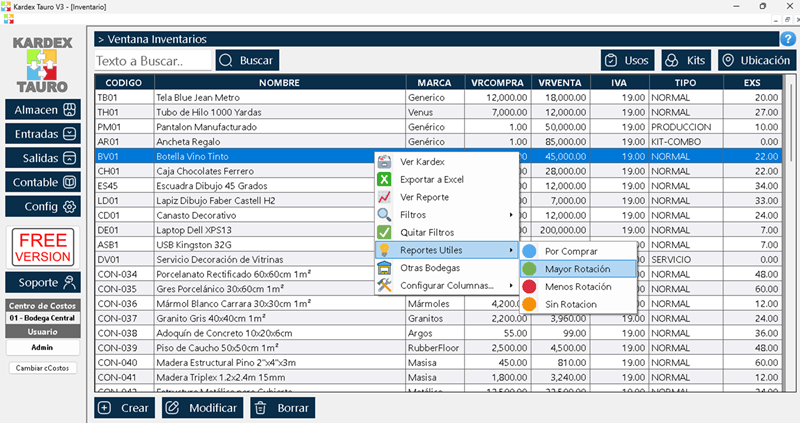
For one event a year, a Word page solves the whole problem and nothing else is needed. But when a business runs activities often — training days, fairs, launches, client meetings — or when several people are collecting replies through different channels, the list gets messy quickly: names written in a notebook, messages left unanswered, duplicated details and people counted twice. At that point it is worth moving to a system where sign-up, the guest list and the running of the event live in the same place.Kardex Tauro is an option aimed at small businesses that want to keep stock, sales and internal processes in a single program, and many teams arrive at it precisely because of events that repeat every month. A Word invitation remains useful as a communication piece; what a system brings into order is the list, not the message. If the event is a one-off and the team is two people, Kardex Tauro is not urgent; if the event repeats every month and nobody is sure any more how many people replied, the change justifies itself.
This template is part of the index of Word templates, which gathers them grouped by family.
⬇ Download event invitation (.docx)