Project timeline template for Word

Project timeline template for Word
A project timeline is what separates a project that moves forward from a group of very busy people who never get anywhere. This project timeline template for Word does exactly that job: it puts in writing what will be done, in what order, who is accountable for each part and when the result is expected. It is built for business owners, site supervisors, small company managers, area coordinators and anyone responsible for small and medium projects who needs a simple, printable document that is easy to share, without depending on complicated software or a monthly subscription.
The file works just as well for a construction job, for fitting out a shop, for a product launch, for a day of preventive maintenance, for a seasonal campaign or for organising an internal event. Company size and industry do not matter: if there is a start date and a result to deliver, there is a timeline to build. The template forces the work into phases, assigns owners by name and surname, and defines milestones that can actually be checked, instead of leaving everything in the manager's head or in a chat nobody reads twice.
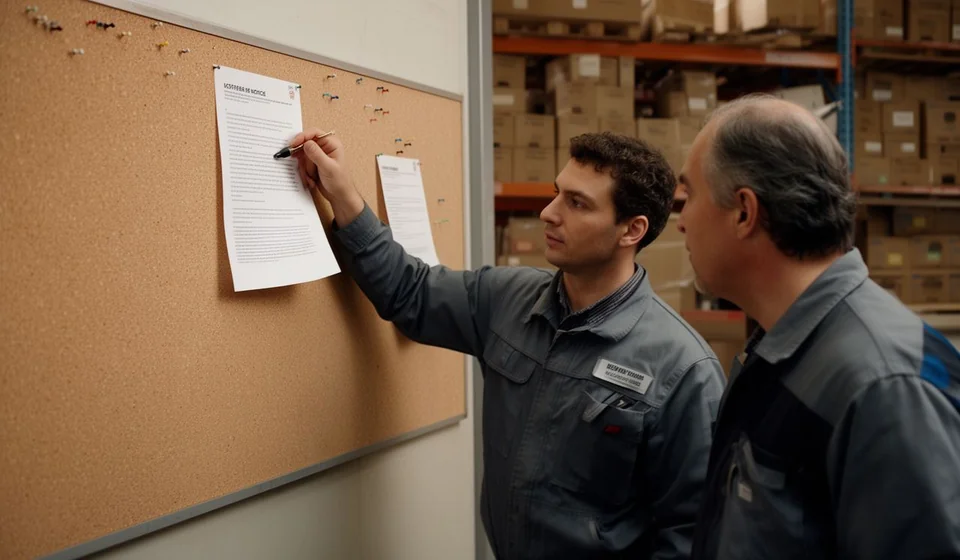
It is also a living document, not a folder decoration. It gets printed and pinned on the office wall, shared by email, projected in a fifteen minute weekly meeting. When something changes, the date is corrected, the reason is noted and the new version is recorded, so that a month later anyone can understand why the plan moved and what was done to recover the lost time.
Because it is a Word file it adapts without a fight: you can change the logo, the heading colour, the font size and the number of weeks, and you can save it as a read only document to send to a client. Everything below explains which sections it contains, how to fill it in, what to check before signing it, and the moment when that file is no longer enough.
⬇ Download project timeline (.docx)What it is and what it is for
A timeline is not decoration on a proposal: it is the document that answers the awkward questions before they appear. Specifically, it helps you to:
- Order the work into clear phases: preparation, execution, verification and closing, each with its own logic.
- Assign every activity to a named owner instead of an abstract area such as «production» or «the team».
- Define milestones and deliverables that can be approved or rejected against visible criteria rather than opinions.
- Spot dependencies: which task cannot start until another one ends, and what happens if that one slips by a week.
- Report progress to a client, a partner or a supervisor without inventing figures the night before the meeting.
- Back you up when arguments arise about deadlines, cost overruns or responsibilities, with the signed paper as the reference.
- Keep a record of the follow up: what was reviewed, on what date, by whom and with what result, so the learning stays in the company.
What the template includes
These are the real sections of the file, with what goes in each one:
| Section | What is written there |
|---|---|
| Project or period details | Project name, client or internal area, city, start date, planned delivery date and who prepared the timeline. |
| Objective and scope | In two or three sentences, the expected result and what is explicitly left out of the work. This is where the warning that saves projects goes: a timeline without a clear scope grows on its own, and every week a new task appears that nobody planned. |
| Work phases | The four phases already written in the file (preparation, execution, verification and closing), with the main activity of each one and the person responsible for pushing it forward. |
| Week by week timeline | A table with columns for week one to week four to mark with an X; each row is an activity and each mark shows the week in which it runs. |
| Milestones and deliverables | The results that are formally approved, with their date and with who signs the approval. |
| Dependencies and owners | Every activity with the person in charge and a note on what happens if it slips: what moves, what is lost and who must be told. |
| How follow up is done | Review frequency, who reviews, in which meeting, and how progress is reported to the client or to management. |
| Signatures and control table | Space for the signatures of the person who prepares it and the person who approves it, plus the control table with the document code, the version and the dates of each change. |
The weekly table is used by marking, not by writing. One row per activity and one X per week in which that activity moves. In one look, anyone can see three things: how many activities run in parallel, which week carries the heaviest load, and where there is a gap of time nobody is using. Here is how it looks:
| Activity | Week 1 | Week 2 | Week 3 | Week 4 |
|---|---|---|---|---|
| Scope sign off with the client | X | |||
| Purchase and stock of materials | X | X | ||
| Execution on site | X | X | ||
| Verification and handover | X |
How to use it, step by step
- Download the file and save it under the project name and the date. Never work on the original template: if you overwrite it, you lose the clean format for the next project.
- Replace the header details with the project name, the client or area, the city, the start date and the planned delivery date.
- Write the objective in two sentences and the scope in three lines, separating what is part of the work from what is not. If the client asks for something that is not in those lines, you already know it is a change and not an obligation.
- Review the four phases in the file and adjust the activities to your real case: delete the ones that do not apply and add the ones that are missing, without worrying about the table growing.
- Mark the weeks of each activity with an X, checking that no week ends up with more work than the team can truly handle. It is better to stretch a week than to promise the impossible.
- Write the milestones with their date and with the person who approves them. A milestone without a date and without an approver is an intention, not a milestone.
- Note the owner of each activity and the concrete consequence of a delay. If you cannot write that consequence down, the activity is probably not well defined.
- Set the follow up: day of the week, time, who calls the meeting, who reports and where progress is written down. The minutes of that meeting are what feed the next version of the timeline.
- Replace the company name in the footer with the real name of your business and change the document code in the control table to your own. You can use the CR prefix, keep the project number and record the version and the date of the first change, so the trail of modifications is never lost.
- Sign it, save a PDF copy and share that copy with the team and the client. The Word file stays for editing; the PDF stays as proof of what was agreed that day.
Common mistakes, and what to check before signing
- Promising dates before knowing who runs each task and with what resources. The calendar is built after the people, not before.
- Leaving activities without an owner, or with a vague one. «The team» is not an owner: nobody feels named and the task falls through.
- Forgetting waiting time: internal approvals, purchases, material delivery, client permits, reviews. An activity can take two days and wait five.
- Confusing tasks with milestones. Tasks are executed; milestones are approved. If everything is a milestone, nothing is a milestone.
- Writing milestones that cannot be verified, such as «improve communication» or «get everything ready». A milestone passes against a visible criterion or it does not pass.
- Not updating the document. If the real date changed and the paper stayed the same, the timeline loses credibility and the team stops consulting it.
- Signing and filing it away without agreeing how often it will be reviewed. A plan with no periodic review is a wish in a nice format.
When it is worth moving to a system
This format works very well when a project lasts weeks, when the team is small and when follow up happens in face to face meetings. It stops working when several projects run in parallel, when five people need to see the same progress at the same time, or when the client asks for a report every week: that is when duplicate files appear, versions stop matching and hours are lost copying data from one place to another. At that point the paper costs more than it saves.
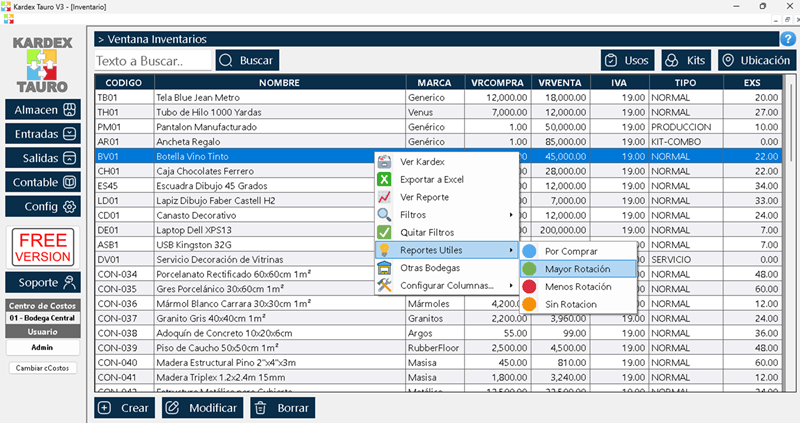
The sign is easy to recognise. If you spend more time updating the file than reviewing the work, or if someone asks «how are we doing?» and the answer takes more than a minute, a system is worth it. Kardex Tauro keeps the timeline together with the owners, the documents and the real progress of each activity in one place, without losing the printed template for presentations or backups. There is no need to migrate everything at once: start with the largest project, keep the small ones in Word and decide with experience. Kardex Tauro earns its place exactly when the document that serves you today starts to cost you time instead of saving it.
This template is part of the index of Word templates, which gathers them grouped by family.
⬇ Download project timeline (.docx)