Event programme template for Word
Event programme template for Word
An event is a lot like a building site: if nobody wrote down the order of the work, everyone moves at their own pace and by the end some things run over while others fall short. The event programme is that order written down. It is the document that makes clear what time each activity starts, who runs it, where it happens, how long it lasts and what to do if something slips.
It is used by event organisers and by companies running a launch, by workshops opening registration, by people teams on a training day and by small businesses marking an anniversary or hosting an important customer. In every one of those cases there is a moment when several people need to know the same thing at the same time, and that moment is solved with a printed document or a shared file, not with last-minute calls or crossed messages.
This event programme template for Word brings together in a single file the hour-by-hour script, the owner of each block, the logistics list, the host's script and the backup plans for surprises. You fill it in once per event, print or share it with the team, and file it at the end as a record of what happened.
⬇ Download event programme (.docx)What it is and what it is for
An event programme is not the invitation, and it is not the attendee list: it is the working document of the team that organises. It exists so that every person knows what is theirs and when, and so that whoever hosts always has the next step to hand. These are the most common uses:
- Handing out the running order to the team before the doors open, so nobody improvises their part.
- Coordinating sound, set-up, catering and transport suppliers with firm times to arrive and to leave.
- Writing down who decides when something changes, so there is no argument in front of the guests.
- Aligning the master of ceremonies with what they will announce, at which point, and what follows.
- Having answers ready for the likeliest surprises instead of improvising in front of an audience.
- Leaving a record that lets you review the event and run the next one with fewer mistakes.
The same format works for very different events: a three-hour training session, a market fair that lasts all day, a one-hour product launch or a residents' meeting. What changes is the scale; what does not change is the need to write down what happens in each block and who is answerable for it. When the event is small, the programme fits on a page and takes twenty minutes to write; when it is large, it runs to several pages and becomes the document everyone consults before asking anyone. It is also the sheet you hand to a supplier so that the caterer, the sound technician and the venue staff are all working to the same timetable instead of to three different ones.
What the template includes
The file comes with the sections already built, with blank fields and tables, and a few short examples in brackets so it is clear what goes where. This is the real structure of the document:
| Section | What goes there |
|---|---|
| General event details | Name, date, venue, start and end time, general owner, expected number of attendees and format: in person, online or mixed. |
| Event objective | What has to happen for the event to count as a success: how many people, which decision, which sale or which learning. Everything else follows from here. |
| Hour-by-hour programme | A table with time, activity, who runs it, where and duration, to break the day into manageable blocks. |
| Owners by block | Three blocks already written (opening and registration, main block and closing) with the owner, who supports and the key task of each. |
| Resources and logistics | What is needed, who gets it, when it must be ready and its current status: sound, chairs, materials, refreshments, permits and transport. |
| Master of ceremonies script | Four moments already written (before opening, opening, change of block and closing) with the idea of what to say, not a full speech. |
| What to do if something leaves the plan | Four surprises already listed (a guest who is late, sound or projector failure, more people arriving than expected, the venue not ready) with the response in each case. |
| Review and close | Four questions already written on attendance, timing, whether the objective was met and what to change, and who keeps the record. |
| Document control | Document code, version, date and the signatures of the general owner and of whoever approves. |
How to use it step by step
The template is filled in from top to bottom, and in that order. These are the steps the file itself recommends:
- Download the document, save it under a name that identifies the event and open it in Word.
- Write the event objective first. If you do not know what has to happen for it to count as a success, the timetable has no compass.
- Fill in the general details: name, date, venue, start and end time, general owner and format.
- Build the hour-by-hour programme by adding durations, not by subtracting times. Leave a margin of ten to fifteen minutes between one block and the next.
- Assign one owner and one support person per block, and write the key task of each.
- Review the logistics: which resource is needed, who gets it and by which day it must be ready.
- Adapt the master of ceremonies script to your event, with short ideas instead of text to read aloud.
- Write the likely surprises and the decision for each one. Name the person who can change the order if needed.
- Replace the company name in the footer with your business or your team, and change the document code in the control table, which comes as a field to complete, for the one you use internally.
What to check before you print and hand it out
The programme is handed to many people, so one mistake multiplies. Before printing it or sharing it with the team, review these points:
- That every block has a start time and a duration, and that the total matches the closing time.
- That no block is left without an owner or without a support person.
- That the master of ceremonies script is short ideas and not paragraphs to read.
- That there is a backup plan for the sound, for the projector and for a guest who is late.
- That parking, wheelchair access and emergency contacts are noted down.
- That the footer carries your company name and that the control table has the right code and version.
- That only one version is in circulation: if something changes, update the version number and tell the team.
- That the printed copy and the shared file say exactly the same thing, because people will read whichever one reaches them first.
Common mistakes when building the programme
Most programmes that fail trip over the same points. It is worth checking them before you call the document finished:
- Writing start times but no durations, so nobody knows how long they have and the timetable drifts from the very first block.
- Scheduling with no breathing space between blocks, as if setting up, moving chairs and letting people in took no time at all.
- Keeping the backup plan in one person's head: if that person is not there, nobody knows what to do when the sound fails.
- Confusing the programme with the invitation: the invitation says when and where; the programme says what happens inside and who does it.
- Handing out different versions to suppliers and to the team, so each of them works to a different timetable.
- Not writing down who turns off the lights, who locks up and who stores the equipment at the end.
When it is time to move to a system
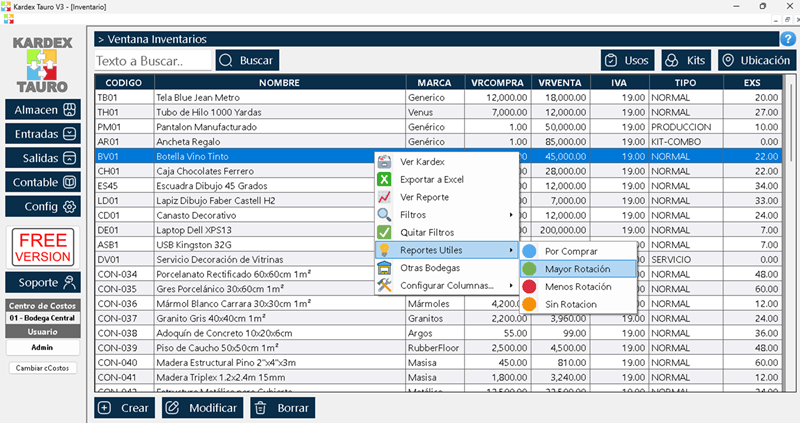
A programme in Word is perfect for one event, for two or for five a year. The trouble starts when organising becomes routine: several events a month, several owners, last-minute changes that nobody communicated and two versions of the same document in circulation at once. At that point the loose file starts to cost more than it saves. A management system treats the event as a process, keeps a history of who changed what and notifies each owner at the moment their part is due. It is the natural next step: the template solves the day's paperwork and the system solves the whole year's organisation. Many businesses start with the template and make the jump when the second event clashes with the first. If your case is still the occasional event, keep the template, which does its job well. If you are already carrying a calendar of events, it is worth looking at Kardex Tauro, a system that orders that operation and stops the programme from living in three different versions.
This template is part of the index of Word templates, which gathers them grouped by family.
⬇ Download event programme (.docx)