Essay template for Word

Essay template for Word
An essay usually goes wrong at the same point: the idea is clear in your head, but on the page it turns into a summary of the topic with no position and no order. This essay template for Word forces you to state your thesis in a single sentence before you start and divides the rest of the document into four blocks: introduction, body, objection and conclusion. It is meant for the high school student writing a first argumentative paper, for the university student who has to defend a position with sources, and for the teacher marking thirty papers who needs one shared structure instead of writing the same comment on every page.
The file downloads in .docx format and opens in Word, LibreOffice or Google Docs with nothing to install. The pages come blank: there are no sample paragraphs to delete and no filler text that drags somebody else's topic into your work. Every section carries a short instruction stating what goes there and how long it should be, so the writer always knows whether an argument still needs work or whether the same idea is simply being repeated in different words.
The argumentative structure is the same in any subject and in any language, so the format works equally well for an essay in history, philosophy, social studies or literature, and for the writing tasks in English or Spanish classes. Anyone who learns to fill it in properly once can reuse it for years, and in timed writing exams the habit of settling the thesis before the first paragraph is the change that moves the mark the most.
⬇ Download essay template (.docx)What it is and what it is for
It is an editable two or three page format that reproduces the anatomy of an argumentative essay: the thesis at the top, the arguments in the middle, the objection in a block of its own and the closing at the end. It is free to download, it adapts to a course topic in minutes and it can be printed to write by hand or filled in directly on the computer. It works for a short paper in one subject as well as for a final project at the end of a term, because the structure does not change: only the length of each block does.
- State the thesis before writing. The second block asks for one sentence that can be argued against; if nobody could disagree with it, it is not a thesis yet and it deserves a rewrite.
- Organise the body by arguments, not by pages. Each argument gets its own space with the evidence behind it, so the text moves through reasons instead of padding.
- Anticipate the objection. The objection and reply block forces you to look at the topic from the other side, which is what separates an essay from a loose opinion.
- Keep each part within its length. With a suggested length next to every section it is easy to share the work and reach the end without running out of room for the conclusion.
- Make the link between paragraphs visible. The format asks you to note the sentence that ties a paragraph to the previous one, so the text reads as one line of thought and not as glued-together ideas.
- Check before handing it in. The final checklist runs through thesis, sources, coherence and format in one pass and saves the marks lost to details that take five minutes to fix.
The value is not in the empty boxes but in the moment they are filled in one sitting, with the topic in front of you and the sources at hand. An essay sketched in this format first is much faster to write afterwards, because every paragraph already knows what it has to prove.
What the template includes
The file has nine numbered sections, a control table at the end and a footer with the institution name, which you replace with your own school, college or institute before printing. The table below sums up what goes in each section.
| Section | What you write |
|---|---|
| 1. Assignment details | The working title of the essay, the subject, the student's name, the teacher's name and the due date. |
| 2. The thesis in one sentence | Your whole position in one sentence, without decoration: what the essay will defend and which idea it is arguing against. |
| 3. Structure | The split of the text into introduction, body, objection and conclusion, with the approximate length given to each part. |
| 4. Arguments and support | The two or three main arguments, each with the fact, quotation, example or source that holds it up. |
| 5. Objection and reply | The strongest opposing argument that can be made against the thesis, and the answer the essay gives to it. |
| 6. Links between paragraphs | The connecting sentence that joins each paragraph to the one before it, so the reader does not lose the thread when the idea changes. |
| 7. Closing | The conclusion that restates the thesis, sums up what was proved and leaves one final idea the reader can remember. |
| 8. Checklist before handing in | The points reviewed one last time: visible thesis, arguments with support, objection answered, sources cited and correct format. |
| 9. Control and signatures | The document code, the version, the date, the space for the student's signature and the approval of whoever receives the work. |
The nine sections take up little room on screen, so the whole draft fits on two pages. That brevity is deliberate: an essay is easier to write when the plan for what it will say takes less space than the saying of it.
How to use it step by step
The order of work matters more than speed. Fill the blocks in two sittings: the plan first, the text afterwards.
- Change the institution name in the footer and the details in the header, and update the document code in the control table so the version you hand in is the final one.
- Write the topic and the working title in the first section; the title is adjusted at the end, once the thesis is settled.
- Draft the thesis in one sentence and read it out loud: if it needs two breaths or says two different things, it is not ready.
- Divide the essay into its four parts and give each one a length; once that is done it is hard to end up with a long introduction and a rushed conclusion.
- Fill one row per argument with its support beside it: the fact, the source, the quotation or the example that backs it.
- Write the strongest objection you can think of and answer it; if the objection does not bother you, you picked a weak one.
- Note the linking sentence of each paragraph in the connections section and then write the final document on separate sheets, following the order of the blocks.
- Walk through the checklist ticking every point, and only then sign the control table and save the file under the name of the assignment.
If the teacher asks for the plan instead of the finished essay, the same sheet works as an annex: the reader sees the thesis, the arguments, the objection and the sources before reaching the full text.
Common mistakes
Nearly every essay that comes back with comments repeats one of these mistakes, and none of them is fixed by writing more pages.
- Confusing the topic with the thesis: pollution in big cities is a topic, not a position you can defend.
- Summarising instead of arguing: if the text only reports what others said, your own work is missing.
- Leaving the objection out of the document, as if the reader were going to accept the thesis out of tiredness.
- Piling up quotations without explaining what they prove or how they connect to the argument.
- Writing a long introduction that promises a lot and a two-line conclusion that closes nothing.
- Handing in without a format check: a footer with another institution, a document code from an earlier version, or spelling mistakes in the title.
None of those is fixed on the last night. What prevents them is filling in the plan before drafting, which is exactly what this format is for.
When it is worth moving to a system
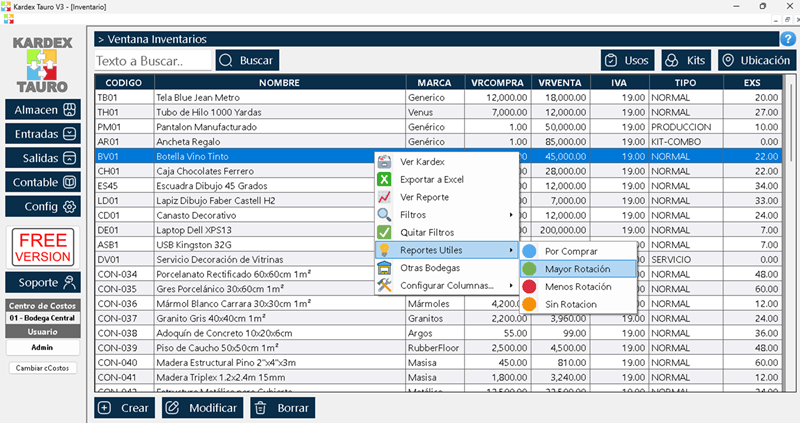
The template works very well while the work is individual and the volume is manageable: a student with a few essays per term or a teacher marking one or two groups. Once subjects multiply, groups get larger, work arrives in stages, versions need reviewing and files travel by email or messaging apps, the Word document starts to fall short, because it does not warn you about a pending deadline or track what has already been reviewed. At that point it is worth leaning on a system such as Kardex Tauro, which keeps the record and the follow-up in one place, and leaving the Word file to do what it does best: planning and writing the text.
This template is part of the index of Word templates, which gathers them grouped by family.
⬇ Download essay template (.docx)